
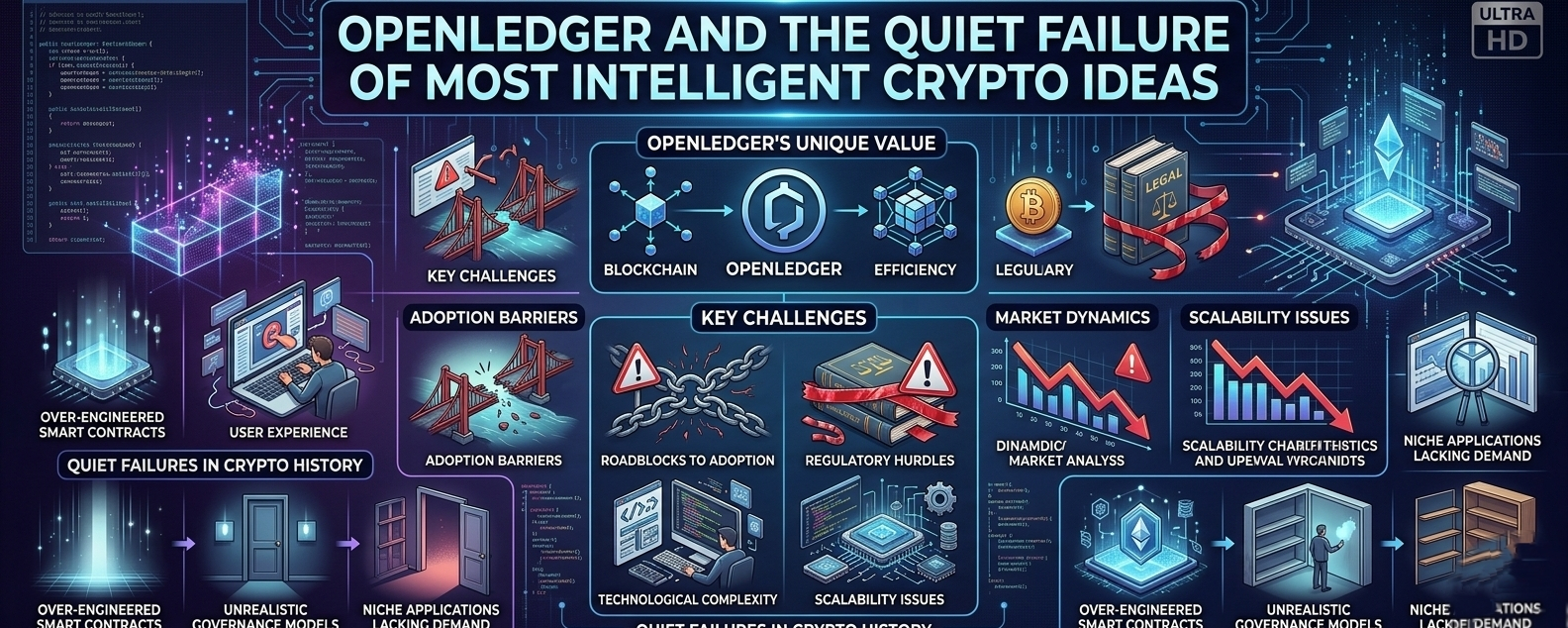
I’ve been around long enough to stop confusing noise with momentum. That changes the way certain projects look.
A few years ago, something like OpenLedger would have triggered the usual reflexes. AI narrative. Modular infrastructure. Data monetization. Agent economy. Liquidity layers. Everyone rushing to map another trillion-dollar market onto a token before the market even understands the actual problem. The whole thing would have been treated like inevitability. Another “picks and shovels” play for the future.
Now it just feels heavier than that.
Not because the idea is bad. Maybe because it sounds almost too reasonable inside a market that rewards theater more than design.
The pitch around OpenLedger is clean enough. Create infrastructure where data, models, and AI agents become economically composable assets. Let contributors monetize the raw ingredients feeding machine intelligence instead of allowing value to accumulate entirely at the application layer or inside closed corporate systems. In theory, that makes sense. Probably more sense than half the infrastructure narratives that ran 100x over the last cycle.
But crypto has developed this strange habit of mistaking architectural coherence for destiny.
A system can make perfect sense on paper and still die quietly because nobody truly needs it badly enough.
That’s the part people avoid talking about now. Especially after surviving a few cycles.
Most crypto products don’t fail because they’re scams. They fail because friction is undefeated. They fail because users are lazy. Developers are distracted. Distribution is brutal. Attention spans are microscopic. And eventually the market stops pretending complexity is innovation.
OpenLedger feels aware of some of this. At least more aware than most.
There’s a noticeable restraint in the design language around it. Less obsession with becoming “the everything chain.” Less desperate signaling. More focus on coordination problems around AI data and economic attribution. You can tell somebody behind it has spent time thinking about where value actually forms in AI systems instead of simply stapling a token onto inference.
That alone separates it from a huge percentage of AI crypto projects.
Still, I keep coming back to the same uncomfortable question. Not whether the idea is intelligent. Whether intelligence itself matters anymore.
Because the graveyard is full of intelligent systems.
The market has seen decentralized storage before. Decentralized compute. Decentralized marketplaces. Data exchanges. Model layers. Reputation systems. Incentive alignment mechanisms. Every cycle introduces another version of the same underlying dream. Distribute ownership. Financialize participation. Remove gatekeepers. Let the protocol coordinate what corporations currently monopolize.
The language changes. The diagrams get cleaner. The websites get darker and more polished. But under all of it, the same problem keeps surfacing.
People only tolerate complexity when the alternative becomes unbearable.
And right now, centralized AI still works well enough for most people.
That matters more than tokenomics. More than throughput. More than elegant architecture.
Nobody wakes up angry that OpenAI or Anthropic own their training pipelines. Most users barely think about where models come from. They want convenience. Speed. Cheap output. Reliability. That’s usually where crypto narratives start to thin out. Somewhere between ideological importance and actual behavioral demand.
OpenLedger sits directly inside that tension.
The concept sounds meaningful because it probably is meaningful. Data provenance matters. Ownership matters. Incentive distribution matters. Especially if AI becomes the economic layer many expect it to become. But meaningful is not the same thing as necessary.
Crypto veterans eventually learn that distinction the hard way.
There’s also another issue nobody really likes discussing. Markets grow exhausted. Narratives decay faster now. AI itself already feels oddly tired in parts of crypto, even while the broader tech world keeps accelerating around it. Too many projects rushed to attach themselves to the theme without building anything durable underneath. The result is this low-grade skepticism hanging over everything.
Even good projects inherit that fatigue.
Sometimes unfairly.
OpenLedger feels like it’s trying to build during the awkward stage after the excitement fades but before real adoption begins. Historically that’s either where serious companies emerge or where technically competent teams disappear forever because the market moved on before users arrived.
There’s no clean way to know which one this becomes.
And honestly, the people speaking with certainty are usually the ones I trust the least now.
I do think there’s a real possibility that infrastructure around AI attribution becomes unavoidable later. Not because crypto wants it to happen, but because the economics around data ownership eventually become too distorted to ignore. If autonomous agents start transacting with each other at scale, if datasets themselves become yield-generating assets, if model training turns into a transparent supply chain instead of a black box, then systems like OpenLedger suddenly stop looking speculative and start looking obvious in hindsight.
But hindsight is where every market genius lives.
Reality is uglier.
Maybe enterprises never want open attribution systems. Maybe regulation crushes incentive structures before they mature. Maybe centralized providers simply absorb these features internally and users accept it because convenience wins again. History suggests convenience usually does win.
And crypto, despite all its rhetoric about decentralization, often ends up recreating the same power concentrations with extra steps.
That’s another thing age changes. You stop assuming decentralized automatically means resilient.
Sometimes it just means slower.
Still, there’s something about OpenLedger I can’t fully dismiss. Not excitement. More like recognition. It feels built by people who understand that infrastructure should probably survive periods where nobody cares about it. That matters more than aggressive marketing now. The loudest projects rarely last. They burn through attention like fuel because attention itself became the product.
OpenLedger doesn’t feel optimized for attention.
Which could either become its strength or its death sentence.
Hard to tell anymore.
Especially in crypto, where the market often punishes patience right up until the moment it suddenly worships it retroactively.
