

I used to think the long-term AI race would mostly revolve around capability. Better reasoning, faster execution, more autonomous coordination, stronger outputs. That idea still dominates most discussions because markets naturally focus on visible performance first. The systems that produce the most impressive results attract attention quickly, and people immediately associate intelligence with long-term value. But the more time i spend studying how digital systems evolve, the more i feel the deeper transformation around AI may have very little to do with raw intelligence alone.
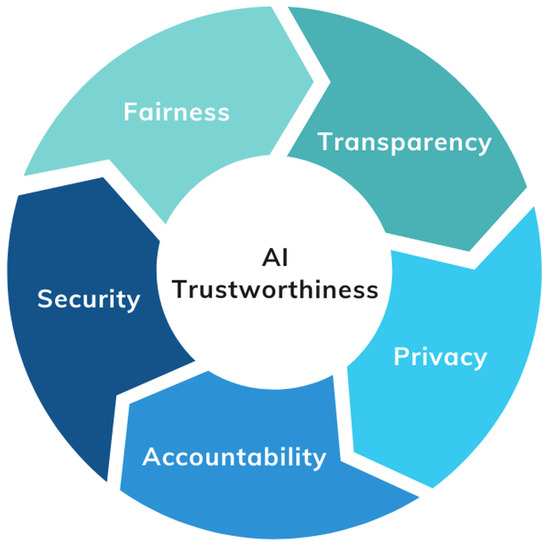
What really changed my perspective was noticing how crypto unintentionally created reputation economies over time. In the early stages, people mostly cared about token prices, speculation, and transaction speed. But eventually something much bigger formed underneath all of that activity. Wallet behavior slowly became a signal of credibility across networks. Transaction history, governance participation, liquidity movement, consistency of activity, and contribution patterns all turned into ways people measure trust inside decentralized environments. Nobody formally designed that culture in advance. It simply emerged because blockchain systems made behavior transparent enough to track continuously over time.

I think autonomous AI systems may eventually move through a very similar transition. Right now the market rewards output quality because output quality is easy to evaluate immediately. Smarter models create stronger first impressions. Better automation attracts users quickly. Autonomous agents already look impressive when they execute tasks faster than humans or coordinate workflows efficiently. But once these systems begin operating continuously inside financial infrastructure, digital coordination layers, governance environments, or economic networks, intelligence alone stops being enough. The conversation changes completely at that point.
People stop asking whether an AI system is smart. They start asking whether it can be trusted repeatedly without supervision. That difference may become one of the most important infrastructure shifts of the next internet cycle. A highly intelligent system with inconsistent behavior eventually becomes a liability in environments connected to capital, coordination, and decision-making. Digital economies cannot scale efficiently around autonomous systems that behave unpredictably over long periods of time. Reliability starts becoming more valuable than occasional brilliance. Consistency starts mattering more than speed. Behavioral history starts becoming more important than isolated performance.
That is why i think the next major AI infrastructure layer may revolve around reputation, attribution, and accountability rather than capability alone. Persistent identity systems, execution history, contribution tracking, behavioral transparency, and long-term credibility may eventually become economically valuable primitives for autonomous ecosystems. The networks capable of measuring reliability around machine behavior could become incredibly important once autonomous participation becomes deeply integrated into digital economies.
Most projects today still approach AI like a competition around features and intelligence upgrades. But i increasingly feel the larger opportunity may exist in building systems that allow autonomous entities to earn trust over time the same way humans, wallets, and institutions already do inside existing financial networks. Because in the end, intelligence alone does not create stable coordination at scale. Trust does. And if AI eventually becomes deeply embedded into economic infrastructure, the systems managing credibility around machine behavior may become far more valuable than most people currently expect