
On OpenLedger (@OpenLedger ), the important moment is not only when an agent gives an answer.
It is the moment that answer starts earning.
A query enters the marketplace.
An agent returns something useful.
A workflow saves time.
A strategy produces value.
Now the real question begins:
where inside the OpenLedger stack should the money go?
Most AI systems blur that line on purpose. The output sits at the surface, the platform captures the upside, and everything underneath it, data, tuning, compute, validation, gets treated like invisible scaffolding.
On OpenLedger, that scaffolding is supposed to become economically visible.
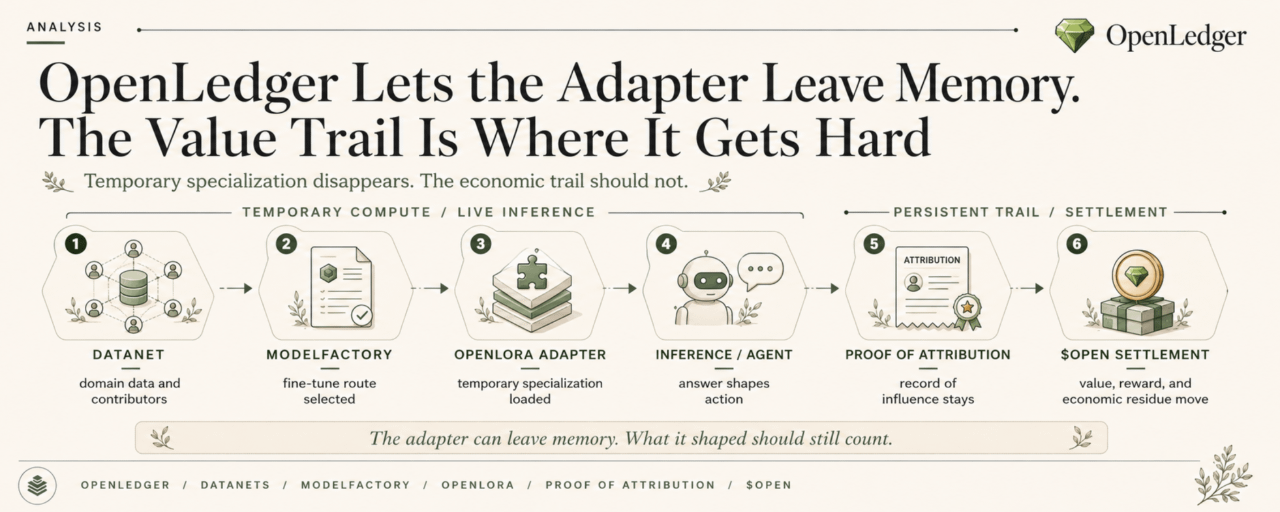
on OpenLedger, If a Datanet shaped the model’s memory, if fine-tuning sharpened the result, if compute and validation helped produce the inference, then the revenue event should not behave like a magic trick. It should behave like settlement. Value should be able to move backward through the intelligence stack instead of getting trapped at the top.

That is what makes OpenLedger Proof of Attribution so important here. It turns contribution into something the system can actually account for. Not a vague “thanks to everyone involved,” but payout logic tied to what helped create the output.
That is also why “Payable AI” feels larger than a slogan.
Not AI that only responds.
AI that clears.
Not AI that only produces value.
AI that can route value.
Datanets matter because they stop data from being treated like disposable fuel. On OpenLedger, a Datanet is not just passive memory behind a model. It sits inside the production layer behind the final answer. If the answer earns, the memory that helped create it should not remain economically invisible.
The marketplace layer sharpens the whole picture. A user query is not just a request for information. It is a trigger for economic flow. Once the output becomes valuable, the backend needs to know how to split, settle, and distribute that value across the layers that made it possible.
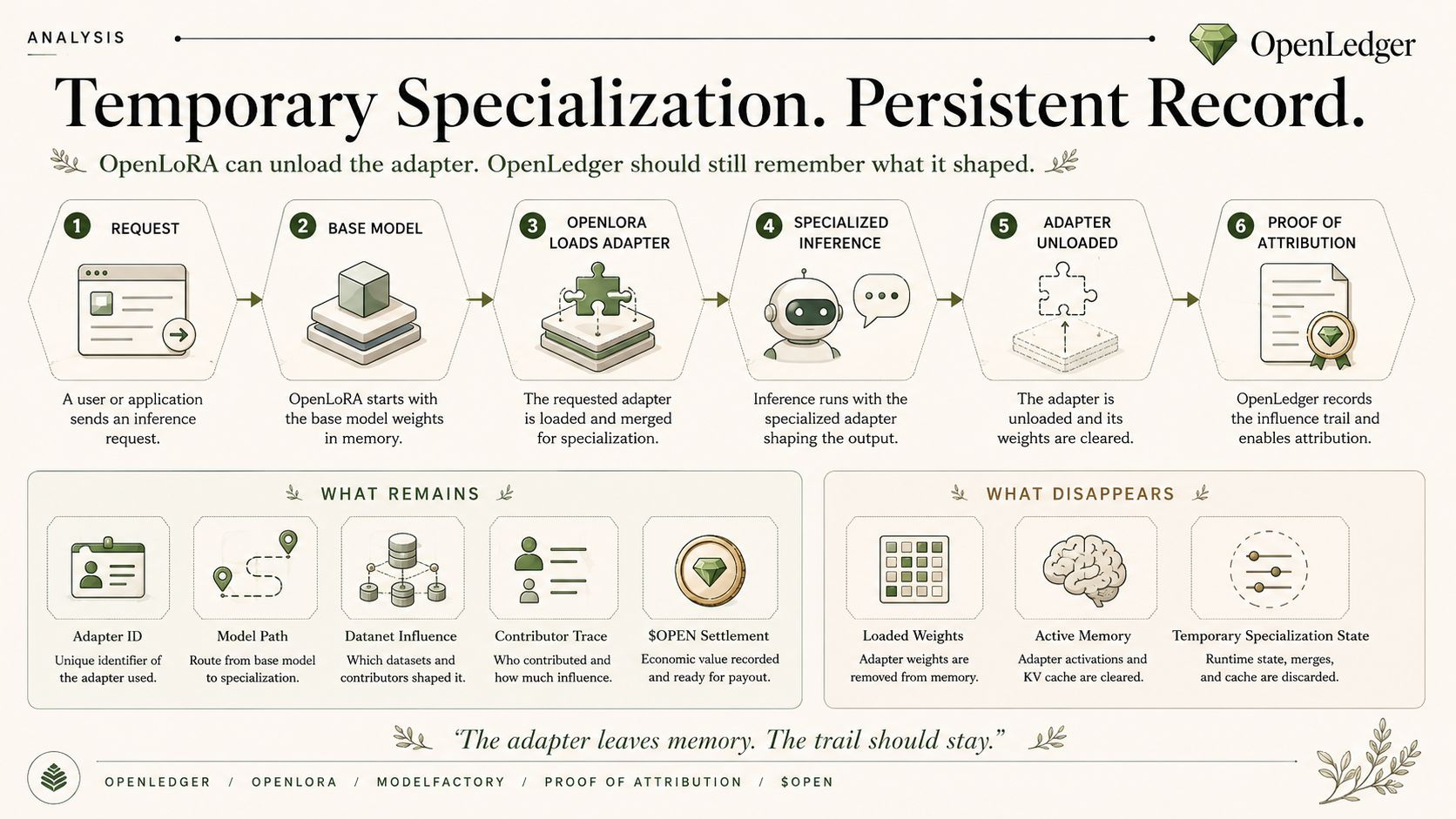
That is where OpenLedger starts to matter in a more serious way. Not as decoration around the system, but as part of the coordination logic holding contribution, validation, governance, and usage together. If OpenLedger wants AI to behave more like an economy than an extraction machine, the token has to live inside that loop.
A lot of AI projects want to prove they can sound intelligent.
OpenLedger is forcing a harder question:
can the architecture behave correctly once intelligence starts earning?
That is the point where AI stops being a demo.
That is the point where it becomes an economy.
And in an economy, the answer is never the whole story.
The payout map matters too.