
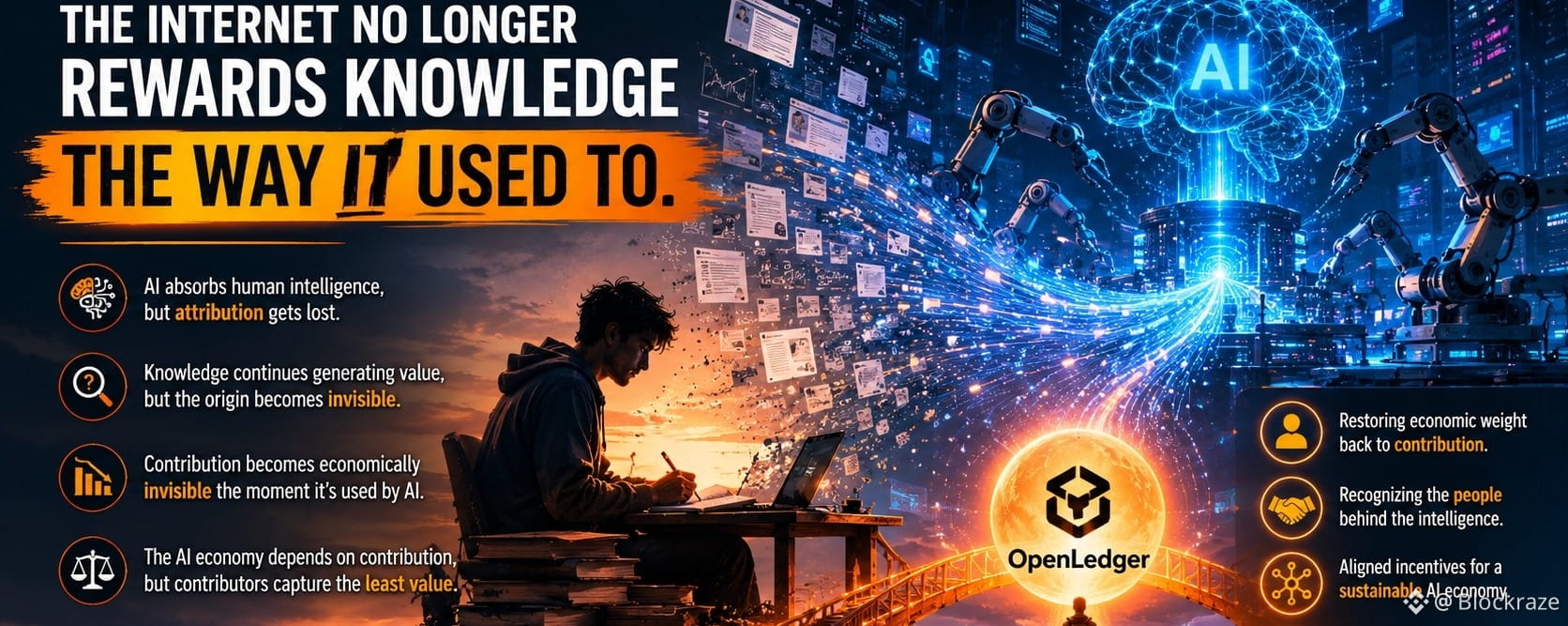
One of the least discussed consequences of AI is that the internet no longer rewards knowledge the way it used to.
For most of the digital era, valuable information and visible information were closely connected. If someone consistently produced useful ideas, research, explanations, or analysis, the internet eventually routed attention back toward them. Visibility became the mechanism through which contribution translated into economic opportunity.
That relationship is beginning to break down.
AI systems now absorb enormous amounts of distributed human intelligence without preserving meaningful attribution to the people who produced it. A niche technical thread, a specialized dataset, years of domain-specific pattern recognition, or an obscure explanation written by someone with no audience can quietly become part of model behavior somewhere downstream. The knowledge continues generating value, but the connection to its origin becomes increasingly difficult to trace.
What makes this important is not simply the question of ownership. It is the question of incentives.
The modern AI economy depends heavily on the continuous production of useful information, yet the individuals contributing that information are often positioned furthest away from the systems capturing its long-term value. In many cases, contribution itself becomes economically invisible the moment it is successfully integrated into machine intelligence.
That creates a structural imbalance that the broader market still seems uncomfortable confronting directly.
This is partly why started standing out in a different way.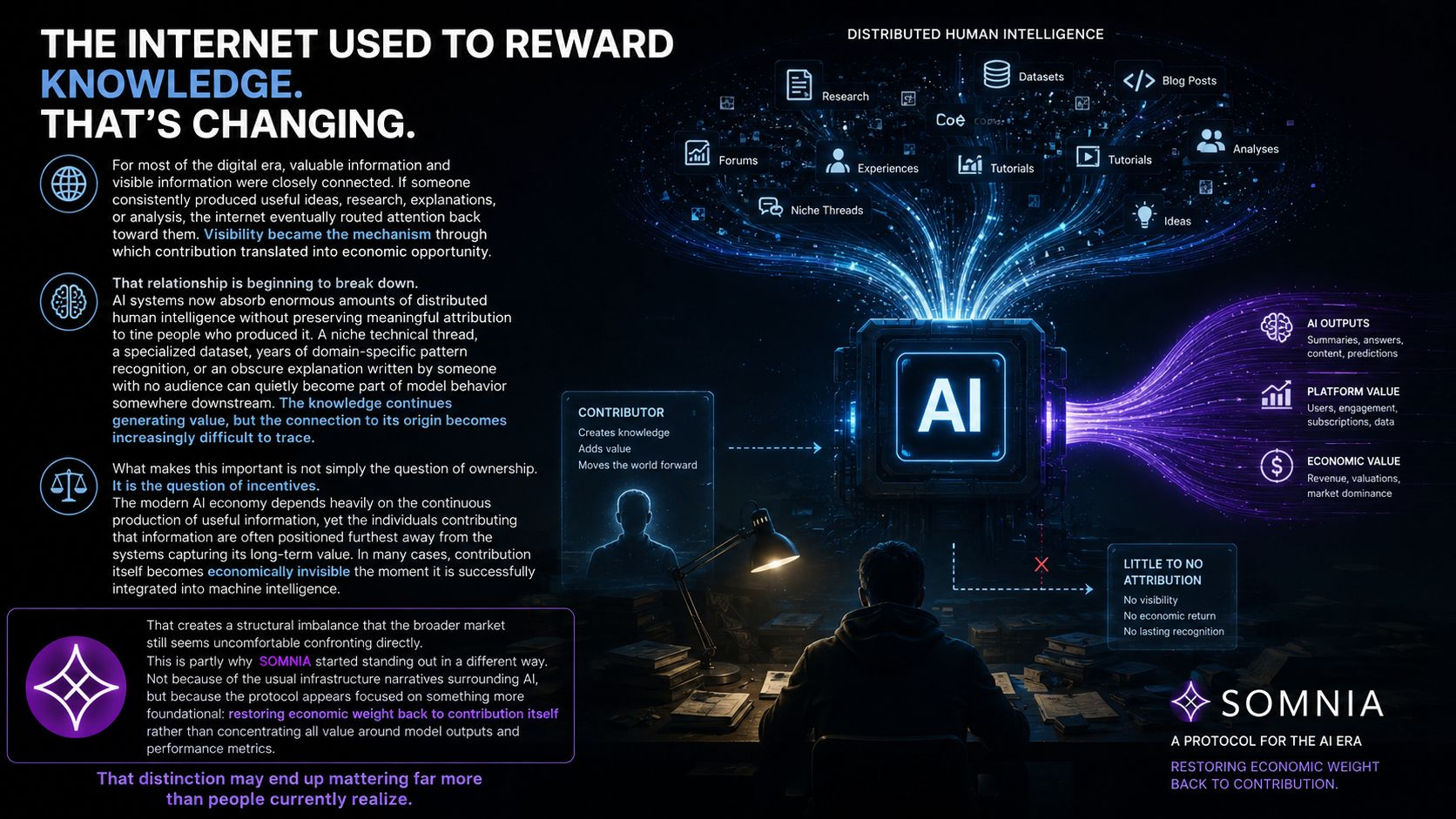
Not because of the usual infrastructure narratives surrounding AI, but because the protocol appears focused on something more foundational: restoring economic weight back to contribution itself rather than concentrating all value around model outputs and performance metrics.
That distinction may end up mattering far more than people currently realize