
The public perception of artificial intelligence within the Web3 sector remains deceptively superficial.

Most casual observers view decentralized machine learning and physical infrastructure networks as mere narrative layers or lightweight features attached to existing applications. The prevailing discourse fixates on user facing chatbots or speculative assets, reducing complex cryptographic networks to visible marketing gimmicks. The intersection of these technologies represents a profound shift toward decentralized compute supply, immutable data validation, and autonomous operational flow that functions far beneath the user interface.

Shifting the focus from front end novelties to structural architecture introduces @OpenLedger, an artificial intelligence native blockchain built explicitly to manage the lifecycle of data, fine-tuned models, and autonomous entities. Rather than operating as a general-purpose ledger, this infrastructure is engineered around persistent node networks and specialized data layers capable of handling heavy machine learning workflows. Through its decentralized data nets and an optimized inference-based framework known as proof of attribution, the network acts as a rigorous coordination layer that tracks precisely how training datasets influence final model outputs.

The stakes of establishing this type of network are uniquely high, separating foundational infrastructure from ephemeral consumer applications. If a standard decentralized application suffers a brief latency spike or localized downtime, the disruption is minor and easily mitigated. For an integrated artificial intelligence economy running trading agents, execution systems, and multi-tenant graphics processing unit structures, systemic reliability and uptime are absolute survival requirements. Opaque data monopolies or corrupted input streams can cause immediate operational collapse, meaning the stability of the underlying data registry must remain completely absolute.
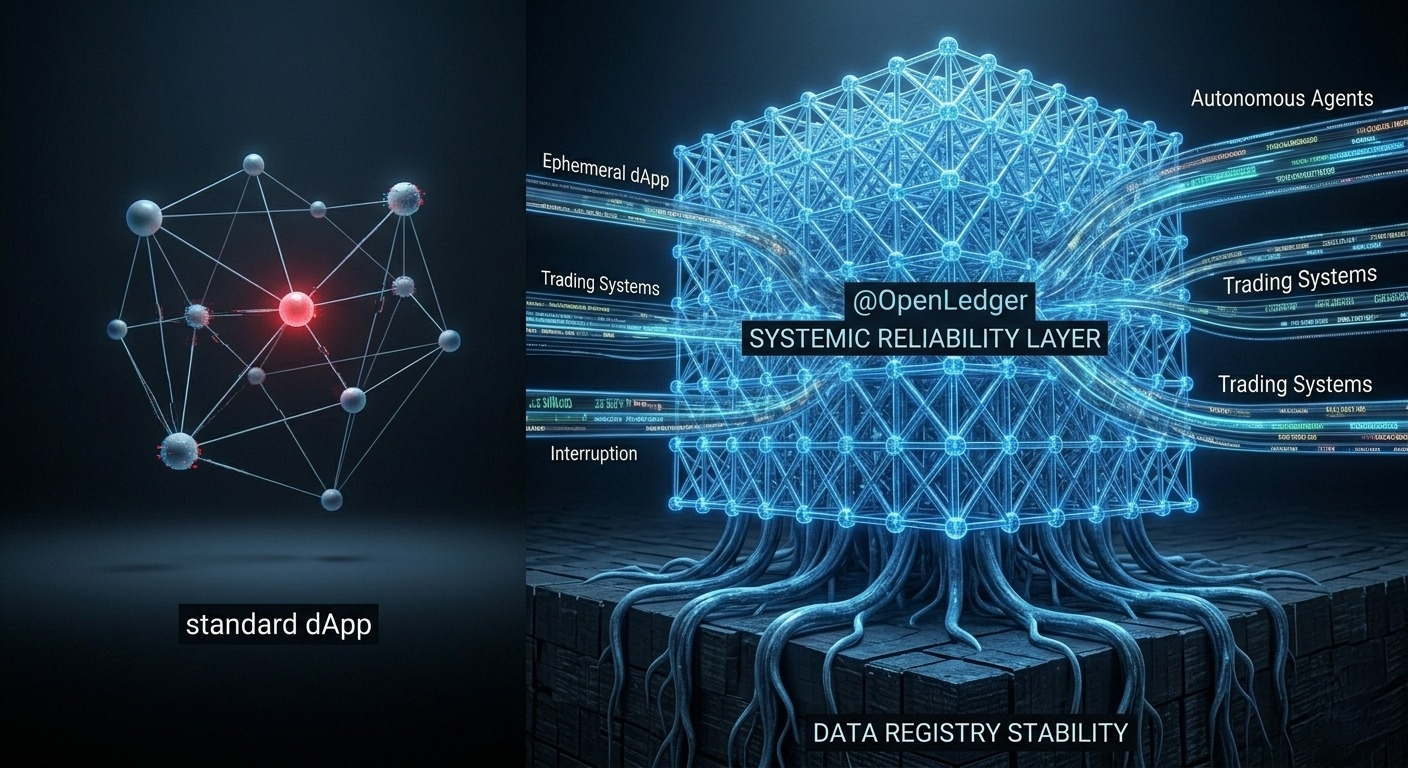
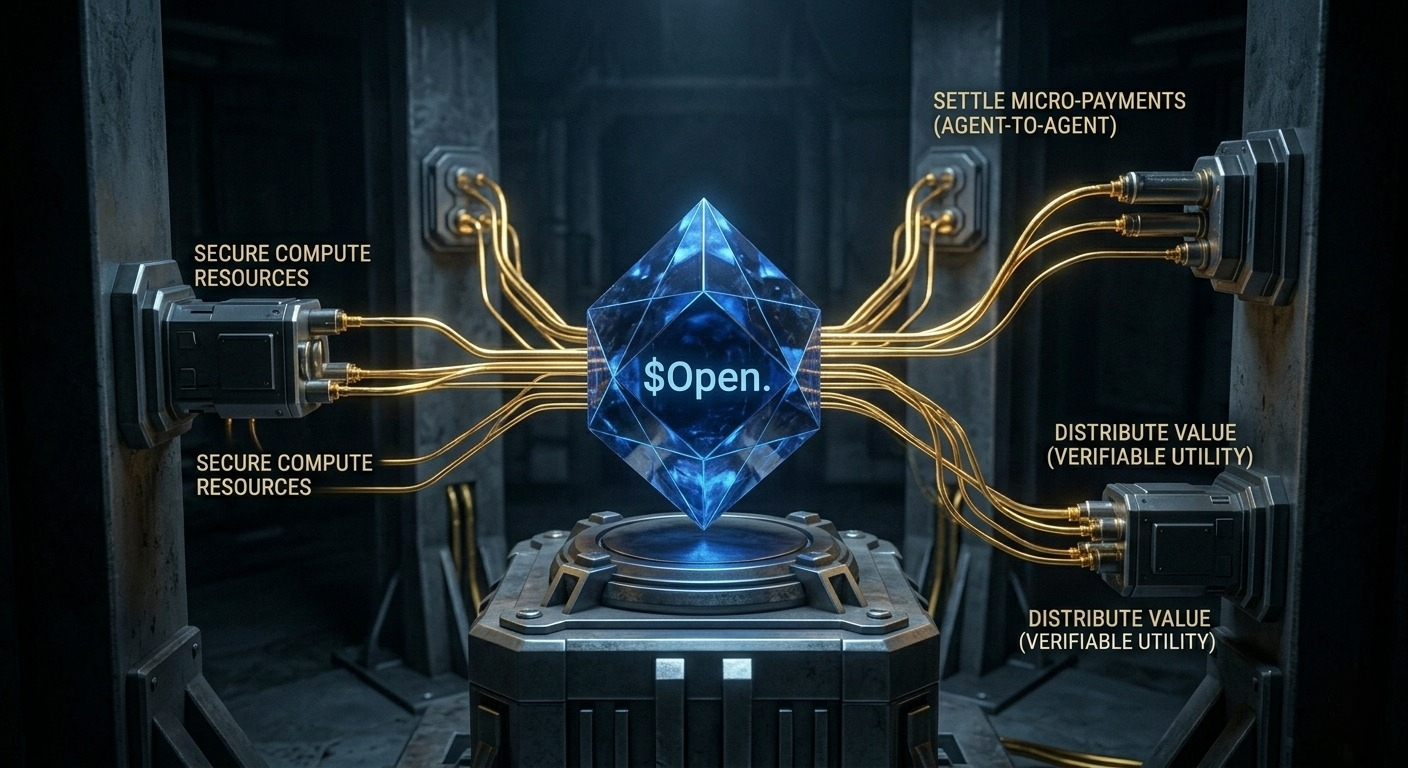
This institutional requirement for stability directly informs the design of the ecosystem token, $Open. Within the network economy, the token transitions from a vehicle for speculative capital into the primary economic settlement layer required for user-owned machine ecosystems. It is utilized to secure compute resources, settle micro-payments between independent autonomous agents, and distribute value to data contributors based on mathematically verifiable utility. As these workflows automate, the asset becomes an embedded utility mechanism powering a deep, structural backbone rather than a superficial speculative token.
A fundamental macroeconomic transition is occurring without the fanfare typically associated with retail market cycles. While mainstream attention remains occupied with short-term sentiment shifts and surface level trends, the underlying mechanics of machine-to-machine commerce are being steadily deployed. The construction of verifiable data pipelines and autonomous coordination layers represents the actual maturity phase of the decentralized technology stack. This critical infrastructure layer is being established quietly and methodically by those looking at systemic value rather than passing noise.