
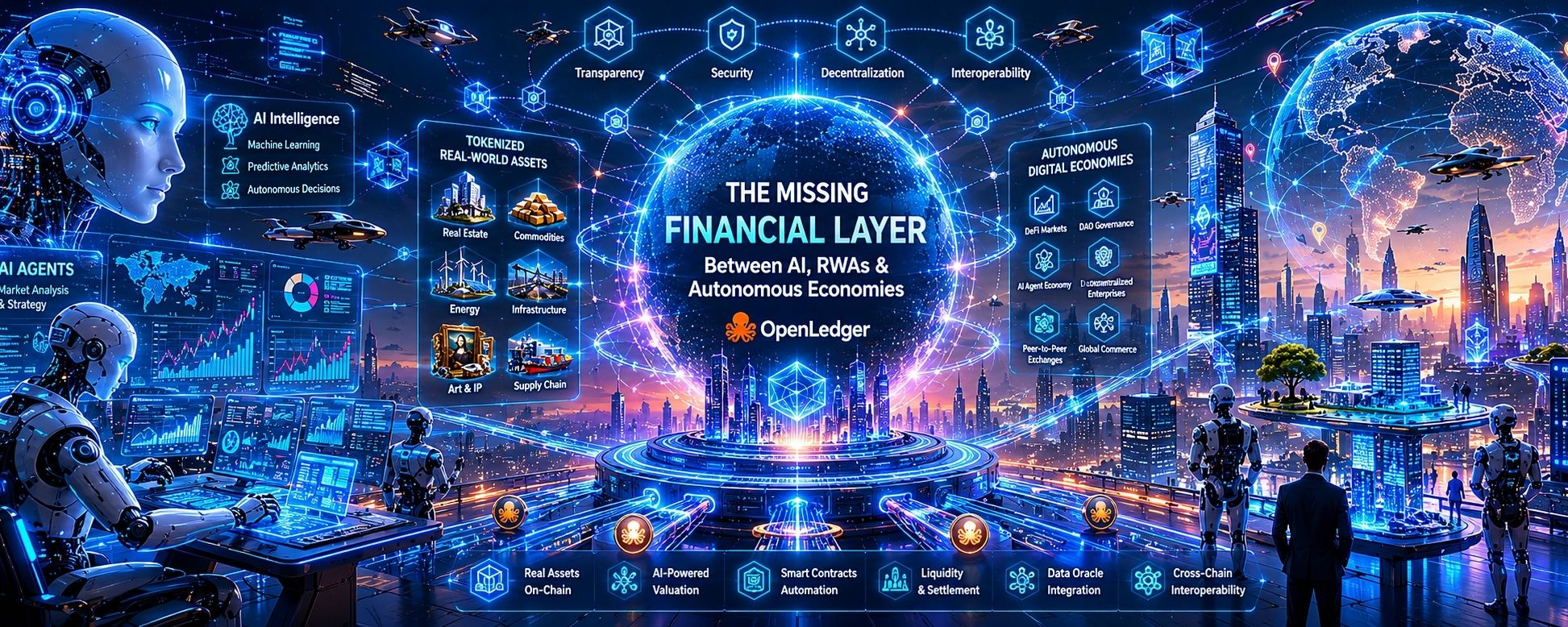
The Next Internet Won’t Be Built for Humans Alone
The internet is quietly evolving into something humanity has never experienced before.
Not just social networks. Not just blockchains. Not just AI.
But autonomous economies.
A world where AI agents negotiate deals, manage capital, optimize supply chains, purchase services, tokenize physical assets, and interact with decentralized infrastructure — without waiting for human approval every second.
The technology already exists in fragments.
Artificial Intelligence is becoming capable of reasoning. Real World Assets (RWAs) are bringing trillions of dollars on-chain. Blockchains are creating permissionless financial rails.
Yet despite all this progress, one critical layer is still missing.
A financial coordination layer powerful enough to connect AI systems, tokenized real-world assets, and autonomous economic activity into a single operational economy.
That missing layer may become the most important infrastructure opportunity of the next decade.
And most people still don’t realize it.
AI Is No Longer Just a Tool — It’s Becoming an Economic Actor
For years, AI was treated like software.
A chatbot. An assistant. An automation tool.
But that narrative is rapidly collapsing.
Modern AI systems are evolving into autonomous decision-making entities capable of:
• Managing portfolios
• Executing financial strategies
• Running businesses
• Optimizing logistics
• Trading data
• Purchasing compute resources
• Coordinating digital labor
• Generating revenue streams
The moment AI begins interacting with value, finance becomes unavoidable.
And this creates a massive infrastructure problem.
Traditional financial systems were built for humans.
Banks require identities. Governments require jurisdiction. Payment rails require permission. Cross-border settlements are slow. Ownership structures are fragmented.
Autonomous AI economies cannot scale on legacy infrastructure.
AI agents need:
• Programmable capital
• Real-time settlement
• Permissionless liquidity
• Trustless coordination
• Transparent ownership
• Machine-native financial rails
Without this, autonomous economies remain trapped inside centralized systems.
This is where the next evolution begins.
RWAs Are Unlocking the Largest Liquidity Migration in History
The tokenization of Real World Assets is not just another crypto narrative.
It may become one of the largest financial transformations ever witnessed.
Real estate. Treasury bills. Energy infrastructure. Commodities. Private credit. Intellectual property. Revenue streams.
Everything is moving on-chain.
The reason is simple.
Tokenization transforms traditionally illiquid assets into programmable financial primitives.
RWAs enable:
• Fractional ownership
• Global liquidity access
• 24/7 settlement
• Transparent verification
• Automated yield distribution
• Composable financial products
But there is an even bigger implication most analysts ignore.
Once RWAs become programmable, they can interact directly with AI systems.
Imagine AI agents:
• Managing tokenized real estate portfolios
• Optimizing energy grids tied to tokenized infrastructure
• Automatically reallocating treasury exposure
• Trading carbon credit markets in real time
• Financing machine economies using tokenized yield-bearing assets
This creates an entirely new financial architecture.
Not human-first. Machine-first.
And the current internet is not prepared for it.
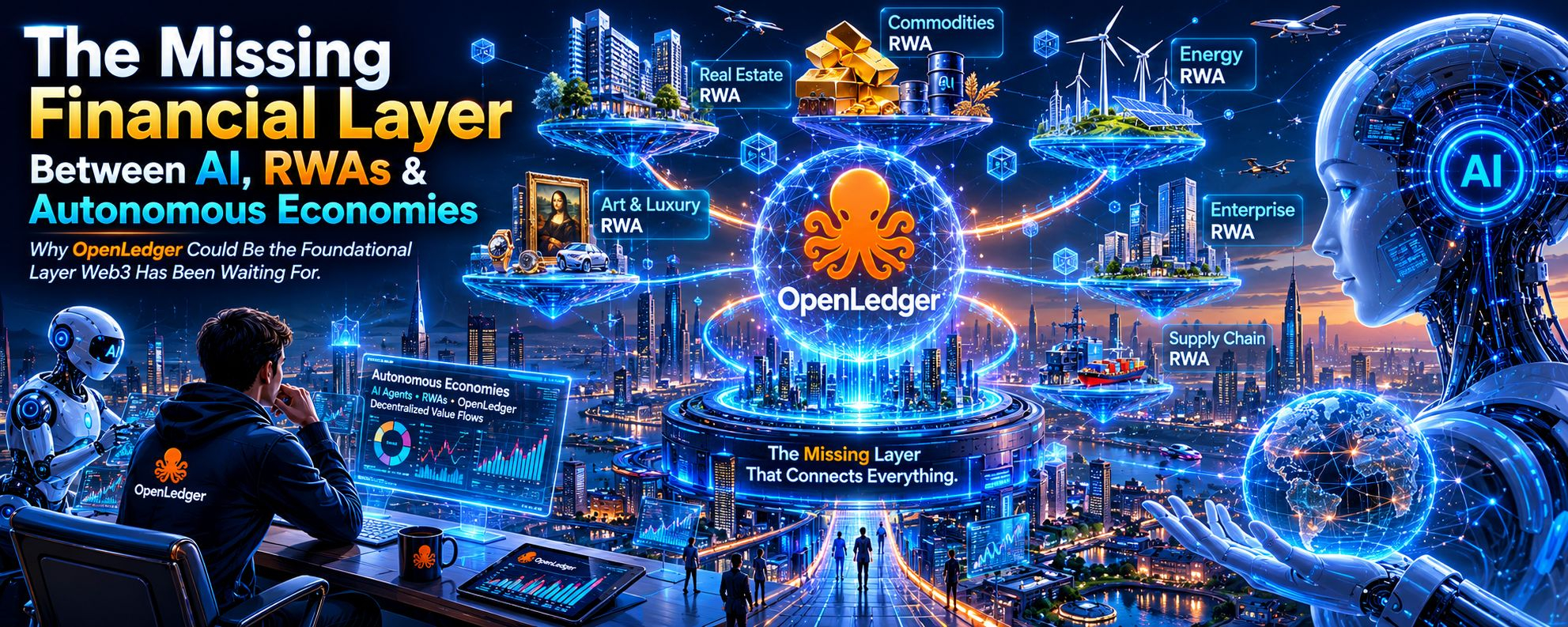
The Real Problem Isn’t AI or RWAs — It’s Coordination
The crypto industry often focuses too much on isolated innovation.
One protocol solves payments. Another solves identity. Another builds AI infrastructure. Another tokenizes assets.
But autonomous economies require coordination across all layers simultaneously.
That coordination layer is missing.
Today’s ecosystem suffers from:
• Fragmented liquidity
• Disconnected data systems
• Incompatible infrastructures
• Centralized AI dependencies
• Inefficient verification systems
• Weak interoperability
• Limited machine-to-machine finance
As AI systems become economically active, these inefficiencies become catastrophic bottlenecks.
The future economy cannot rely on manual financial coordination.
It requires infrastructure where:
• AI can verify ownership
• RWAs can provide machine-accessible liquidity
• Smart contracts can automate economic logic
• Data can be validated transparently
• Autonomous agents can transact globally
• Economic incentives align automatically
This is the layer most people are failing to see.
The missing financial operating system between intelligence, assets, and autonomous coordination.
Why Open Infrastructure Matters More Than Ever
One of the greatest risks facing the AI economy is centralization.
If a handful of corporations control:
• AI models
• Data pipelines
• Financial rails
• Asset ownership
• Compute infrastructure
Then the future economy becomes programmable — but not permissionless.
That completely contradicts the original promise of Web3.
Open infrastructure changes this equation.
Decentralized financial coordination enables:
• Open participation
• Transparent incentive systems
• Borderless economic access
• Shared ownership structures
• Verifiable data integrity
• Community-driven innovation
This is why the intersection of AI + RWAs + decentralized coordination matters.
Because whoever builds this layer does not simply build another crypto project.
They help define the architecture of the autonomous internet.
And that infrastructure may eventually support:
• AI-native corporations
• Machine-managed investment funds
• Autonomous supply chains
• Decentralized energy economies
• Self-operating marketplaces
• Tokenized global productivity networks
We are no longer talking about speculative technology.
We are talking about economic evolution.
Autonomous Economies Will Need Trustless Financial Intelligence
Most discussions around AI focus on intelligence.
But intelligence alone is not enough.
An autonomous economy also requires:
• Capital allocation
• Risk management
• Identity verification
• Data reliability
• Incentive alignment
• Settlement infrastructure
• Governance coordination
In traditional systems, humans perform these functions.
But autonomous economies cannot scale if every decision requires human intervention.
This is where decentralized financial intelligence becomes critical.
The next generation of infrastructure must enable AI systems to:
• Evaluate asset quality
• Access verified on-chain data
• Coordinate liquidity autonomously
• Interact with tokenized financial instruments
• Execute programmable financial strategies
• Participate in decentralized governance systems
This fundamentally changes how economies operate.
Instead of centralized institutions coordinating global markets, intelligent decentralized systems begin coordinating themselves.
That transition could become as significant as the birth of the internet itself.
The Most Valuable Layer May Be Invisible
Historically, the most valuable technology layers were often invisible to the average person.
People used the internet without understanding TCP/IP. People used smartphones without understanding operating systems. People use cloud applications without seeing data centers.
The same pattern is emerging now.
The next trillion-dollar layer may not be a consumer app.
It may be the invisible financial coordination infrastructure connecting:
• AI systems
• RWAs
• Smart contracts
• Data verification
• Autonomous agents
• Decentralized liquidity
The protocols building this infrastructure today are not simply participating in the AI revolution.
They are building the economic rails beneath it.
And once these rails mature, autonomous economies may scale faster than most governments, corporations, or financial institutions can adapt.
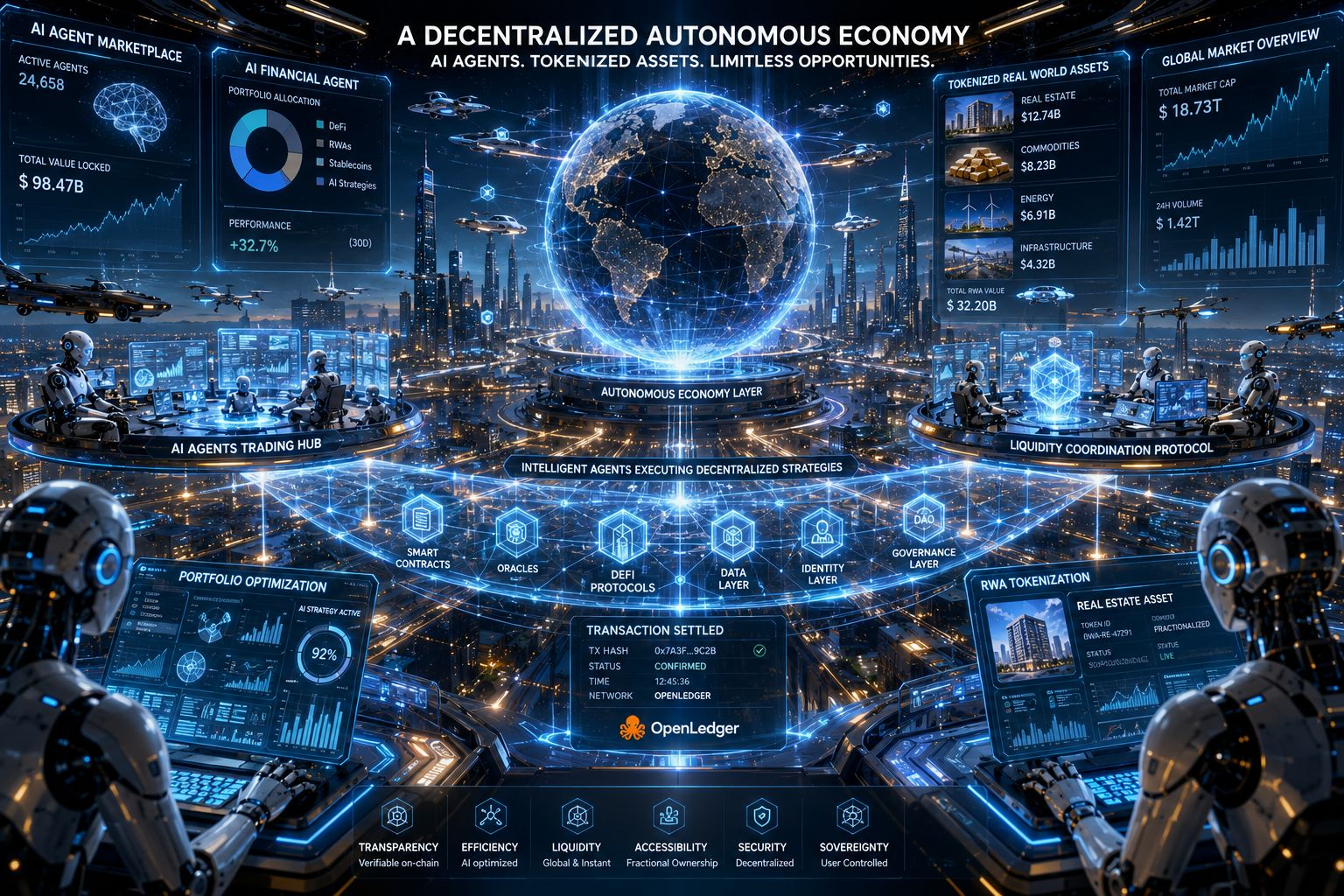
Conclusion: The Next Financial Revolution Will Be Machine-Native
Crypto was never just about digital currency.
AI was never just about automation.
RWAs are not simply another investment narrative.
Together, they represent the foundation of an entirely new economic architecture.
But without a financial coordination layer connecting them, the system remains incomplete.
The future autonomous economy requires infrastructure where intelligence, ownership, liquidity, and trust can operate seamlessly together.
That is the missing layer.
And the projects solving this problem today may ultimately become the foundational infrastructure powering the next era of the internet.
The transition has already started.
The only real question is:
Who will build the financial operating system for autonomous economies before the rest of the world realizes it is needed?
The convergence of AI, RWAs, and decentralized infrastructure is creating a new economic paradigm.
The next wave of innovation will not come from isolated technologies — but from the financial layer that connects them all.
Builders focusing on open, autonomous, and machine-native economies today are positioning themselves at the center of the next internet revolution.


