
There’s a strange kind of numbness that settles in after enough years inside crypto. You stop reacting to announcements. Stop chasing every new infrastructure layer pretending to redefine the internet. Eventually everything starts sounding familiar, even when the wording changes. AI today. Modular yesterday. Metaverse before that. Different vocabulary wrapped around the same hunt for liquidity.
That’s probably why OpenLedger stayed in my head longer than I expected.
Not because it looked explosive. Honestly, projects that arrive looking explosive usually disappear the fastest. They burn through attention before they even discover what they actually are. OpenLedger feels slower than that. More deliberate. Almost uncomfortable with marketing itself too aggressively. I noticed that immediately.
The idea behind it is easy enough to repeat. An AI blockchain focused on monetizing data, models, and autonomous agents. On paper, it sounds exactly like the kind of narrative cocktail crypto loves to inflate beyond recognition. The market hears “AI” and suddenly every whitepaper becomes prophetic. Every dashboard starts pretending it’s building the future of intelligence itself.
Most of it is noise.
And after watching several cycles collapse under their own storytelling, I’ve learned to pay closer attention to the projects that seem aware of how fragile narratives really are.
OpenLedger doesn’t feel naive about infrastructure. That’s important. A lot of teams build systems as if technical elegance alone creates adoption. It doesn’t. Users abandon products for reasons engineers barely notice. A confusing interface. Slight delays. Too many signatures. Invisible friction compounds fast. Nobody cares how decentralized something is if the centralized version already works without effort.
Crypto still refuses to fully understand that.
What makes OpenLedger interesting isn’t the promise. It’s the tension underneath the promise. There’s an attempt here to build economic rails around AI assets before the market fully understands whether those rails are necessary at all. Data liquidity. Model ownership. Agent coordination. These are real ideas. Potentially important ones too. But importance and adoption have never moved together consistently.
That disconnect kills more projects than bad technology ever does.
I keep thinking about how many systems in crypto were technically brilliant and economically irrelevant. Entire ecosystems built with precision that nobody truly needed. People here often mistake theoretical value for lived demand. They assume because a mechanism sounds inevitable, the market will eventually organize itself around it.
Reality is colder than that.
Most people choose convenience every single time. They choose familiarity. They choose speed. Even when it contradicts their own principles. Especially then.
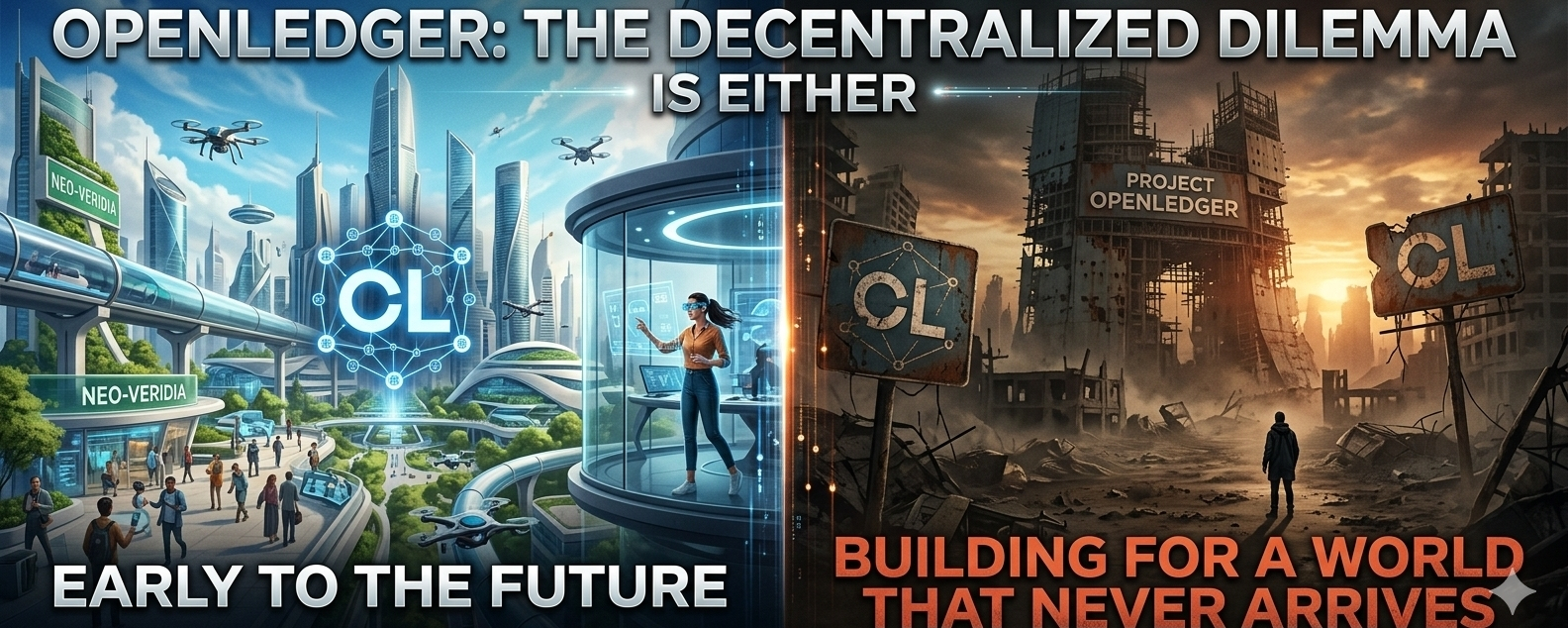
So when I look at OpenLedger, I don’t really see certainty. I see a project trying to prepare for a future that may arrive unevenly. Maybe autonomous AI agents eventually become economically active enough to require decentralized coordination layers. Maybe ownership of training data becomes politically and financially critical. Maybe centralized AI platforms become so dominant that open infrastructure starts feeling necessary rather than ideological.
Or maybe none of that happens at scale.
That possibility matters too.
There’s a temptation in crypto to speak about the future as if it already exists. People describe hypothetical ecosystems with this strange confidence, as though diagrams themselves create reality. But real adoption is messy. Users behave irrationally. Markets move toward simplification, not complexity. The better system often loses.
OpenLedger seems built by people who understand systems deeply. I respect that. But understanding systems and understanding timing are completely different skills. History keeps proving that.
Some of the most thoughtful projects I’ve seen over the years ended up trapped in this awkward space where builders admired them but nobody else cared enough to stay. They became references instead of movements. Quietly respected. Financially dead.
I could see OpenLedger drifting into that territory if the broader AI economy develops differently than expected. The project feels dependent on behaviors that still don’t exist naturally yet. That’s always dangerous. Infrastructure built ahead of demand usually spends years waiting for reality to catch up.
Sometimes it never does.
Still, there’s something honest about the way OpenLedger presents itself. Less performance. Less desperation for immediate validation. It doesn’t scream certainty the way weaker projects usually do. And after enough years around crypto, I’ve started trusting restraint more than ambition.
The loudest projects rarely survive long enough to become important.
But silence isn’t proof either.
That’s the uncomfortable thing about all of this. Good design can still fail. Intelligent architecture can still disappear beneath market indifference. Sometimes the world simply doesn’t need what you built badly enough to change its habits for it.
And I honestly can’t tell yet whether OpenLedger is early to something real or carefully constructing infrastructure around a future that only exists inside crypto conversations.
