


A few years ago people used to talk about data like oil. I remember hearing that comparison everywhere. Conferences, startup decks, investor calls. The more you controlled, the stronger you became. Nobody really questioned it because, honestly, the logic worked for a while. The companies collecting the most behavioral information usually built the most powerful recommendation systems, the strongest ad networks, the smartest machine learning pipelines.
But lately I keep getting the feeling that the AI market is drifting into a very different phase, and strangely, most conversations still sound stuck in the old one.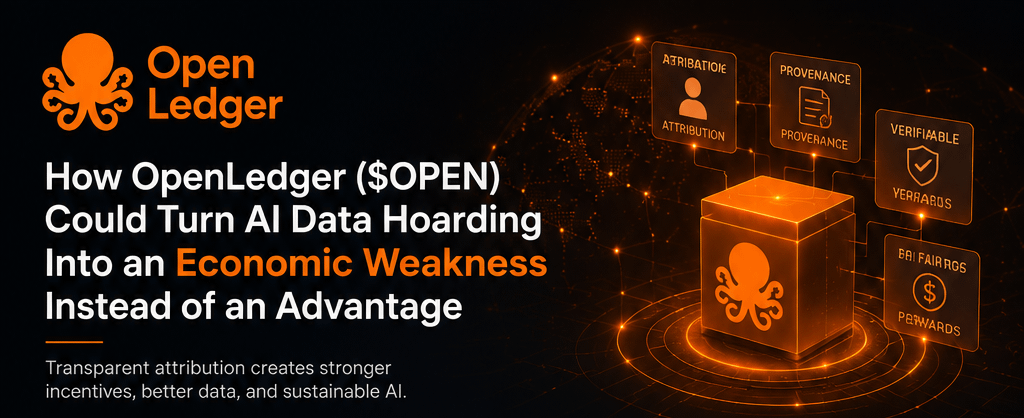
Everyone keeps obsessing over model size. Compute. Inference speed. Which company raised another billion dollars to train another giant black box. Meanwhile the uncomfortable part keeps growing quietly underneath everything: nobody really knows where half this intelligence is coming from anymore. And maybe even worse, nobody knows who is responsible once these systems start making expensive mistakes.
That tension feels small until real money touches it.
A chatbot giving a bad movie recommendation is irrelevant. An AI system influencing insurance approvals, medical workflows, trading infrastructure, legal review, or autonomous financial agents is different. Suddenly provenance matters. Audit trails matter. Ownership matters. The market keeps pretending intelligence alone is the product when increasingly it feels like traceability is becoming the product too.
That is partly why OpenLedger caught my attention. Not because it promises “decentralized AI,” honestly I think that phrase is already becoming meaningless from overuse. Every second project now claims to be building decentralized intelligence infrastructure. Most are just repackaging compute marketplaces with AI branding attached to them.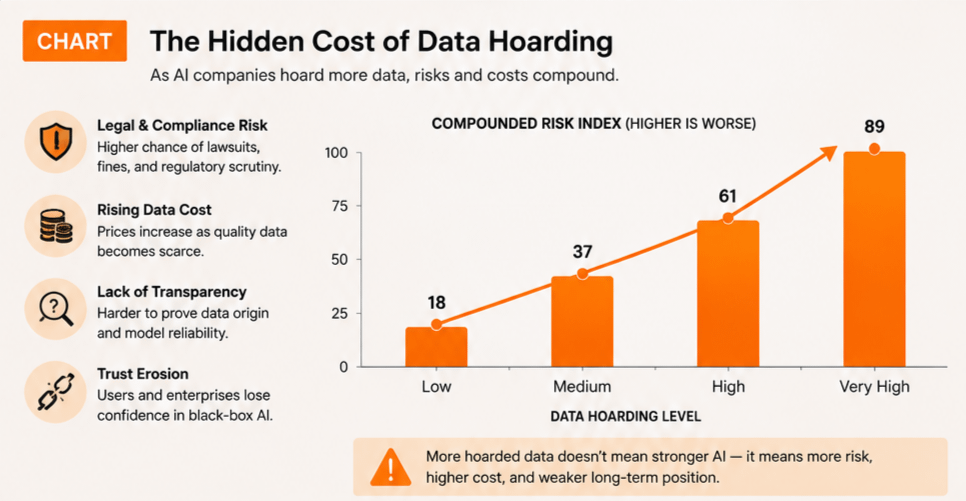
OpenLedger feels more focused on something narrower and probably more uncomfortable for the industry. Attribution.
Not just generating outputs. Tracking where intelligence actually came from.
The difference sounds subtle at first. It is not.
Right now the AI economy behaves a little like a giant extraction machine. Data goes in. Models absorb it. Outputs come out. The contributors underneath the process disappear almost immediately. Writers, researchers, niche experts, domain specialists, small communities… they become invisible once their information gets compressed into training weights. The system remembers the knowledge but forgets the source.
That forgetting process is where I think the market may be misunderstanding the long-term problem.
Because hidden data pipelines look efficient right up until regulation, legal pressure, or trust failures start entering the room. Then suddenly opacity stops looking powerful and starts looking fragile. You can already feel hints of this happening. Lawsuits over copyrighted material. Enterprise concerns around compliance exposure. Questions around synthetic training loops where AI models start feeding off AI-generated material until quality slowly degrades in ways nobody notices immediately.
It reminds me a little of old financial infrastructure before reporting requirements tightened globally. For years opacity generated profit because hidden complexity allowed institutions to move faster than oversight systems. Then eventually transparency itself became economically valuable. Not morally valuable. Economically valuable. Huge difference.
I think AI may be walking toward a similar wall.
OpenLedger’s idea around Datanets becomes interesting inside that context. Instead of treating data like a one-time extractive resource, the system tries to preserve contribution lineage across the lifecycle of AI usage. Meaning contributors are not necessarily paid once and forgotten forever. Their influence can remain economically visible if the network continues using that information downstream.
I actually think that changes behavior more than people realize.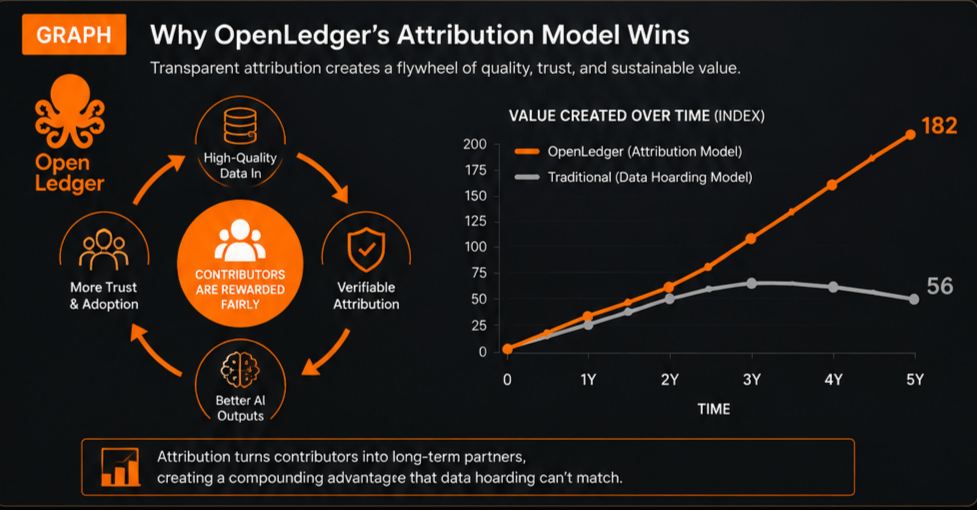
Most AI systems today reward accumulation. Gather more data. Store more data. Hide more data. But attribution-based systems create incentives around maintaining clean, verifiable, high-quality contribution histories instead. Those are very different economic cultures. One optimizes for possession. The other optimizes for trusted participation.
And honestly, trusted participation might scale better in the next phase of AI than raw hoarding does.
Especially once enterprises fully enter the market.
A hospital cannot just plug critical workflows into a black-box intelligence engine sourced from unverifiable internet sludge. Neither can financial institutions forever. At some point somebody asks uncomfortable questions. Where did this recommendation originate? Which datasets shaped this output? Who approved the training pipeline? Can we audit the decision path? Suddenly the hidden architecture underneath AI becomes operational risk, not just technical architecture.
People underestimate how fast institutions become conservative once liability appears.
Still, I do not think OpenLedger magically solves this overnight. Some parts actually look extremely difficult. Attribution systems sound elegant conceptually, but maintaining honest contribution tracking at scale is messy. Reward systems attract manipulation naturally. Low-quality contributors flood incentives. Coordinated farming appears. Reputation systems get gamed. Crypto history already showed this pattern repeatedly.
And there is another uncomfortable issue here that nobody really likes discussing openly: many companies do not actually want transparency even if transparency improves trust. They want control. Those are not always the same thing.
That friction matters.
Because OpenLedger is indirectly challenging one of the biggest assumptions inside modern AI economics where that secrecy automatically compounds competitive advantage forever. I am no longer convinced that remains true once AI starts integrating deeper into regulated systems where accountability becomes unavoidable.
Maybe the future advantage is not the company hiding the most information.
Maybe it is the system capable of proving where intelligence came from without collapsing operationally in the process.
That feels like a very different market than the one most people still think they are trading.