
I used to think AI competition would eventually become simple.
Not easy exactly, but predictable.
The strongest models would win. Better reasoning, faster outputs, cleaner multimodal behavior, stronger memory systems, lower inference costs. Every discussion seemed to orbit around the same assumption that
intelligence itself was the final product. The model that solved more problems with fewer mistakes would naturally dominate everything around it.
But recently I started feeling like that framing misses something important.
Because the moment AI systems begin making decisions that move through other systems, intelligence alone stops being enough.
What matters then is not only whether the answer sounds correct.
It matters whether the decision can survive after it leaves the environment that created it.
And I think that changes the entire architecture of competition.
Most AI systems today operate like compressed surfaces. You ask something, the model responds, and the interaction ends there. The output arrives polished enough that people rarely pause to inspect the invisible layers underneath it.
Retrieval chains, filtered context windows, reinforcement pressure, ranking objectives, hidden edits, prior conditioning, synthetic refinements. All of that collapses into one stable-looking response.
The answer feels singular even when the production path was fragmented.
That part keeps bothering me.
Because downstream systems do not treat those outputs casually anymore. Search engines rank them. Recommendation systems distribute them.
Hiring tools evaluate them. Financial models react to them. Social platforms amplify or suppress them. Other AI systems train on them again.
The output does not disappear once it is generated.
It enters circulation.
And once AI generated decisions begin circulating through environments that carry economic or social consequence,
accountability stops behaving like an ethical bonus feature. It starts behaving like infrastructure.
That difference sounds subtle until you sit with it for a while.
I think a lot of people still imagine accountability as a public relations layer around AI. Attribution systems.
Transparency dashboards. Optional citations. Something companies add later to appear responsible once the core intelligence problem is solved.
But I’m starting to think accountability becomes important for a completely different reason.
Systems eventually need replayability.
Not because humans are morally perfect, but because institutions become unstable when decisions cannot preserve enough evidence continuity after they spread across environments.
A recommendation affects visibility.
Visibility affects opportunity.
Opportunity affects money.
Money affects power.
By the time anyone tries tracing the original reasoning path backward, most of the earlier context has already disappeared.
“The visible output survives. The earlier conditions collapse.”
That line has been sitting in my head for days.
Especially when I think about AI-generated content ecosystems where everything increasingly depends on ranking systems deciding what deserves attention.
Freshness. Relevance. Influence. Credibility. Originality.
The strange thing is that these systems rarely evaluate truth directly.
They evaluate legibility.
Can the object move cleanly through the system?
Can it survive scrutiny long enough to remain useful?
Can it preserve enough structural credibility that downstream environments continue accepting it?
Those pressures feel small right now because most AI outputs are still treated like disposable interactions. People ask questions, receive responses, move on. But once AI systems begin operating inside legal infrastructure, financial coordination, education systems,
autonomous agents, healthcare tooling, institutional search layers, and creator economies, disposable logic starts breaking apart.
The answer is no longer the endpoint.
It becomes emitted state.
And emitted state accumulates consequence whether the originating model remembers its reasoning path or not.
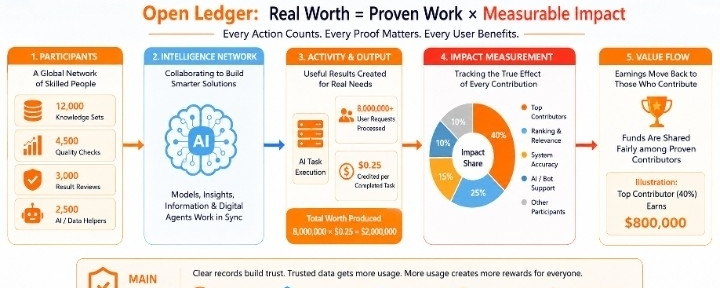
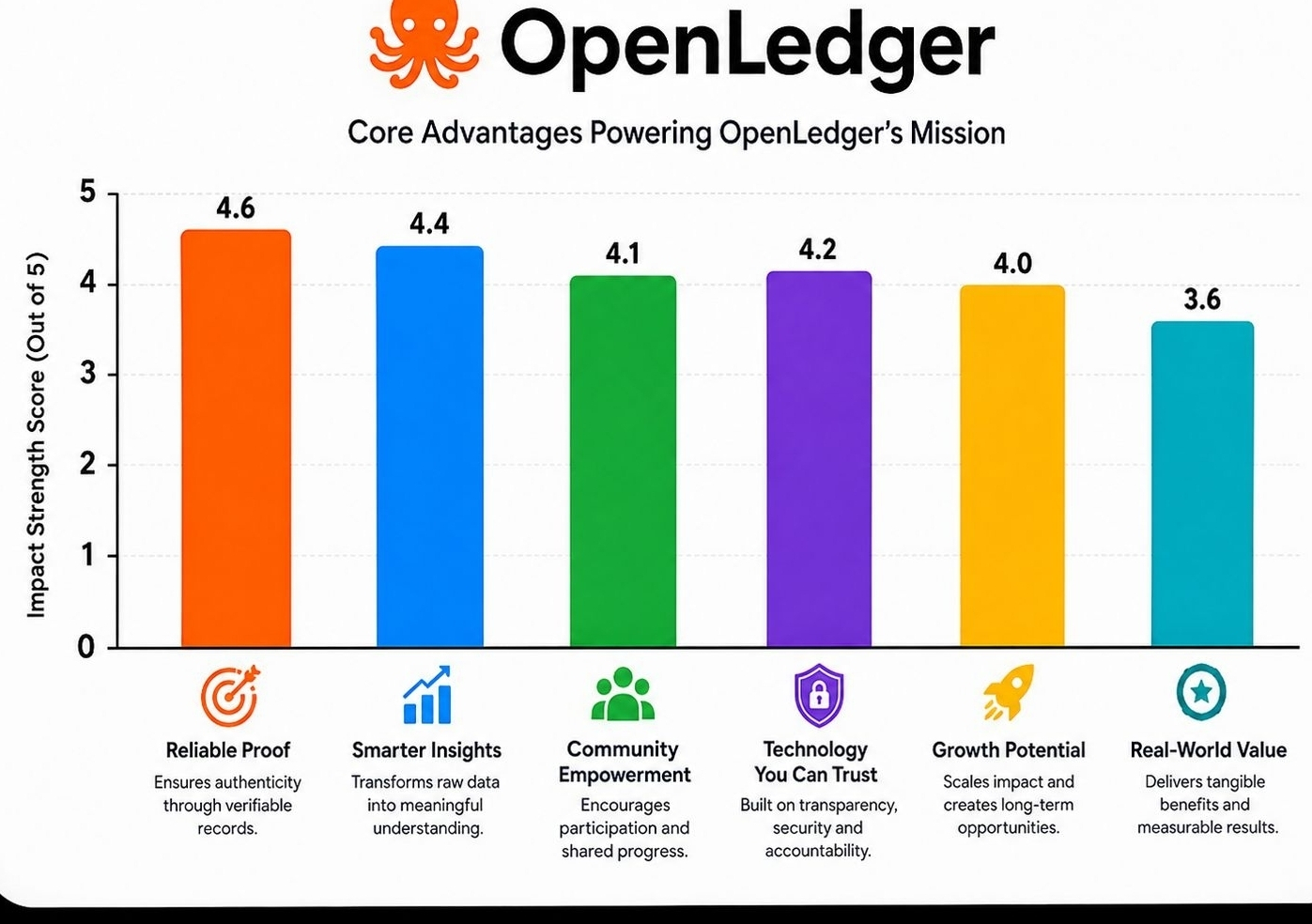
That is probably why I keep paying attention to projects like OpenLedger.
Not because they are promising some magical superintelligence breakthrough. Honestly, I think most AI companies already understand that raw generation quality will continue converging over time.
Faster models arrive every month. Better interfaces become normalized quickly. Intelligence itself eventually becomes harder to differentiate cleanly.
But preserved accountability remains structurally difficult.
Context is expensive to retain.
Lineage is messy.
Influence paths are politically uncomfortable.
Replayability slows systems optimized for speed.
And modern AI ecosystems are heavily optimized for speed.
That tension feels more important than people realize.
Intelligence scales through compression. Accountability scales through retained context. Those are almost opposite instincts architecturally.
One reduces uncertainty into efficient outputs. The other keeps asking what disappeared before the output stabilized.
One rewards fluency.
The other pressures traceability.
I do not think users consciously prioritize accountability most of the time. Convenience usually wins first.
Fast systems dominate behaviorally because humans optimize for friction reduction before consequence arrives. That pattern repeats everywhere in technology.
But infrastructure markets eventually reorganize around failure boundaries.
A financial system eventually cares about settlement history.
A legal system eventually cares about evidentiary chains.
Supply systems eventually care about verification layers.
AI probably reaches the same point once its outputs become too economically important to remain unverifiable.
And maybe that is the hidden transition happening underneath this entire industry right now.
The competition quietly shifts from:
“Which model sounds smartest?”
to something far more uncomfortable:
“Which system can still explain the conditions behind its decisions after the output leaves its own environment?”
That question feels heavier the longer I think about it because most systems cannot answer it fully. They preserve fragments maybe. Metadata. Partial citations.
Confidence theater. Enough to satisfy lightweight validation. But not enough to reconstruct the deeper influence path once downstream systems begin depending on the decision itself.
The object looks stable.
The consequence does not.
And maybe that becomes the real dividing line in AI eventually.
Not intelligence in isolation.
But whether the system leaves behind durable enough evidence continuity that later environments can still trust the decision after it begins moving independently through the world.
Not smarter.
Just harder to disown later.