

OpenLedger (OPEN), an AI Blockchain, unlocking liquidity to monetize data, models, and agents, sounds like one of those ideas that sits right on the edge between genuinely interesting and slightly overconfident.
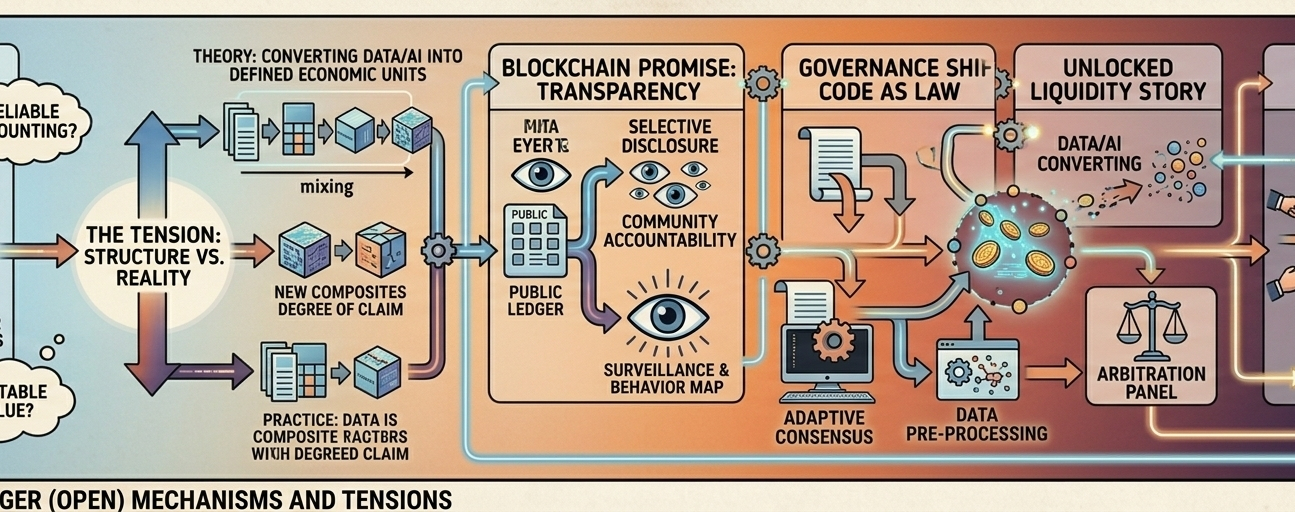
If you strip away the buzzwords for a moment, what it’s really trying to do is treat data and AI models like things you can clearly own, track, and trade. That’s a strong assumption right away. In reality, data is rarely cleanly “owned” in the first place. It’s collected from behavior, shaped by context, mixed with other data, and then baked into models that don’t really remember where anything came from in a neat, traceable way. So the idea of turning all of that into well-defined economic units feels tidy in theory, but messy in practice.
The blockchain angle adds another layer. You get this promise of transparency everything logged, everything verifiable. But transparency isn’t automatically a good thing for everyone. If every interaction with a model or dataset becomes traceable, then you’re not just creating accountability, you’re also creating a kind of map of behavior. And that map is powerful. It can be used for fairness, sure, but it can also become a surveillance tool, especially if power ends up concentrated in whoever is reading the data rather than whoever is producing it.
There’s also this quiet shift that happens when you move governance into code. Rules become fixed in smart contracts, which sounds efficient, but real-world AI questions don’t stay still. What counts as fair use, what deserves compensation, what is “derived work” these things evolve. Once they’re encoded too early, you risk freezing a particular worldview into infrastructure that’s hard to change later. And that’s not just a technical issue, it’s a political one disguised as engineering.
The “liquidity” story is also doing a lot of work. It assumes there’s a large pool of value just sitting there, waiting to be unlocked if we just build the right marketplace. Sometimes that’s true. But sometimes the harder problem isn’t infrastructure it’s that the market itself is unclear, or the value is too diffuse, or the legal and ethical boundaries aren’t settled enough for trading to even make sense yet.
Still, it wouldn’t be fair to dismiss the whole direction. There is a real gap in how AI systems handle attribution. People contribute data, feedback, labeling, expertise and most of that gets absorbed into models without much clarity on return. So the instinct behind OpenLedger is understandable: make contribution visible, make value flow back. The tension is whether making that system explicit through a blockchain actually improves things, or just makes them more rigid and easier to measure than they are to fairly judge.
What it ends up feeling like is less a solution and more a negotiation space. You gain structure, but you also inherit new kinds of friction between openness and exposure, between fairness and control, between innovation and the limits of what can realistically be tracked or priced. And in practice, those tensions don’t go away. They just become part of the system’s daily behavior.