
Most people still talk about AI like the entire competition is only about intelligence.
Smarter models.
Faster inference.
Better reasoning.
Cleaner outputs.
And for a while, I thought the same thing.
The market seemed simple:
Whoever builds the most intelligent system wins.
But the deeper I look at ecosystems like @OpenLedger, the more incomplete that assumption starts feeling.
Because intelligence alone does not solve what happens *after* the output leaves the model.
And I think that’s where the real battle quietly starts.
━━━━━━━━━━━━━━━
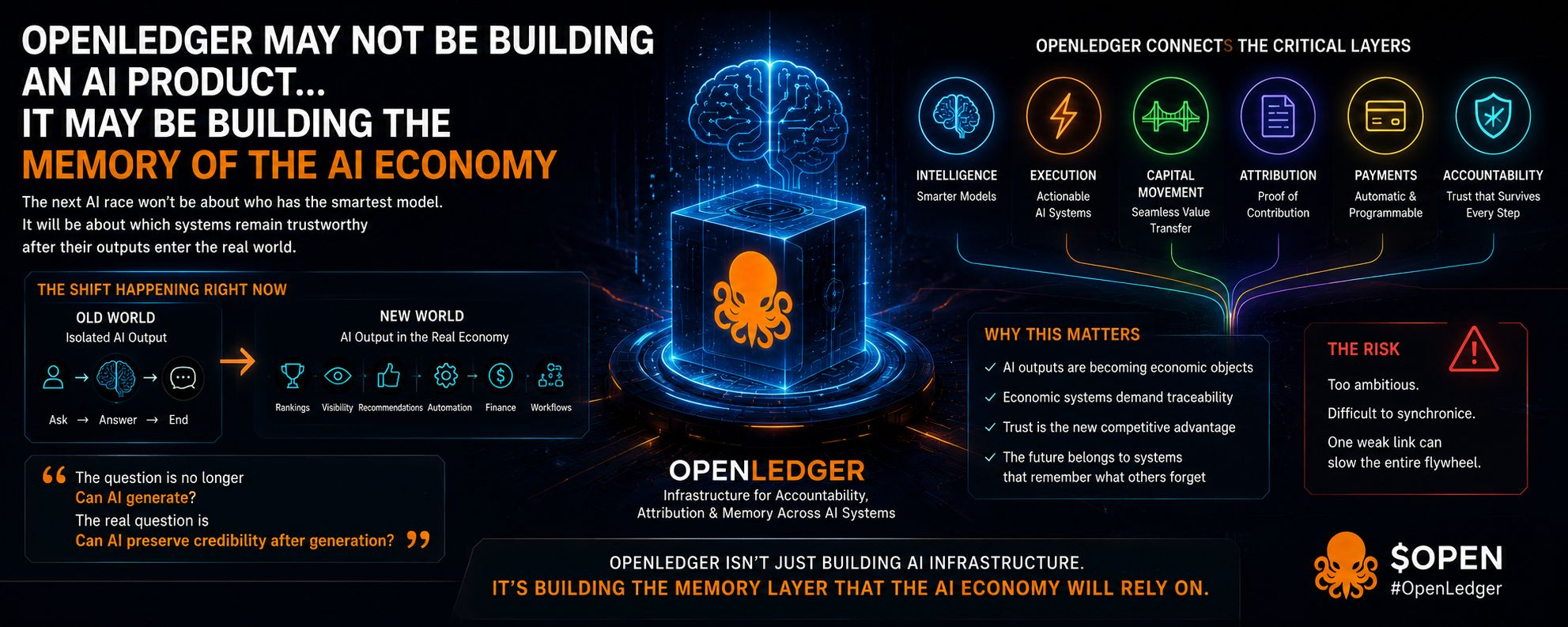
🧠 AI IS NO LONGER STAYING INSIDE ITS OWN BOX
━━━━━━━━━━━━━━━
A few years ago, AI outputs felt temporary.
You asked something.
The model responded.
The interaction ended.
But now AI-generated outputs are moving through entire economic systems.
They influence:
⚡ rankings
⚡ visibility
⚡ recommendations
⚡ creator reach
⚡ automation layers
⚡ financial decisions
⚡ autonomous workflows
And once outputs begin traveling across systems, something changes.
The answer itself is no longer the only thing that matters.
The history behind the answer starts mattering too.
Where did the information originate?
What influenced the output?
Which systems touched it before it became visible?
Can the process be replayed later if trust breaks?
Most current AI environments still behave like black boxes wrapped in smooth interfaces.
The output arrives polished.
But the internal chain behind it often disappears the moment generation is complete.
That works fine while consequences remain small.
But large systems eventually stop trusting invisible processes.
And I think OpenLedger may already be positioning around that shift.
━━━━━━━━━━━━━━━
⚡ THE REAL AI WAR MAY NOT BE ABOUT INTELLIGENCE
━━━━━━━━━━━━━━━
It may be about accountability.
That sounds less exciting at first.
Until you realize how many industries eventually reorganize around trust once scale arrives.
Financial systems care about settlement history.
Legal systems care about evidence chains.
Infrastructure systems care about replayability because downstream consequences always arrive eventually.
AI systems have mostly escaped that pressure because people still treat outputs like disposable interactions.
But that behavior probably changes once AI begins operating inside:
⚡ autonomous agents
⚡ creator economies
⚡ institutional systems
⚡ financial environments
⚡ automated decision layers
At that point, outputs stop behaving like temporary responses.
They become economic objects moving between systems.
And economic systems eventually demand traceability.
That’s the part I keep thinking about when I look at OpenLedger.
The project feels less focused on producing isolated intelligence and more focused on preserving continuity across AI environments.
Not just:
“Can AI generate?”
But:
“Can AI preserve credibility after generation?”
That is a very different problem.
And probably a much harder one.
━━━━━━━━━━━━━━━
🌉 WHY THIS FEELS BIGGER THAN A NORMAL AI NARRATIVE
━━━━━━━━━━━━━━━
Most crypto AI projects still specialize in one layer.
Some focus on:
🧠 intelligence
Others focus on:
⚡ execution
Others focus on:
💰 incentives
Or:
🌉 interoperability
But OpenLedger appears to be trying to connect multiple pressure points into one larger system.
Intelligence.
Execution.
Capital movement.
Attribution.
Payments.
Accountability.
The ambition behind that is massive.
And honestly?
That’s also what makes the project risky.
Because systems this broad do not fail from lack of vision.
They fail when adoption across layers becomes difficult to synchronize.
One weak connection slows the entire flywheel.
That’s why I don’t think the biggest question around OpenLedger is whether the technology works.
The bigger question is whether the market is ready for infrastructure that assumes AI outputs will eventually require durable trust layers underneath them.
Because if that transition actually happens…
OpenLedger may end up competing in a category far larger than people currently realize.
━━━━━━━━━━━━━━━
💭 THE STRANGEST PART
━━━━━━━━━━━━━━━
What keeps staying in my mind is that OpenLedger doesn’t feel like it’s optimizing for short-term AI excitement.
It feels like it’s quietly optimizing for the moment when AI systems stop being treated like tools…
and start being treated like participants inside economic infrastructure.
That distinction changes everything.
Because once AI agents begin:
⚡ moving capital
⚡ influencing visibility
⚡ executing workflows
⚡ affecting rankings
⚡ coordinating systems
…the pressure for accountability becomes unavoidable.
Not philosophical accountability.
Operational accountability.
And most current AI systems still look structurally fragile under that kind of pressure.
Maybe that changes.
Maybe users continue prioritizing convenience forever.
But infrastructure markets usually evolve around failure boundaries, not optimistic assumptions.
That pattern repeats constantly across technology.
Which is why I keep coming back to one uncomfortable possibility:
What if the future AI winners are not the systems that sound the smartest…
but the systems that remain trustworthy after their outputs leave the generation la
yer?
Because if that becomes true…
then OpenLedger may not simply be building another AI ecosystem.
It may be building the memory layer that future AI economies eventually depend on.