
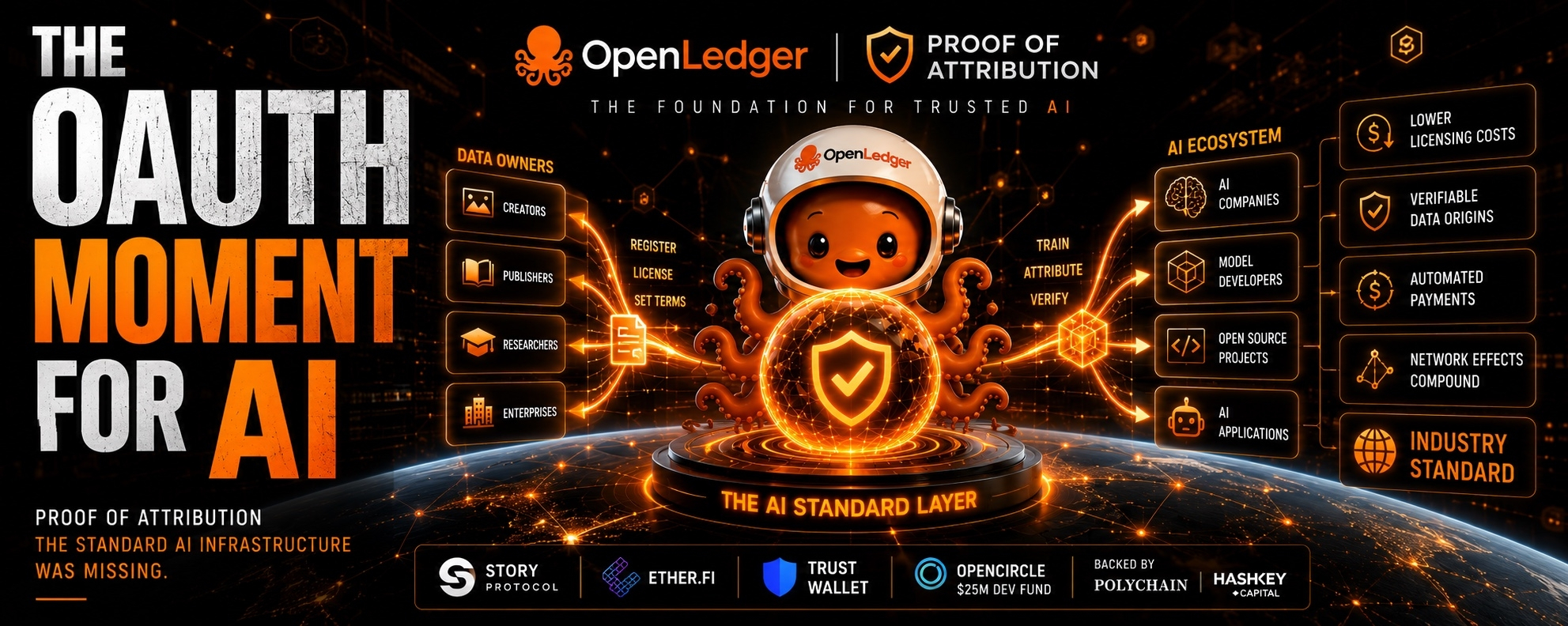
In 2009, OAuth adoption was fragmented and most web services built their own authentication systems. OAuth 2.0 standardization changed that by lowering coordination costs across the entire ecosystem.
@OpenLedger is making a structurally similar bet: that Proof of Attribution becomes the default attribution standard in AI infrastructure. The implications of that bet going right are worth thinking through carefully.
Standards matter not because they are technically superior to every alternative. They matter because they reduce coordination costs enough that building on top of them becomes cheaper than building a competing approach. Network effects compound in the standard’s favor over time.
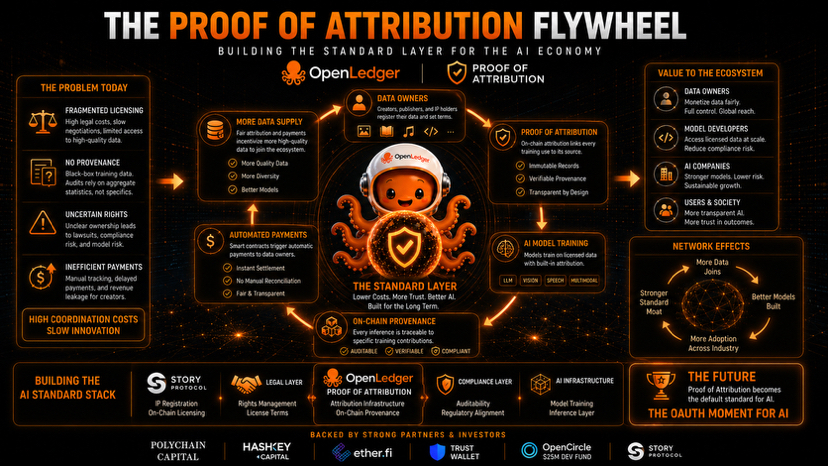
Start with the data economy. Right now, every AI company that wants to access high-quality proprietary data negotiates individual licensing agreements with data holders. This is expensive, slow, and biased toward organizations with legal resources. If PoA becomes standard, that negotiation layer collapses into a programmable attribution system. A data holder sets their terms once, registers their dataset, and any model training on that dataset automatically triggers the agreed payment flow. The reduction in transaction costs for data licensing is significant.
The model development side changes even more dramatically. Today, if you want to audit the training data behind a model, the typical response is a data card with aggregate statistics: total dataset size, approximate source breakdown, content filters applied. Specific provenance is not available because the pipeline does not generate it. If PoA is embedded at the training infrastructure level, you get specific provenance by default. Every inference can be traced to a specific training contribution, not just a source category.
The competitive implications for large AI incumbents are uncomfortable to think through. Companies that have trained on datasets with uncertain provenance face retroactive compliance risk if PoA becomes a regulatory reference point. More significantly, any new training runs would need to comply, which raises their marginal data cost. A new entrant building on PoA-native infrastructure from the start faces a different cost structure. The incumbency advantage from existing training data starts to diminish when new data is more expensive to license outside a PoA-compliant system.
Story Protocol’s partnership with OpenLedger is directly relevant here. If IP registration on Story Protocol feeds into PoA-tracked training on OpenLedger, the legal and technical layers of compliant AI training are being built in parallel. A model developer who wants both legal licensing and on-chain provenance has a clear path. One that wants only one of the two faces a more fragmented set of tools.
I was thinking about what network effects actually look like at this stage. OpenLedger’s position, with investors like Polychain and HashKey Capital, partnerships with Ether.fi and Trust Wallet, a $25M developer fund through OpenCircle, and the Story Protocol legal layer, is a serious attempt to build the critical mass that standards formation requires. Whether it is sufficient is a question I do not think the current data supports answering definitively. Standards adoption timelines are notoriously difficult to forecast from the infrastructure build phase.