
i keep thinking ERC-4626 inside OpenLedger (@OpenLedger ) changes the feeling of the whole system in a way people are still understating.
because most of the time when people talk about AI infrastructure they still talk like the main event is thought.
data in model out some inference path some agent decision some output with a little traceability wrapped around it fine.
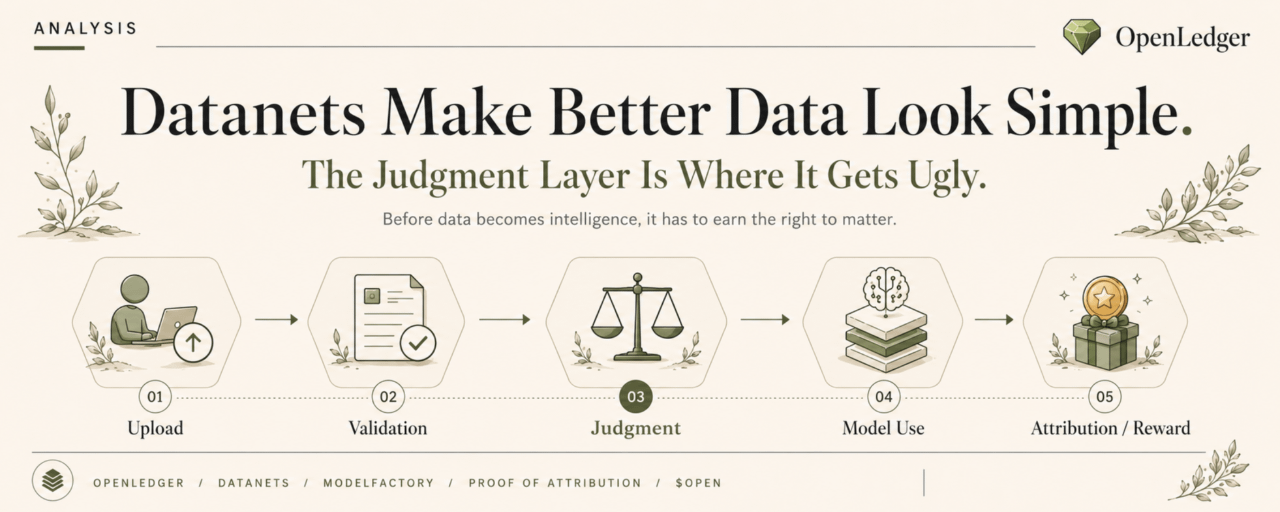
and yeah okay that already matters a lot, especially in a stack like OpenLedger where Datanets, ModelFactory, OpenLoRA, Proof of Attribution, all of that keeps trying to stop AI from becoming one more black box with better branding.
but ERC-4626 pulls the mood somewhere else for me.
because once that standard shows up, the system stops feeling like it is only touching information.
it starts getting close to containers of capital.
and that is just a different category of seriousness.
not because vaults are flashy. honestly vaults are kind of boring on the surface. that’s the whole point of standards like this. they make capital structures boring enough to be reusable. boring enough to be legible. boring enough that other systems know how to touch them without inventing a new interpretation every time.
and that is exactly why it starts feeling dangerous in a more real way.
because AI is messy by nature. inference is messy. agent logic is messy. model behavior is messy. but ERC-4626 is the opposite mood. it is clean shape, known interface, standardized capital behavior, a format other systems can read without asking permission every five seconds.
so what happens when one side of the stack is probabilistic and the other side is standardized. what actually gives first there. the uncertainty, or the distance that used to protect people a little.
that’s the part i keep getting stuck on OpenLedger.
because before that, an agent can still feel like a suggestion machine with ambition. maybe it routes, maybe it evaluates, maybe it proposes, maybe it predicts. still soft enough that your brain keeps some distance. even if OpenLedger wants outputs to be attributable and payable, a lot of people still hear that at the language layer.
but vault structure drags the whole thing downward into a harder place.
now it is not just what the model thinks it is what kind of capital shape the system can read what flows OctoClaw can stand beside what yield containers an attributable route can recognize what asset logic starts becoming machine-legible enough that execution no longer feels decorative.
“standardization is where AI stops sounding theoretical.”
that line has been sitting in my head a while.
because ERC-4626 is not exciting in the cinematic sense. it is exciting in the much more dangerous sense that it removes one category of ambiguity. and whenever ambiguity disappears, execution gets closer.
i think that is why this keeps feeling bigger than the usual feature-update reading.
people hear ERC-4626 integration and think okay nice, compatibility, standard vault support, more composability, whatever. true. but compatibility is not the deepest thing happening there. the deeper thing is that OpenLedger stops needing to confront raw capital as chaos and starts meeting it as structure.
that matters.
because AI gets a lot more believable, and a lot more risky, the moment it can interact with something whose behavior is already regularized before it arrives.
in the older version of the story, the hard problem was maybe whether the model was smart enough.
inside this version, the harder problem starts becoming whether the stack is close enough to clean capital interfaces that “smart enough” is no longer the main gate.
that is a weird shift.
and honestly kind of unsettling.
because standardization doesn’t just make things easier for humans. it makes things easier for systems. easier for routing layers. easier for agent paths. easier for execution frameworks that do not want to negotiate uniqueness every time they touch something valuable.
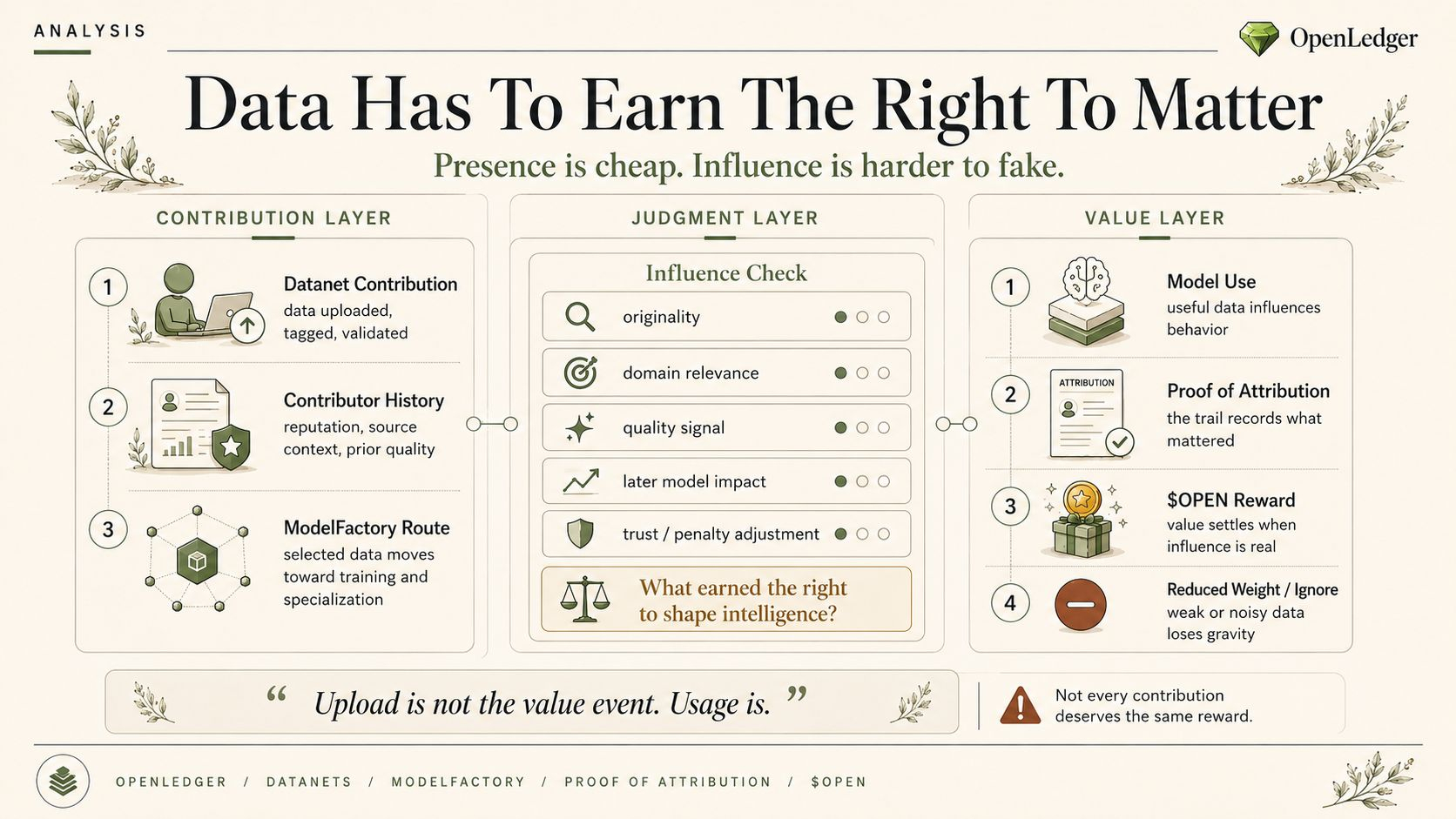
so once ERC-4626 enters the picture, OpenLedger starts feeling less like a place where AI produces interpretable outputs and more like a place where attributable AI paths can begin to stand next to capital formats that are already prepared for interaction.
that’s not nothing.
that’s a very different kind of adjacency.
i keep picturing the older mental model people still have about AI and finance. they imagine something dramatic. the bot “manages funds,” the model “trades,” the agent “allocates.” all these giant verbs. but the real transition is usually quieter than that. first the system just learns the shape of the container. first it learns how value is wrapped. first it learns what structure means. then later the rest gets easier.
and ERC-4626 is exactly that kind of quiet shift.
not a promise that intelligence suddenly becomes trustworthy.
not a promise that agents suddenly deserve autonomy.
just a removal of friction between machine reasoning and capital structure.
which, weirdly, might be more important than the headline version.
because friction was protecting people a little.
messiness was protecting people a little too.
if every capital container is weird, every protocol surface is different, every integration needs its own logic, every route has custom handling, then AI stays clumsy longer. it stays a little outside. it keeps bumping into irregularity. some people hate that. some of that friction deserves to die. sure.
but uniform capital interfaces change the emotional equation.
now the machine doesn’t need to understand capital as an unstructured world. it can meet capital through a standard. and standards always make scale more realistic.
that’s what keeps bothering me, maybe.
not that OpenLedger is adding some DeFi-friendly piece.
but that it is reducing the interpretive distance between attributable AI and structured money.
once that distance shrinks, you can’t keep talking about the stack like it is only experimenting with attribution and data liquidity in some protected conceptual sandbox. not really. now there is a line from Datanets to model shaping to agent logic to execution context to capital container standards. maybe not one smooth line yet, maybe still messy, maybe still full of failure points, but the line is there.
and once the line is there, the old excuse starts dying a little.
the excuse that this is all still mostly informational.
because structured capital is not information in the soft sense. it is behavior waiting for conditions. and if behavior is waiting there in a readable form, what exactly is the rest of the stack still “far away” from.
“capital gets calmer when the interface gets cleaner.”
and calmer capital is easier for machines to touch.
that sentence sounds simple but i think it changes a lot.
because one of the things people miss about standards is that they do not just simplify engineering. they simplify system permission. the feeling of can this route even exist. can this agent path even make sense here. can this logic be reused. can a PoA-traceable output sit close enough to a known financial object that execution no longer sounds insane.
and once the answer becomes yes often enough, the network mood changes.
OpenLedger starts feeling less like AI infra with economic awareness and more like economic infra that happens to be driven by attributable AI paths.
that is a sharper thing.
especially because OpenLedger already has the other ingredients that make this more than a stray integration. Proof of Attribution means the system keeps trying to know what shaped what, but ERC-4626 changes what that attributable decision can stand beside afterward. ModelFactory means builders can bring things into existence without drowning in infra pain. OpenLoRA means specialized behavior can be loaded cheaply at the moment it matters. OctoClaw means agents are not just decorative concepts sitting on a slide somewhere, and standardized vault rails make that side of the stack feel less hypothetical.
so now ask a much uglier question.
what happens when the agent side of the stack, the attributable model side of the stack, and standardized capital containers all start standing near each other long enough to stop feeling separate. what gets blamed then. what gets trusted too early.
that is where i think the real Day 5 pressure lives.
not in vaults by themselves.
in what vault standards do to the credibility of the rest of the system.
because once capital interfaces become legible, the burden shifts again. now the system can no longer hide behind “well, execution is still messy.” less messy than before. less irregular. less bespoke. less protected by incompatibility. the remaining question starts looking harsher.
if the capital shape is readable, if the route is technically cleaner, if the standard is known, then what exactly is still stopping the machine from getting closer to actual financial consequence.
better question maybe.
what should be stopping it.
because this is where people get weirdly naive. they think the danger begins when the agent touches capital. no. the danger begins earlier, when the environment becomes structured enough that touching capital starts sounding normal.
that normalization matters more than the final action.
and ERC-4626 is a normalization layer.
it tells the rest of the system: here, this part is understandable now. this part can be interfaced with. this part doesn’t need a custom philosophical debate every time you approach it.
that is useful.
and also exactly why it changes the mood.
i don’t even think this is mainly about whether AI should control money or not. that’s too loud, too early, too easy. the deeper thing is that OpenLedger keeps reducing the categories of confusion that used to keep AI one step away from clean financial structure.
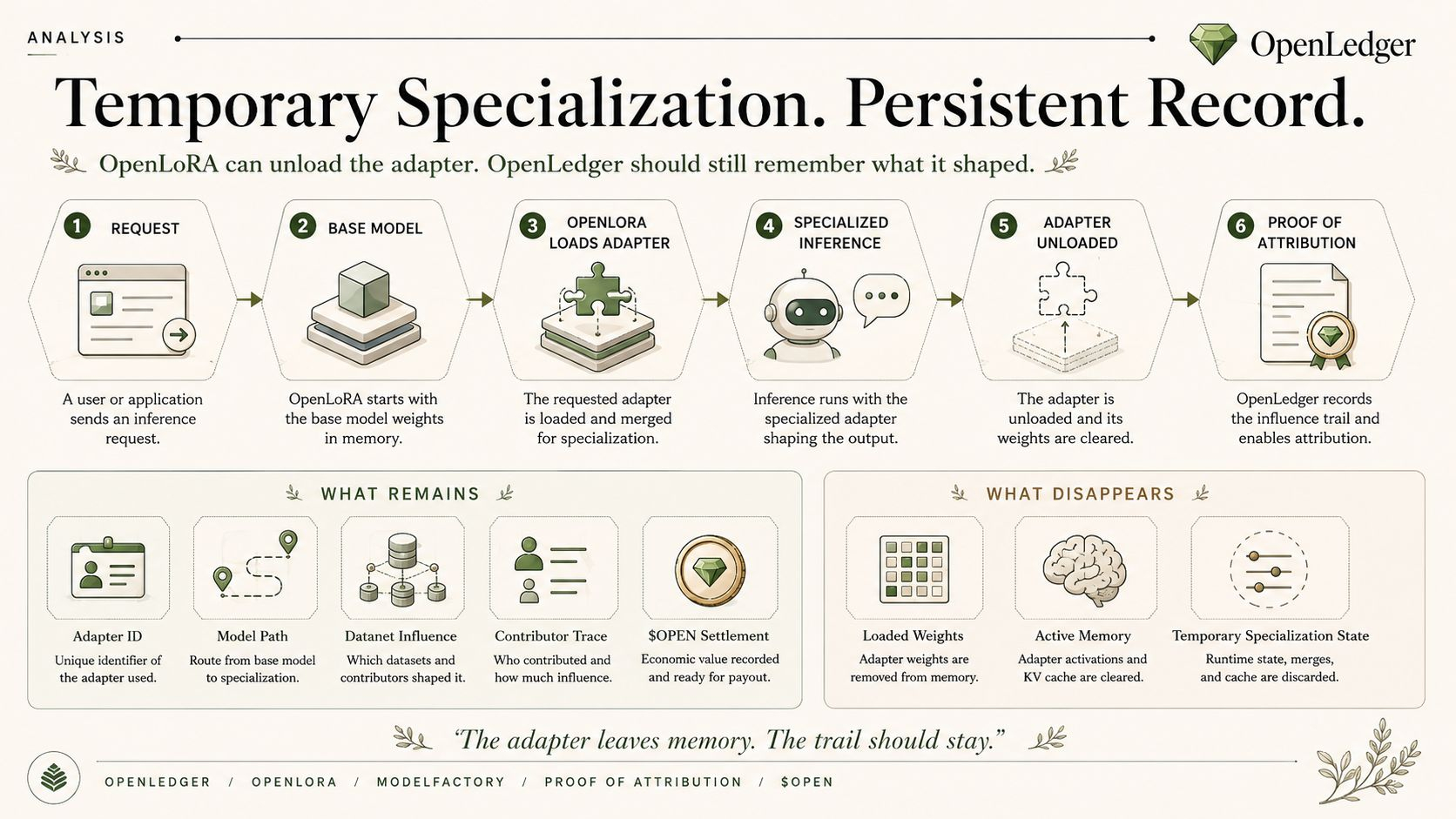
first better data then attributable outputs then specialized behavior then agents with real execution context then standardized capital containers.
at some point you stop looking at isolated components and start looking at a system that is quietly learning how to stand beside money without flinching.
that’s not the same as trust.
it might not even be close to trust yet.
but it is close to legibility.
and legibility is one of the biggest accelerants any execution system can get.
because once something becomes legible enough, scale starts sniffing around it. maybe that’s the real discomfort here. not action yet. not disaster yet. just the sudden feeling that the stack no longer looks conceptually far away.
that is the part i don’t think people are fully pricing in when they talk about OpenLedger like it is still mostly an AI fairness story. yes, fair attribution matters. yes, payable AI matters. yes, provenance matters. but ERC-4626 pulls the whole thing toward another truth too: systems stop being experimental a lot faster when the capital surfaces around them become standardized.
and standards are sneaky like that. they don’t look revolutionary. they look tidy. but tidy is how very serious things become operational.
so yeah, i keep landing on the same thought.
ERC-4626 changes the mood because AI inside OpenLedger stops feeling like it is only near ideas and starts feeling like it is near structured capital.
not capital as chaos capital as interface capital as readable form capital as something the rest of the stack can begin to approach without inventing a new language every time.
that is a bigger change than it sounds like on paper.
because once capital becomes legible, the old distance between “the model said something” and “the system can now stand next to money in a standardized way” gets shorter than a lot of people probably find comfortable.
and honestly i don’t think discomfort there is irrational.
it might be the most rational reaction available.
because AI gets stranger when it becomes attributable it gets sharper when it becomes specialized but it gets serious in a completely different way when it starts living next to clean containers of value.
that’s when the whole stack stops feeling like thought infrastructure.
and starts feeling like something that is learning the grammar of capital.
“first legibility, then consequence.”
that’s probably the part i can’t stop hearing underneath all of this.