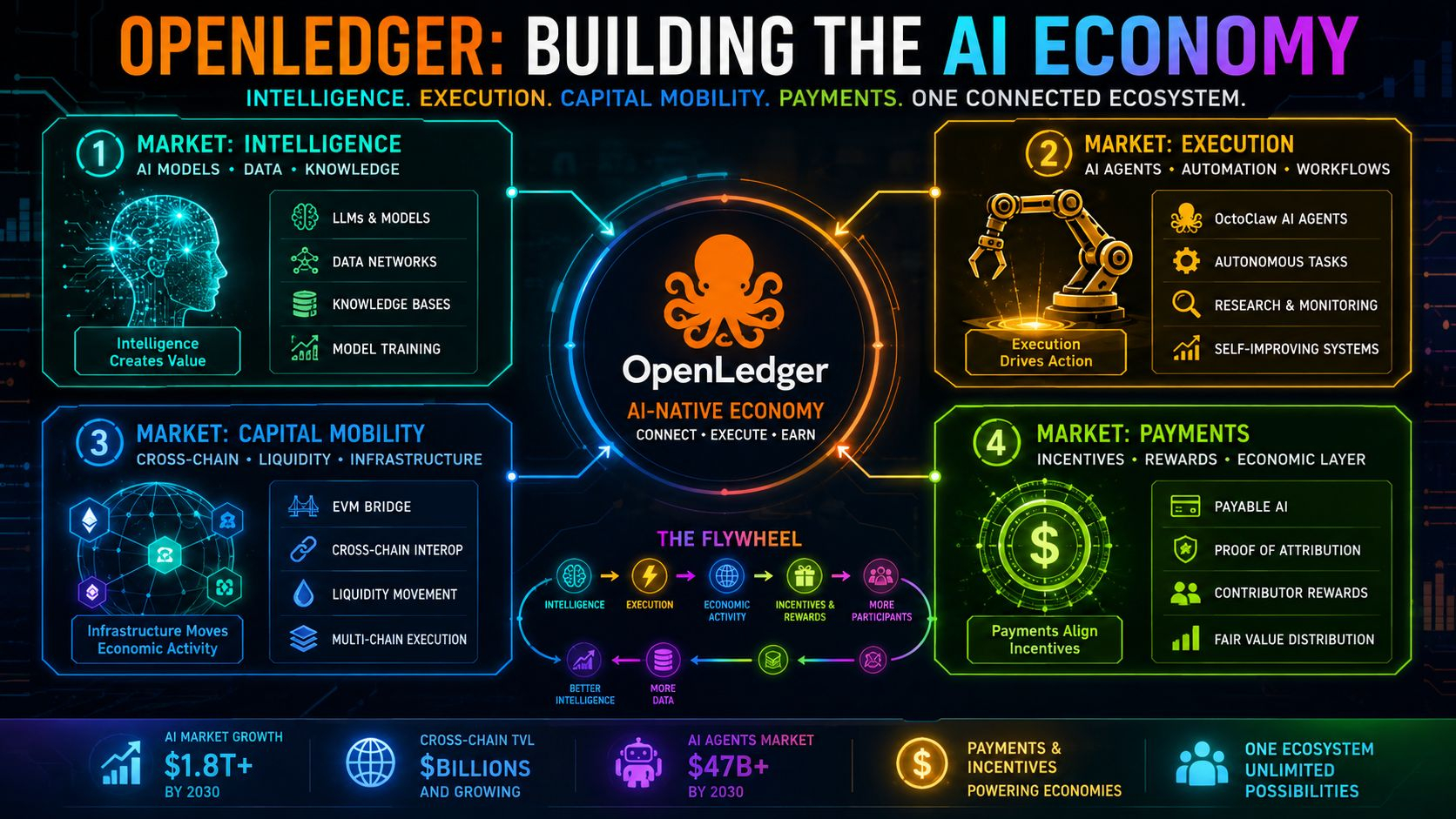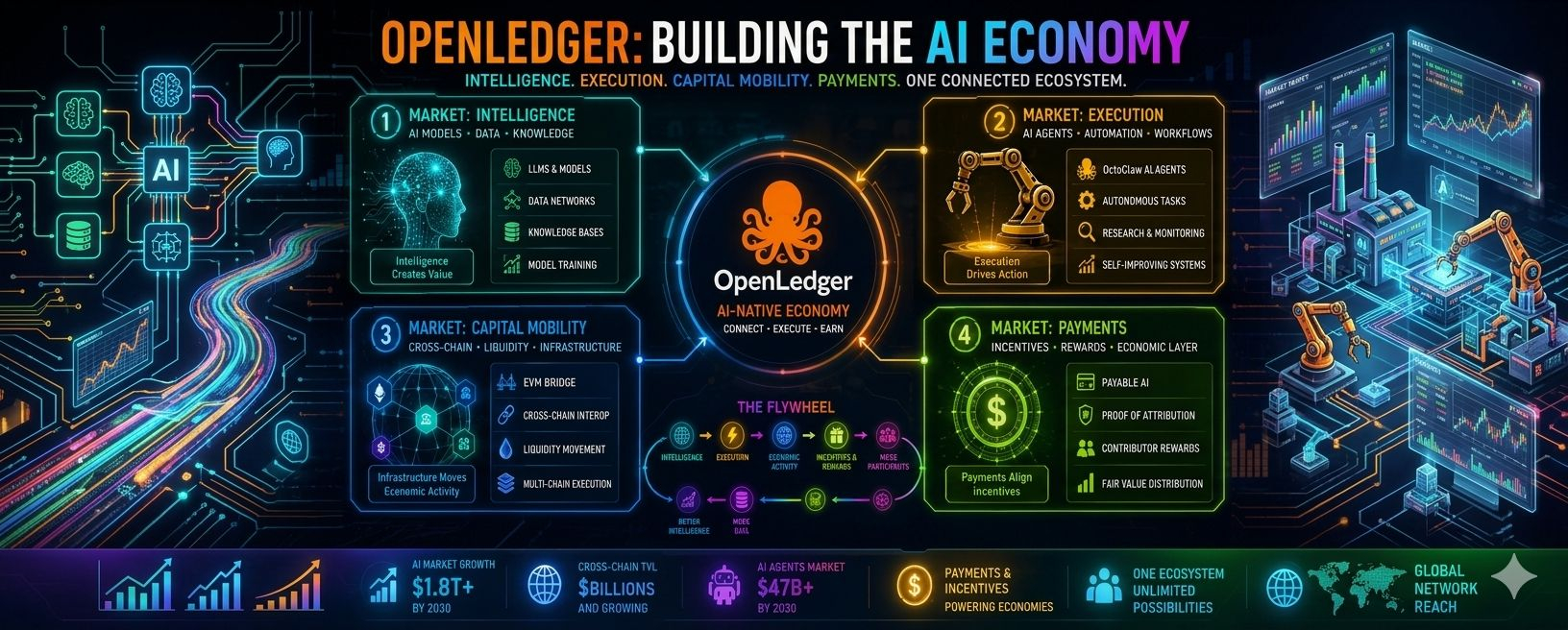
🐙 OpenLedger seems to be building at the intersection of four.
And that’s what caught my attention.
Because history shows that the biggest breakthroughs often happen when separate industries begin to merge.
━━━━━━━━━━━━━━━━
A decade ago, AI was mostly a research topic.
Today, companies like OpenAI, Anthropic, Google DeepMind, and xAI have turned it into one of the most valuable technology markets in the world.
Cross-chain infrastructure followed a similar path.
What once looked like a niche technical problem became a critical layer of crypto, with projects like LayerZero, Wormhole, and Axelar proving that interoperability matters.
Now another shift is happening.
AI is moving beyond conversation.
The next generation of systems won't simply provide answers.
They'll take action.
And that is where OpenLedger becomes interesting.
The more I researched it, the less it looked like an AI project and the more it looked like an attempt to connect multiple emerging markets into a single ecosystem.
━━━━━━━━━━━━━━━━━━
🧠 MARKET #1: INTELLIGENCE
The first layer is obvious.
AI.
The demand for intelligence has already been validated at global scale.
Models can generate content, write code, analyze information, and assist with increasingly complex tasks.
That market no longer needs an introduction.
The question is what happens after intelligence is created.
Because intelligence alone doesn't build an economy.
━━━━━━━━━━━━━━━━━━
⚡ MARKET #2: EXECUTION
Most AI tools today remain reactive.
You ask.
They answer.
You prompt.
They respond.
Useful, but still dependent on human initiation.
The next evolution is execution.
Systems that can monitor, decide, coordinate, and perform tasks autonomously.
This is where OctoClaw stands out.
Many people describe it as an AI agent.
I see it more as an execution framework.
Capabilities like automation, research workflows, proactive monitoring, and self-improving behavior point toward something larger than a chatbot.
The goal is not just intelligence.
The goal is operational intelligence.
━━━━━━━━━━━━━━━━━━
🌉 MARKET #3: CAPITAL MOBILITY
Then there is the infrastructure layer.
At first glance, OpenLedger's EVM Bridge looks like another interoperability product.
But bridges are not really about moving tokens.
They are about moving economic activity.
The success of LayerZero, Wormhole, and Axelar already demonstrated how valuable seamless liquidity movement can become.
Now imagine AI systems interacting with decentralized finance.
Monitoring opportunities.
Managing capital.
Executing strategies.
Operating across multiple chains.
In that future, interoperability becomes infrastructure not just for people, but for machines.
━━━━━━━━━━━━━━━━━
💰 MARKET #4: PAYMENTS
Every functioning economy requires incentives.
And incentives require payments.
This may be one of the most overlooked parts of OpenLedger vision.
The concepts of Payable AI, Proof of Attribution, and contributor rewards suggest an attempt to build an economic layer around intelligence itself.
Today AI ecosystem creates enormous value from data, models, and contributors.
Yet the distribution of that value remains uneven.
OpenLedger appears to be exploring a model where developers, operators, contributors, and data providers participate more directly in the upside they help create.
If successful, that extends beyond crypto.
It's an entirely different way of thinking about digital economies.
━━━━━━━━━━━━━━━━━━
🌀 THE FLYWHEEL
What makes the thesis interesting isn't any single component.
It's how the components reinforce one another.
🧠 Intelligence
drives
⚡ Execution
which generates
🌉 Economic activity across networks
which creates
💰 Incentives and reward.
which attract
👥 More participants
which generate
📊 More data
which improves
🧠 Intelligence
And the cycle continues.
━━━━━━━━━━━━━━━━━━
💀 THE REAL CHALLENGE
This is also where the risk appears.
Not competition.
Coordination.
Most successful companies focus on winning one category.
OpenAI focuses on intelligence.
LayerZero focuses on interoperability.
Other projects focus on attribution or payments.
OpenLedger is attempting to connect several categories simultaneously.
That means every layer depends on the others.
Strong models without adoption don't help.
Execution without users does not matter.
Infrastructure without liquidity has limited value.
Payments without economic activity create no sustainable network effects.
Building the flywheel is easy to describe.
Synchronizing it is much harder.
━━━━━━━━━━━━━━━━━━
🐙 WHY I'M WATCHING
Because ambitious ideas are often misunderstood in their early stages.
OpenLedger doesn't appear to be positioning itself as another chatbot or another blockchain application.
The broader vision seems to be creating connective infrastructure for an AI-native economy.
Whether that vision succeeds remains uncertain.
But I think many people are evaluating it through too narrow a lens.
They're looking at individual products.
The bigger story may be how those products connect.
━━━━━━━━━━━━━━━━━━
💣 FINAL THOUGHT
Most projects aim to dominate a single market.
OpenLedger appears to be attempting something different:
🧠 Intelligence
⚡ Execution
🌉 Capital Mobility
💰 Payments
woven into one coordinated ecosystem.
That's an enormous opportunity.
It's also an enormous challenge.
And that's exactly why it's worth paying attention to.