

Yesterday, as I was scrolling through OpenLedger’s model dashboard, I couldn’t stop thinking about something that rarely gets mentioned: the hidden cost behind all that intelligence. Every active GPU, every model quietly consuming power, made me wonder-how much energy is truly being spent just waiting to be used? At first glance.. it seemed logical: bigger systems require M0re energy. But the longer I watched..the more I realized that inefficiency hides in plain sight, silently shaping what we call progress.
While reading about OpenLedger, my attention shifted from raw intelligence to idle machines. AI discussions often celebrate capabilities, yet very little focus lands on the silent toll of keeping thousands of models live at all times. Infrastructure only becomes noticeable when it fails, and energy becomes interesting only when someone foots the bill. The uncomfortable question loomed: is AI’s future limited not by creativity, but by how much waste we accept beneath the surface?
What makes this issue intriguing is that inefficiency is often hidden behind impressive metrics. A model may deliver flawless outputs while large amounts of computation sit underutilized. The industry rewards output, not efficiency. We praise intelligence while ignoring the machinery that keeps it running. This creates a paradox where building larger systems is celebrated more than building smarter, leaner ones.
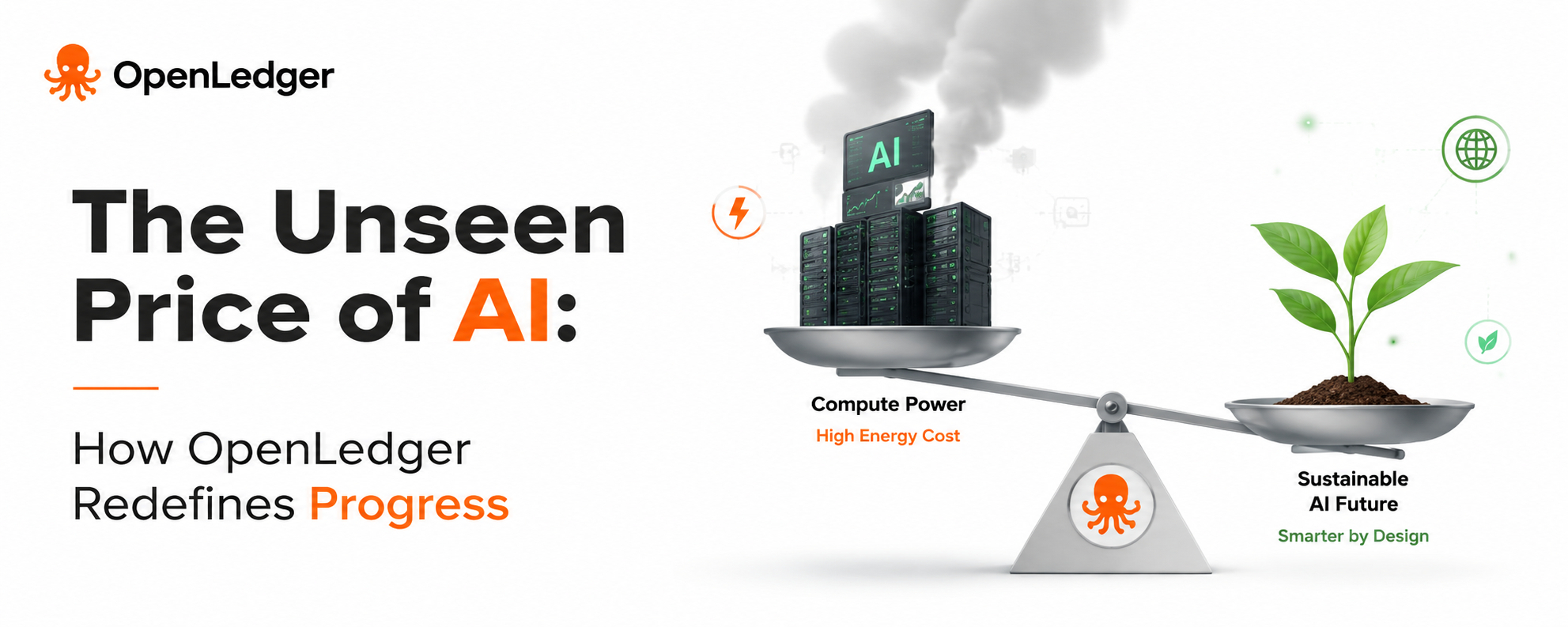
OpenLedger offers a perspective that feels surprisingly practical. It doesn’t treat infrastructure as infinite. Through dynamic model loading and shared resources, computational power activates 0nly when needed. On the surface... it seems like a technical choice.. Beneath that, it signals a philosophy: AI ecosystems should grow responsibly.. not just expansively.
The hidden tension is that sustainability rarely excites anyone. Investors chase growth..users chase performance. builders chase adoption. Few pause to consider energy efficiency.. Yet history shows that systems eventually face operational limits. Those that endure are rarely the loudest or most ambitious-they are the ones that quietly reduce friction and waste.
There is also a subtle behavioral dimension. Efficient infrastructure changes how contributors think about scale. Computational resources stop being invisible; contributors start optimizing for allocation, timing, and long-term sustainability. Small architectural decisions ripple outward, shaping the evolution of the Entire Ecosystem.. The result is lower waste and a healthier relationship between growth and responsibility.
Of course, no system is immune to risk. Gains can be offset if demand outpaces optimization. Sustainability is ongoing.. not a one-time achievement. As AI adoption accelerates.. Even well-designed infrastructures face pressure from growing workloads. The real challenge is maintaining discipline when expansion tempts shortcuts.
The more I reflected, the less this felt like a story ab0ut energy and the more like a story about maturity. Every technological leap eventually reaches a point where intelligence al0ne is not enough. The question becomes whether the system can Scale responsibly. Perhaps future winners in AI will not be the platforms that consume the most resources.. but those that quietly learn to do more with less. That kind of progress rarely makes headlines, yet it often becomes the foundation upon which everything else is built.
