
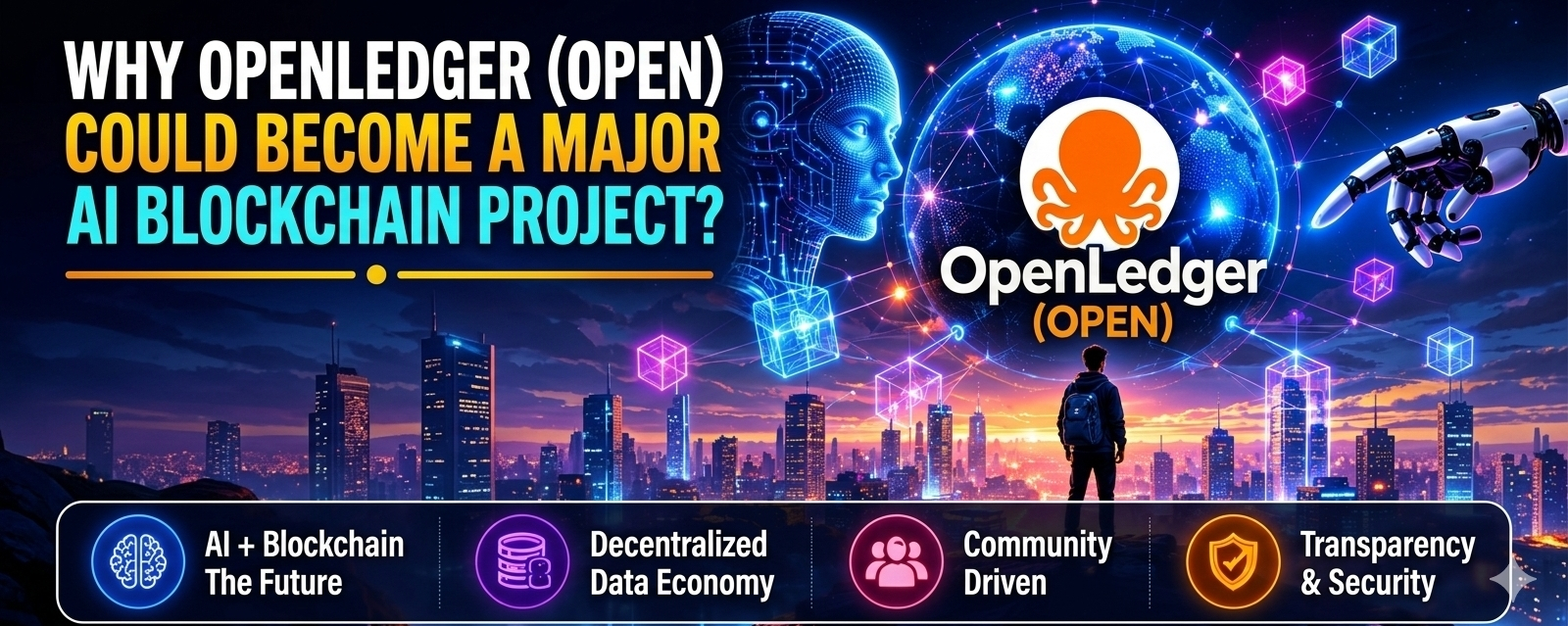
Artificial Intelligence is rapidly transforming the global digital economy. From automation and content generation to predictive analytics and decentralized computing, AI has become one of the strongest technological narratives of this decade. At the same time, blockchain technology continues to evolve beyond simple financial transactions into infrastructure capable of supporting data ownership, transparency, and decentralized coordination. The intersection between these two sectors is where OpenLedger (OPEN) is positioning itself — and that is exactly why many investors and analysts believe it could become one of the most important AI blockchain projects in the coming years.
Most AI systems today rely heavily on centralized platforms. Large technology companies collect enormous amounts of user data, train AI models privately, and control the economic value generated from those systems. While AI innovation is accelerating, the rewards are often concentrated in the hands of a few corporations. OpenLedger attempts to challenge this structure by building a decentralized ecosystem where data contributors, developers, node operators, and AI applications can all participate in the value creation process.
One of the strongest reasons @OpenLedger stands out is its focus on the economic value of data. Data is the fuel of modern AI. Without large, high-quality datasets, AI models cannot improve effectively. However, most people who generate valuable data online receive no direct financial benefit from it. OpenLedger introduces a model where users and communities can contribute data and potentially receive rewards when that data powers AI systems. This creates a new incentive structure that aligns blockchain economics with AI development.
Another important factor is transparency. In centralized AI ecosystems, users often have little understanding of how models are trained, what datasets are used, or how decisions are made. OpenLedger’s blockchain-based architecture introduces a more transparent framework where contributions and interactions can be verified on-chain. This could become increasingly important as governments and regulators around the world begin demanding more accountability from AI companies.
Scalability and interoperability are also major strengths. The future of AI will not depend on one single chain or isolated ecosystem. Instead, successful projects will need to connect multiple networks, applications, and data environments together. OpenLedger appears to understand this reality by focusing on infrastructure that can integrate with broader decentralized ecosystems rather than remaining closed and isolated. In crypto, infrastructure projects that enable connectivity often become more valuable over time because they support entire ecosystems instead of single applications.
Another reason OpenLedger has attracted attention is the growing demand for decentralized AI. Many people are becoming concerned about the concentration of AI power inside a few dominant corporations. Decentralized AI networks offer an alternative where innovation can remain open, permissionless, and community-driven. OpenLedger is entering the market at a time when this narrative is gaining significant momentum. Timing matters in crypto, and projects aligned with emerging narratives often experience rapid adoption if they can deliver real utility.
The token economy behind $OPEN N could also play a critical role in its growth. In blockchain ecosystems, tokens are more than speculative assets. They often function as incentives, governance tools, payment mechanisms, and security layers for the network. If OpenLedger successfully creates sustainable demand for AI-related services within its ecosystem, the OPEN token could gain utility far beyond simple trading speculation. Strong utility is one of the key characteristics that separates long-term blockchain projects from temporary hype cycles.
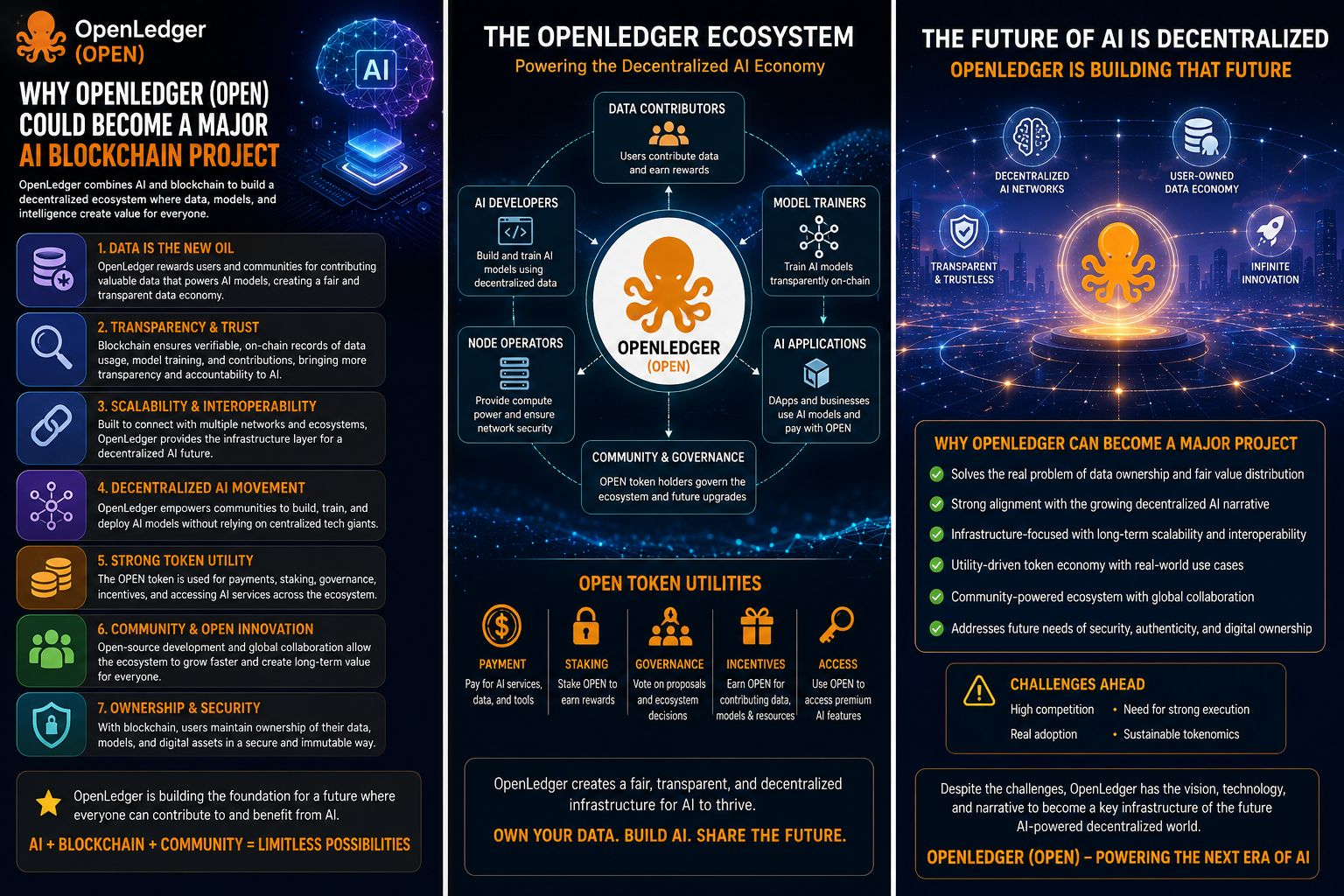
Community-driven ecosystems are another important advantage. Open-source development and decentralized participation have historically accelerated innovation in crypto. OpenLedger’s vision appears to encourage broader collaboration between developers, AI researchers, and decentralized communities. This collaborative model could allow the ecosystem to evolve faster than centralized competitors that rely only on internal development teams.
Security and ownership may become even more valuable in the future AI economy. As AI-generated content, digital identities, and autonomous agents become more common, questions about ownership and authenticity will become critical. Blockchain technology naturally complements these needs because it provides immutable records and verifiable digital ownership. OpenLedger is positioning itself at the center of this future infrastructure layer.
Of course, there are still risks. The AI blockchain sector is highly competitive, and many projects are trying to capture the same narrative. OpenLedger will need strong execution, active development, real adoption, and sustainable tokenomics to become a dominant player. Hype alone is never enough in the long term. The projects that survive are the ones that continuously build, attract developers, and create real-world utility.
However, despite these challenges, OpenLedger has several qualities that give it strong potential. It combines two of the biggest technological trends in the world today — AI and blockchain — while focusing on one of the most important digital resources of the future: data. Its emphasis on decentralized AI infrastructure, transparent data economics, interoperability, and community-driven growth creates a foundation that could become increasingly valuable as AI adoption expands globally.
If the next era of the internet is shaped by decentralized intelligence and user-owned data economies, OpenLedger may position itself as one of the key infrastructure projects powering that transformation. That possibility is exactly why many people believe OPEN could eventually become a major AI blockchain project.
