
I’ve noticed that while the crypto market keeps chasing the latest AI narrative, OpenLedger is one of the few projects that has continued to hold my attention. Not because of bold promises or constant hype, but because it seems to be focused on a problem that feels increasingly important as AI becomes a bigger part of the digital economy. After watching countless trends come and go in Web3, I find myself paying more attention to projects that are trying to build useful infrastructure rather than simply ride market excitement.
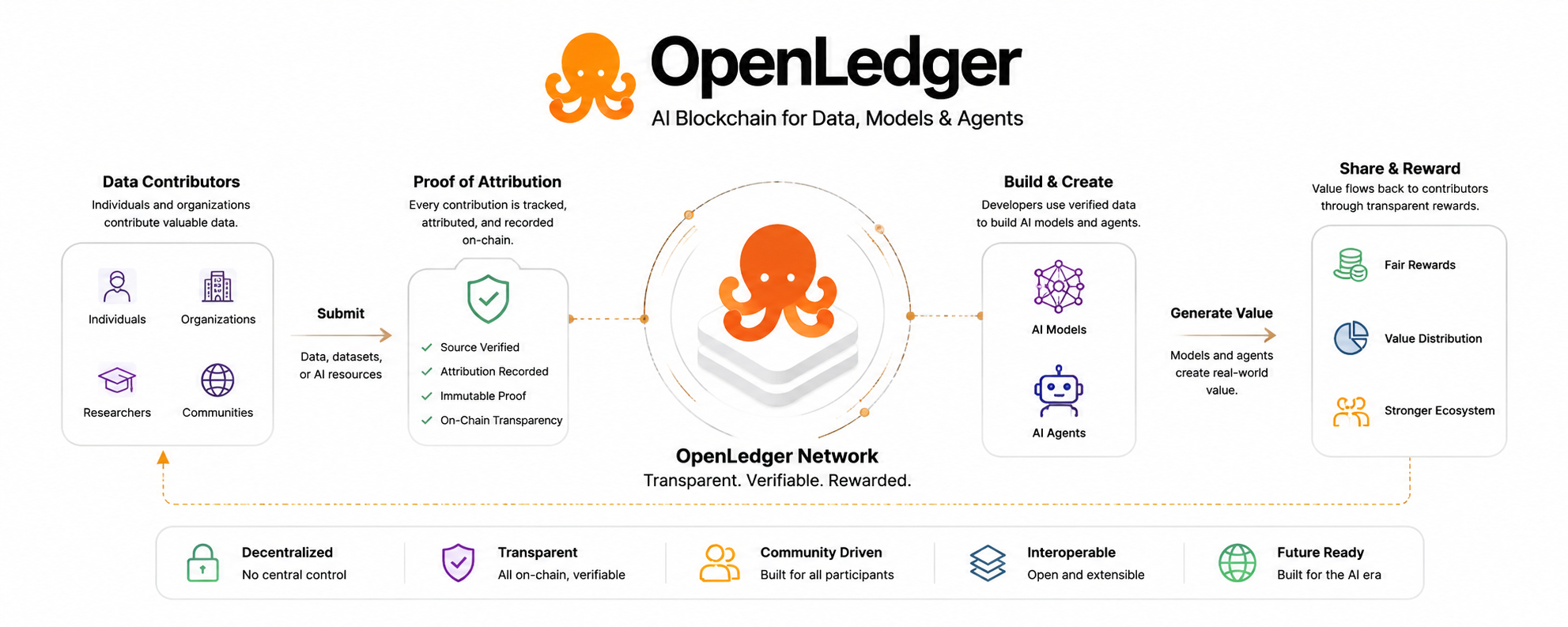
What makes OpenLedger interesting to me is its focus on the relationship between AI and data. Most conversations around AI focus on models, performance, and capabilities, but much less attention is given to where the data comes from and how contributors are recognized. As AI systems become more valuable, questions around ownership, attribution, and fair participation become harder to ignore. OpenLedger appears to be built around addressing some of those challenges instead of treating them as an afterthought.
The reason this stands out is because data is becoming one of the most important resources in the AI ecosystem. Yet the people, communities, and sources that contribute valuable information often remain invisible once that data enters a training pipeline. OpenLedger is exploring a model where contributions can be tracked and linked to the value they help create. Whether that approach ultimately succeeds is still uncertain, but the direction feels practical and relevant to where the industry is heading.
I also think OpenLedger benefits from focusing on infrastructure rather than speculation. Crypto markets often reward narratives in the short term, but lasting value usually comes from systems that solve real problems. If AI continues growing at its current pace, there will likely be increasing demand for transparency around how data is used, where it originates, and who should benefit from it. That is the type of challenge OpenLedger appears to be targeting.
At the same time, I remain cautious. Early-stage crypto projects can look impressive before scale, real users, edge cases, liquidity pressure, network stress, or execution problems begin to test the foundations. Strong ideas do not automatically become successful products, and history has shown that many promising concepts struggle when they meet real-world conditions.
Still, OpenLedger feels worth watching because its focus goes beyond the usual AI buzzwords. It is attempting to tackle a practical issue that sits at the center of both AI and Web3, and that makes it stand out in a market where attention is often driven more by narratives than by genuine utility. In the end, the projects that matter most are usually the ones solving real problems, and that is what keeps OpenLedger on my radar.