
I I was sitting in the evening heat of Faisalabad, watching my neighbor’s kids chase each other around the courtyard while their mother recorded short clips on her phone. The laughter, the dust, the ordinary chaos—none of it felt like “data.” Yet every second captured was feeding something far away, building models none of us here would ever control or benefit from in proportion.
Later that night I decided to try the CreatorPad campaign task. I logged in and started the process of submitting sample data entries. On the upload screen, right next to the progress bar showing “metadata validation,” something shifted. I was carefully tagging context fields and confirming ownership checkboxes for snippets that would train AI systems. That precise moment—watching my small batch move from “pending review” to “verified”—cracked open an uncomfortable realization. We keep celebrating how blockchain will return power to users, but the actual value chain still treats the people creating the raw material as interchangeable inputs rather than essential partners.
The deeper problem isn’t just unfair distribution. It’s that the entire narrative around data in crypto assumes contribution equals ownership. In practice, most data creators remain structurally invisible. We click, we post, we label, we verify. The models improve, the companies raise valuations, and the contributors receive micro-rewards that rarely reflect the compounding utility their data enables years later. This isn’t unique to centralized AI firms. Even projects attempting to fix it through tokens and decentralized storage often replicate the same pattern: the infrastructure gets built on top of our collective output while the economic upside concentrates elsewhere.CreatorPad stands out here not because it solves everything, but because it forces the issue into the open. When you go through the actual submission flow—selecting categories, adding quality tags, waiting for the on-chain confirmation—you feel the gap physically. The platform acknowledges the creator at the point of entry in a way many others don’t, yet the broader market still rewards those who aggregate and compute far more than those who originate. It’s a quiet reminder that technology alone doesn’t rewrite incentives. Human behavior and capital flows do.
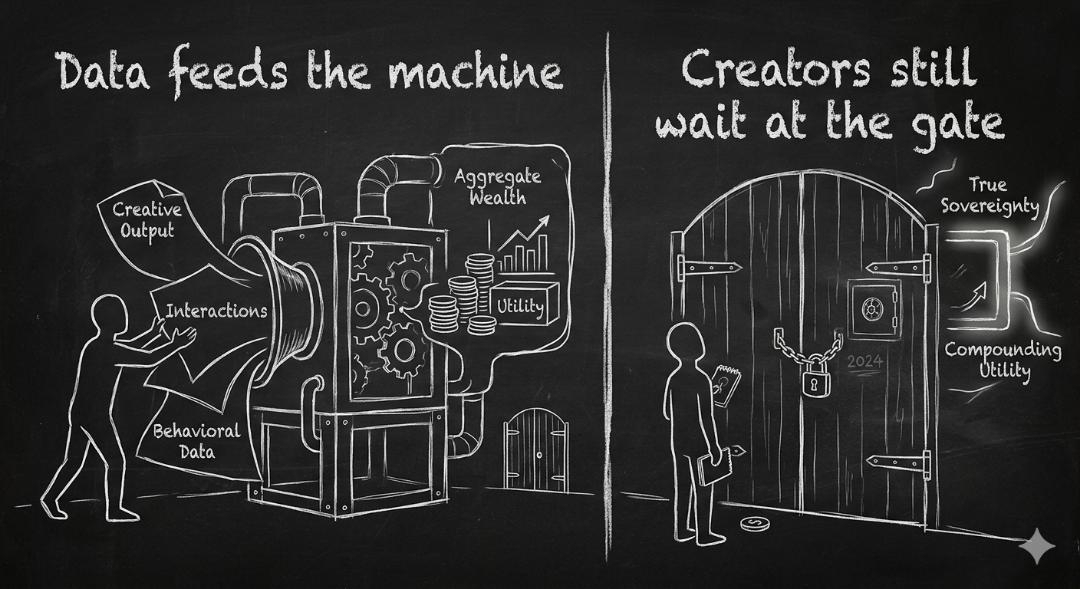
This pattern repeats across crypto. We talk endlessly about sovereignty and self-custody, but data sovereignty remains mostly theoretical. People happily hand over behavioral patterns, creative output, and contextual knowledge because the immediate experience feels convenient or rewarding in small doses. The long-term extraction stays hidden until the AI products become so powerful that the original sources look naive for ever participating freely. The uncomfortable truth is that many of us sense this imbalance yet continue because opting out feels pointless when the network effects are already so strong.
What CreatorPad hints at, without overclaiming, is the possibility of making that missing link visible and enforceable. Not through promises of moonshots or ecosystem dominance, but through deliberate, small-scale acts of attribution that accumulate. Still, it remains fragile. Without deeper cultural insistence from participants themselves, these efforts risk becoming just another interface on top of the same unequal flow.
How long can we keep calling data the new oil while the people who produce it stay paid like day laborers?