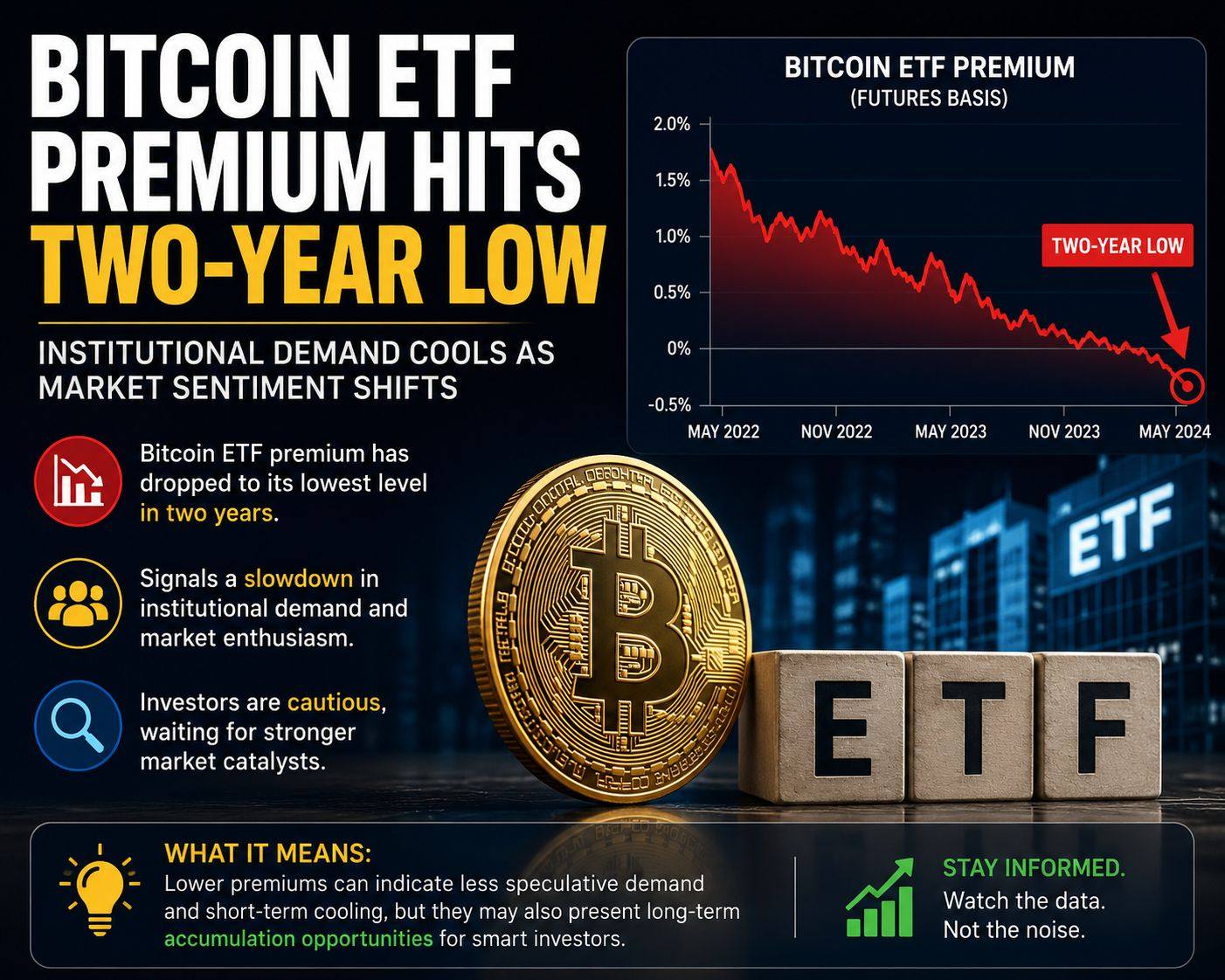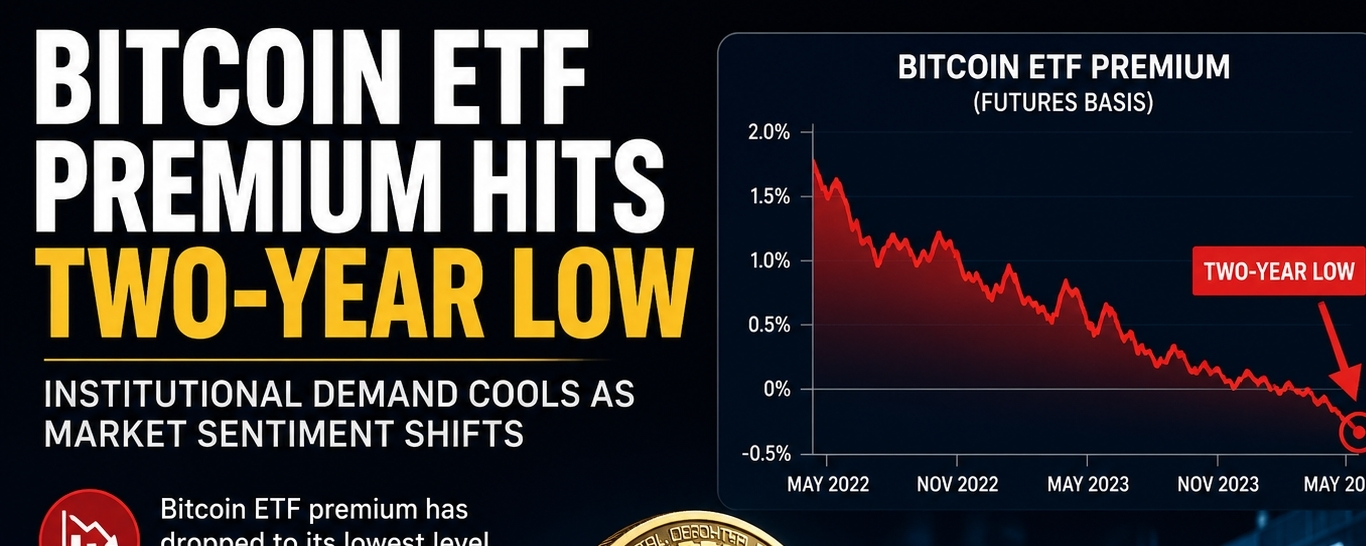
The cryptocurrency market is once again drawing attention as the $BTC Bitcoin ETF premium has dropped to its lowest level in two years. This development has sparked discussions among traders, institutional investors, and market analysts about what it means for the future of Bitcoin and the broader digital asset market.
Bitcoin Exchange-Traded Funds (ETFs) have become one of the most important gateways for institutional investors seeking exposure to Bitcoin without directly holding the asset. Since the introduction of Bitcoin ETFs, they have played a major role in attracting traditional finance participants into the crypto ecosystem.
The ETF premium represents the difference between the market price of an ETF and the value of the Bitcoin it holds. When demand for ETF shares is high, the premium tends to rise. Conversely, when demand weakens, the premium falls. The recent decline to a two-year low suggests that institutional enthusiasm has cooled significantly compared to previous market cycles.
Several factors may be contributing to this trend. Macroeconomic uncertainty, interest rate expectations, regulatory concerns, and changing investor sentiment have all created a more cautious environment. Many investors are waiting for stronger market catalysts before increasing their exposure to risk assets, including cryptocurrencies.
However, a lower ETF premium should not automatically be viewed as a bearish signal. Historically, periods of reduced speculation and market cooling have often laid the foundation for healthier long-term growth. When excessive optimism fades, markets tend to become more stable and sustainable
Long-term investors often see these conditions as opportunities rather than warnings. Lower premiums can indicate that the market is entering an accumulation phase, where experienced investors quietly build positions before the next major trend develops. Bitcoin has repeatedly demonstrated its ability to recover from periods of uncertainty and reach new highs over time.
Another important consideration is the continued growth of institutional participation in the crypto industry. While short-term demand may fluctuate, major financial institutions continue to explore blockchain technology, digital assets, and cryptocurrency investment products. This suggests that the long-term adoption narrative remains intact despite temporary slowdowns.
Market participants should also remember that ETF metrics are only one piece of the puzzle. Factors such as on-chain activity, network growth, global liquidity conditions, regulatory developments, and investor sentiment all influence Bitcoin's price and future direction.
The current two-year low in Bitcoin ETF premiums may reflect caution, but it could also represent a period of consolidation before the next significant market move. Investors who focus on long-term fundamentals rather than short-term headlines are often better positioned to navigate these periods of uncertainty.
As always, successful investing requires patience, research, and risk management. Whether this decline marks a temporary slowdown or the beginning of a larger trend remains to be seen. What is certain is that Bitcoin continues to be one of the most closely watched assets in global finance, and every market cycle creates new opportunities for those prepared to recognize them.
Conclusion
The fall in Bitcoin ETF premiums to a two-year low highlights changing market dynamics and a more cautious investment environment. While some investors may interpret this as a sign of weakening demand, others view it as a potential accumulation opportunity. As the cryptocurrency market matures, understanding these indicators can help investors make more informed decisions and stay ahead of future trends.
Do you think Bitcoin ETF premiums hitting a two-year low is a warning sign, or a buying opportunity for long-term investors?#bitcoin #BitcoinETFPremiumTwoYearLow #BTC