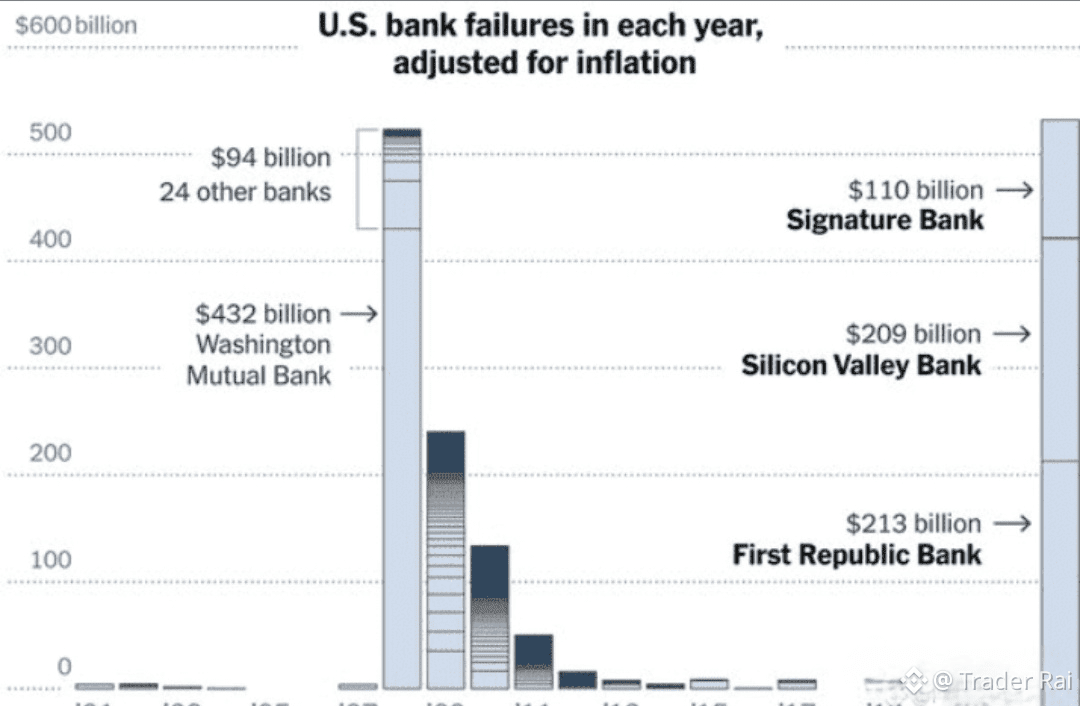
I’ve been digging into the data for months, and the picture isn’t pretty. The risk isn’t theoretical anymore — cracks are forming across the global banking system, and 2025–2026 could be the stress test that exposes them.
Here’s what’s quietly building behind the scenes:
Debt is suffocating the system. Governments and corporations loaded up on cheap loans when rates were near zero. Now refinancing is painful, and in some cases impossible. Between 2025 and 2026, over $1.2 trillion in commercial real estate loans come due. Defaults are already rising.
Office real estate is the real time bomb. Remote work emptied buildings, pushing valuations down 20–30%. If landlords can’t refinance, banks eat the losses.
Then there’s shadow banking — private credit funds holding $1.5 trillion+, highly leveraged and lightly regulated. They’re deeply interconnected with traditional banks. If one side breaks, contagion spreads fast. We’ve seen this movie before.
Add a cooling AI bubble, tightening liquidity, rising bankruptcies, and an inverted yield curve flashing the same warning it did before 2008.
Geopolitical tension, supply chain stress, energy shocks, aging populations — all slow growth and weaken repayment capacity. Regulation isn’t tightening. It’s loosening.
Experts now put recession odds near 65% by 2026, with a real risk of a deeper systemic event.
This isn’t fear. It’s preparation.
Understand where your money sits. Understand counterparty risk. And understand why decentralized rails like $XRP keep coming back into the conversation when trust in the system starts to crack.
Don’t ignore the signals.