


Se sei stato nello spazio blockchain per un po', probabilmente hai sentito parlare di Layer 1 come Ethereum e Solana, o soluzioni di scaling di Layer 2 come Arbitrum e Optimism. Ma c'è qualcosa di ancora più fondamentale che la maggior parte delle persone trascura: la spina dorsale invisibile che fa funzionare tutto insieme.
Benvenuto in Layer 0: il layer di coordinamento che sta silenziosamente rivoluzionando il modo in cui i blockchain comunicano, condividono sicurezza e costruiscono il futuro delle infrastrutture decentralizzate.
Cos'è esattamente Layer 0?
Pensalo in questo modo: se i blockchain di Layer 1 sono come diversi paesi con le proprie lingue e valute, Layer 0 è il sistema di comunicazione globale che consente a tutti di parlare tra loro senza problemi.
Mentre le reti Layer 1 gestiscono l'esecuzione e le soluzioni Layer 2 si concentrano sulla scalabilità, i protocolli Layer 0 sono la colla invisibile che collega tutto, abilitando l'interoperabilità, la messaggistica, il trasferimento dati, la sicurezza condivisa e la funzionalità cross-chain.
In termini semplici: Layer 0 fa sì che l'internet blockchain funzioni realmente come un internet.
I Principali Attori che Ridefiniscono l'Infrastruttura Blockchain
Lasciami analizzare i progetti più entusiasmanti che stanno costruendo questo strato fondamentale, organizzati in base a ciò che fanno realmente:
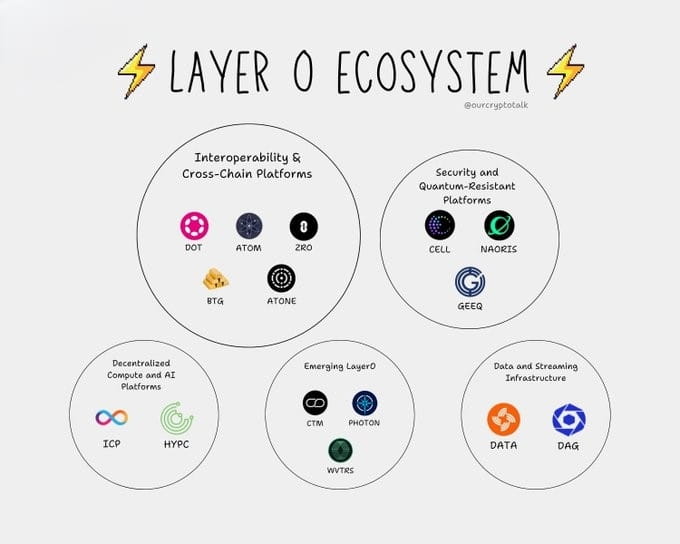
Campioni della Comunicazione Cross-Chain
Polkadot ($DOT) ha pionierato il concetto di relay chain, dove più blockchain specializzate (chiamate parachains) si connettono a un hub centrale. È come avere un'autostrada principale con più rampe di accesso: ogni blockchain mantiene la propria indipendenza beneficiando della sicurezza condivisa e del trasferimento dati senza soluzione di continuità. Gli sviluppatori possono costruire catene personalizzate utilizzando Substrate, e l'intero network rimane sicuro attraverso lo staking del token DOT.
Cosmos Hub ($ATOM) ha adottato un approccio diverso con la sua visione di un "Internet delle Blockchain." Invece di un relay centrale, Cosmos utilizza il protocollo di Comunicazione Inter-Blockchain (IBC), consentendo alle catene sovrane di comunicare tra loro direttamente. L'SDK rende sorprendentemente accessibile il lancio di nuove blockchain, e il consenso CometBFT mantiene tutto in funzione senza far lievitare i costi.
LayerZero ($ZRO) è il nuovo arrivato che sta facendo onde serie. Piuttosto che costruire blockchain, si concentra esclusivamente sulla messaggistica omnichain: consentendo a qualsiasi blockchain di comunicare con qualsiasi altra blockchain tramite Reti di Verifica Decentralizzate. Questo alimenta tutto, dai ponti agli scambi cross-chain fino ai trasferimenti NFT attraverso più reti simultaneamente.
Openverse Network ($BTG) enfatizza il design del protocollo aperto, creando percorsi per le applicazioni Layer 1 di connettersi senza gatekeeping proprietari.
Analog ($ANLOG) porta un approccio innovativo con la sua tecnologia Timechain e Nominated Proof-of-Stake, creando flussi unificati sia per i dati che per gli asset.
AtomOne ($ATONE) è emerso dalla comunità Cosmos con una filosofia incentrata sulla governance, immaginando essenzialmente come i validatori e l'infrastruttura dovrebbero allinearsi attorno ai principi di decentralizzazione.
La Rivoluzione del Calcolo Decentralizzato
Internet Computer ($ICP) è davvero sbalorditivo quando capisci cosa fa. Dimentica di ospitare la tua app su AWS o Google Cloud: ICP ti consente di eseguire interi siti web, back-end e applicazioni completamente on-chain. Ha anche strumenti AI che ti permettono di descrivere un'app in linguaggio naturale e guardarla generare codice. Invece delle tradizionali spese di gas, utilizza un modello di pagamento basato sulla combustione. Non si tratta solo di evoluzione della blockchain; sta sostituendo completamente l'infrastruttura cloud di Web2.
HyperCycle ($HYPC) sta costruendo qualcosa di radicale: un'architettura senza libro mastro progettata specificamente per agenti AI per transigere tra loro a velocità incredibili. Utilizzando il protocollo Toda/IP con sidechain e contratti intelligenti modulari, sta creando l'infrastruttura economica per l'intelligenza artificiale per operare in modo autonomo.
Infrastruttura Dati in Tempo Reale
Streamr ($DATA) elimina completamente i mediatori di dati, creando sistemi di trasporto dati in tempo reale dove puoi monetizzare i tuoi flussi di dati direttamente nelle applicazioni Web3.
Constellation ($DAG) utilizza un'architettura a Grafo Acyclic Diretto invece della tradizionale blockchain per creare pipeline di dati altamente sicure e scalabili in grado di gestire elaborazioni di big data a livello aziendale.
Il Livello di Sicurezza Resistente al Quantistico
Ecco qualcosa di cui la maggior parte delle persone non sta ancora parlando: i computer quantistici romperanno eventualmente l'attuale crittografia della blockchain. Questi progetti si stanno preparando per quel futuro.
Cellframe ($CELL) combina l'interoperabilità Layer 0 con la crittografia post-quantistica, garantendo che la comunicazione cross-chain rimanga sicura anche quando i computer quantistici diventano abbastanza potenti da minacciare la crittografia tradizionale.
Naoris Protocol ($NAORIS) utilizza modelli di intelligenza collettiva e infrastruttura fisica decentralizzata post-quantistica (DePIN) per convalidare i dispositivi in tempo reale: pensa alla sicurezza IoT ma realmente decentralizzata.
GEEQ ($GEEQ) ha inventato il consenso Proof of Honesty con il 99% di tolleranza ai guasti bizantini, creando validazione multi-chain e archiviazione dati incredibilmente sicura contro attacchi coordinati.
Infrastruttura Specializzata Emergente
c8ntinuum ($CTM) si concentra specificamente sulla scalabilità continua, costruendo un'infrastruttura orientata alle prestazioni da zero.
Photon ($PHOTON) fornisce supporto Layer 0 leggero come infrastruttura fondamentale per applicazioni decentralizzate.
Vitreus ($WVTRS) è un progetto in fase iniziale che potrebbe concentrarsi sulla gestione dati conforme e sull'integrazione AI: da tenere d'occhio mentre le regolamentazioni evolvono.
Perché Layer 0 è davvero importante
Ecco la realtà che la maggior parte delle persone ignora: non abbiamo più un problema di blockchain. Abbiamo un problema di integrazione.
Ci sono centinaia di blockchain Layer 1, ciascuna ottimizzata per cose diverse: Solana per la velocità, Ethereum per la sicurezza, Avalanche per la personalizzazione. La domanda non è quale vinca. La domanda è come funzionano tutte insieme.
È qui che Layer 0 diventa critico. È il livello invisibile di coordinamento che:
Abilita le blockchain a condividere la sicurezza senza sacrificare la sovranità
Consente a asset e dati di muoversi senza soluzione di continuità tra le reti
Crea l'infrastruttura per economie decentralizzate di calcolo e AI
Prepara la tecnologia blockchain per le minacce del calcolo quantistico
Costruisce pipeline di dati in tempo reale che sostituiscono i servizi cloud centralizzati
La Prospettiva degli Investimenti
Non sto dando consigli finanziari qui, ma pensaci logicamente: quando internet stava per essere costruito, le aziende più preziose non erano necessariamente i siti web: erano i fornitori di infrastruttura. I Cisco e le aziende di fibra ottica. I registratori di dominio e i fornitori di hosting.
Layer 0 è quel livello infrastrutturale per la blockchain.
Mentre tutti si ossessionano su quale Layer 1 supererà Ethereum o quale meme coin salirà, i progetti Layer 0 stanno costruendo silenziosamente le strade, i ponti e i sistemi di comunicazione che fanno funzionare l'intero ecosistema.
Il Punto Finale
Layer 0 non è appariscente. Non promette 100x da un giorno all'altro. Ma è assolutamente essenziale.
Senza questi protocolli, le blockchain rimangono isole isolate. Con essi, otteniamo un internet decentralizzato veramente interconnesso dove:
Le applicazioni funzionano interamente on-chain senza server centralizzati
Gli asset si muovono liberamente attraverso qualsiasi blockchain
Gli agenti AI conducono attività economiche autonome
La sicurezza rimane intatta anche contro i computer quantistici
I dati fluiscono in tempo reale senza intermediari aziendali
La rivoluzione della blockchain non riguarda solo la creazione di nuove valute o collezionabili digitali. Si tratta di ricostruire l'intera infrastruttura di internet, rendendola aperta, senza permessi e veramente decentralizzata.
E quella ricostruzione inizia a Layer 0.
Quali progetti ti entusiasmano di più? Lascia i tuoi pensieri qui sotto e discutiamo su dove sta andando questa tecnologia.