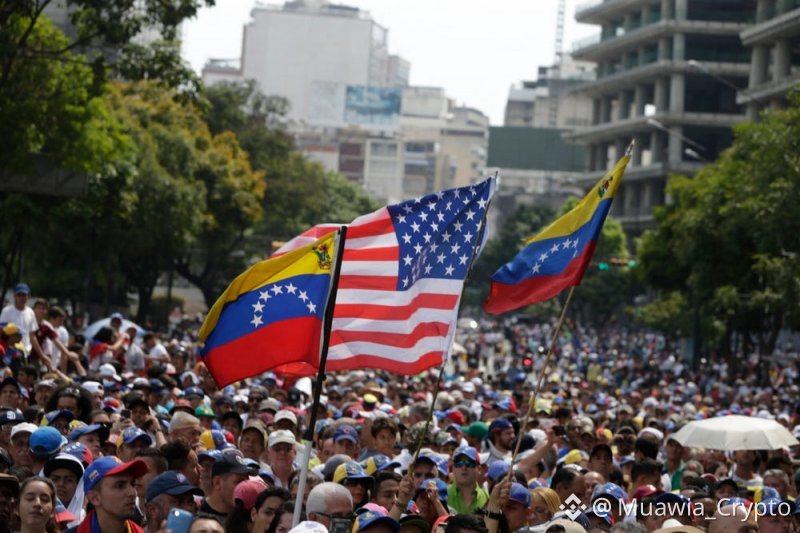
We are approaching a moment that will not be understood in real time—but will be studied for years.
What appears on the surface as a regional political maneuver is, in reality, a calculated contest over energy dominance, financial architecture, and global power projection. Venezuela is not the objective. It is the lever.
If the United States succeeds in decisively asserting control over Venezuela—the nation holding the largest proven oil reserves on Earth—the implications extend far beyond Latin America. This is not a debate about governance or ideology. It is a structural play for influence over the foundations of the global system.
WHY VENEZUELA MATTERS
Energy is not merely a commodity; it is leverage. Control over supply chains determines trade routes, alliance structures, and monetary stability. Venezuela represents one of the last remaining pieces on the global energy chessboard that can materially alter the balance of power.
STRATEGIC CONSEQUENCES
• 🛢 Energy Realignment
A Venezuela aligned with U.S. interests would significantly reduce Western dependence on Middle Eastern oil, reshaping strategic calculations across the Gulf region and tightening pressure on Iran.
• 💵 Reinforcement of the Petrodollar
Expanded influence over oil flows strengthens dollar-denominated trade, reinforcing U.S. financial supremacy at a time when alternative settlement systems are being actively explored by rival blocs.
• 🌍 A Precedent for Power Projection
Venezuela would serve as a case study—proof that sovereign states can still be restructured when they sit at the intersection of energy, finance, and geopolitics.
THE DOWNSIDE RISK
Power, when overextended, carries a cost.
If the United States becomes entangled in a prolonged or destabilizing engagement, the consequences could ripple outward—diluting political capital, straining military readiness, and emboldening adversaries across the Middle East and beyond. History shows that unresolved interventions often invite secondary crises elsewhere.
THE BROADER CONTEXT
This moment cannot be isolated.
Simultaneous developments in Venezuela, the Red Sea, and the Arabian Gulf point toward a larger pattern: an accelerating confrontation between U.S. and Chinese strategic interests. These are not disconnected flashpoints—they are pressure zones in a single, expanding competition for global leadership.