This Was Not Sudden. This Was 25+ Years in the Making.
What happened in Venezuela did not unfold overnight.
It was not impulsive.
And it was certainly not just about one man.
This moment was the final act of a long process—decades of institutional decay, criminal integration into the state, failed pressure campaigns, and a strategic recalculation by Washington.
Here is the full story—clear, direct, and grounded in structure rather than headlines.
I. The Original Fault Line (1999–2013): How Venezuela Became a Systemic Problem
In 1999, Hugo Chávez came to power promising reform.
What followed instead was a slow but decisive transformation of the Venezuelan state.
From the beginning:
Power was centralized around the presidency
Democratic institutions were weakened or bypassed
The military was embedded directly into economic management
This was not merely ideological. It was structural.
As civilian oversight eroded, corruption did not just increase—it became normalized. Over time, Venezuela evolved into a key transit corridor for narcotics moving north. This did not begin with Nicolás Maduro, but under Chávez it became institutionally embedded.
By the late 2000s, this was no longer a peripheral issue.
II. The Military–Drug Nexus: When the State Becomes the Network
By the mid-2000s:
Senior military officials controlled airports, ports, and borders
Drug shipments moved with official clearance and protection
This was not a street-level cartel problem.
This was a state-protected trafficking architecture.
The distinction matters.
Once narcotics logistics are fused with military command, the system becomes self-defending. Any reform threatens revenue. Any transparency threatens power.
At that point, the state itself becomes the obstacle.
III. Maduro Inherits a Collapsing Machine (2013)
When Hugo Chávez died in 2013, Nicolás Maduro did not inherit a functioning country—he inherited a compromised one.
Under Maduro:
The economy imploded
Oil production collapsed
International sanctions intensified
Corruption deepened further
As legal revenue disappeared, illegal revenue became indispensable. Drug transit was no longer supplemental—it became one of the regime’s primary lifelines.
From Washington’s perspective, this was a critical shift: Venezuela was no longer just unstable.
It was structurally criminal.
IV. The Legal Line Is Crossed (2020): The Indictment That Changed Everything
In March 2020, the United States took an unprecedented step.
The Department of Justice formally indicted a sitting head of state.
Maduro was charged with:
Narco-terrorism
Large-scale cocaine trafficking
Conspiracy to flood the United States with drugs
A $15 million bounty was issued.
From that moment forward, Maduro ceased to be treated as a normal foreign leader. Legally, he became a fugitive. Strategically, Venezuela became a special case.
This distinction would matter later.
V. The Pressure Phase (2020–2024): Sanctions Without Resolution
Following the indictment:
Sanctions expanded
Diplomatic isolation intensified
Negotiations repeatedly failed
Despite sustained pressure, nothing changed:
Maduro stayed in power
Drug routes remained active
The regime adapted rather than collapsed
Legal pressure alone had reached its limit.
VI. Why Venezuela — and Why Now (2024–2025)
By 2024, several factors converged:
Drug overdose deaths remained a critical U.S. crisis
Trump campaigned on enforcement, deterrence, and credibility
Mexico was politically sensitive
Venezuela was not
Venezuela had:
An active U.S. criminal indictment
Disputed elections
Minimal international protection
It was the least defensible target—and the most legally prepared one.
VII. Oil Changes the Equation
Venezuela holds the largest proven oil reserves on Earth.
According to reports, Maduro offered oil concessions to ease pressure.
That offer was rejected.
Why?
Negotiating with an indicted leader:
Weakens leverage
Locks in unfavorable terms
Legitimizes a criminal structure
The strategy was clear: Pressure first. Control later.
VIII. When Pressure Fails, Action Follows
By late 2025:
Sanctions had not removed the regime
Drug trafficking continued
Maduro remained entrenched
From the U.S. perspective, the conclusion was simple:
A criminal system will not dismantle itself.
IX. What Happened Overnight
Reports emerged rapidly:
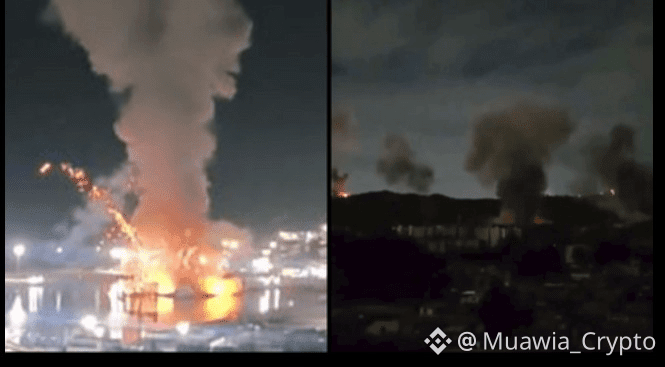
Explosions across Caracas
U.S. helicopters in Venezuelan airspace
A national emergency declared
Military units ordered to mobilize
Then confirmation:
Nicolás Maduro and his wife were captured
Narco-terrorism charges are set to proceed
X. Trump’s Announcement and the Global Shockwave
Trump announced:
A U.S.-led transitional oversight period
Entry of major U.S. oil companies into Venezuela
Expected consequences:
Increased global oil supply
Downward pressure on oil prices
Reduced revenue for Russia
Additional leverage to end the war
Final Thought: This Was Never Just About Venezuela
This operation was about:
Drugs
Oil
Power
Global leverage
The consequences will not fade in months.
They will shape geopolitics for decades.