
Financial markets don’t wait for confirmation—they react to emotion, perception, and positioning. During crisis-driven headlines, psychology often becomes a stronger force than fundamentals, and recent geopolitical developments have once again highlighted this reality.
When figures like or events involving countries such as dominate global headlines, markets immediately begin repricing risk—long before clarity arrives.
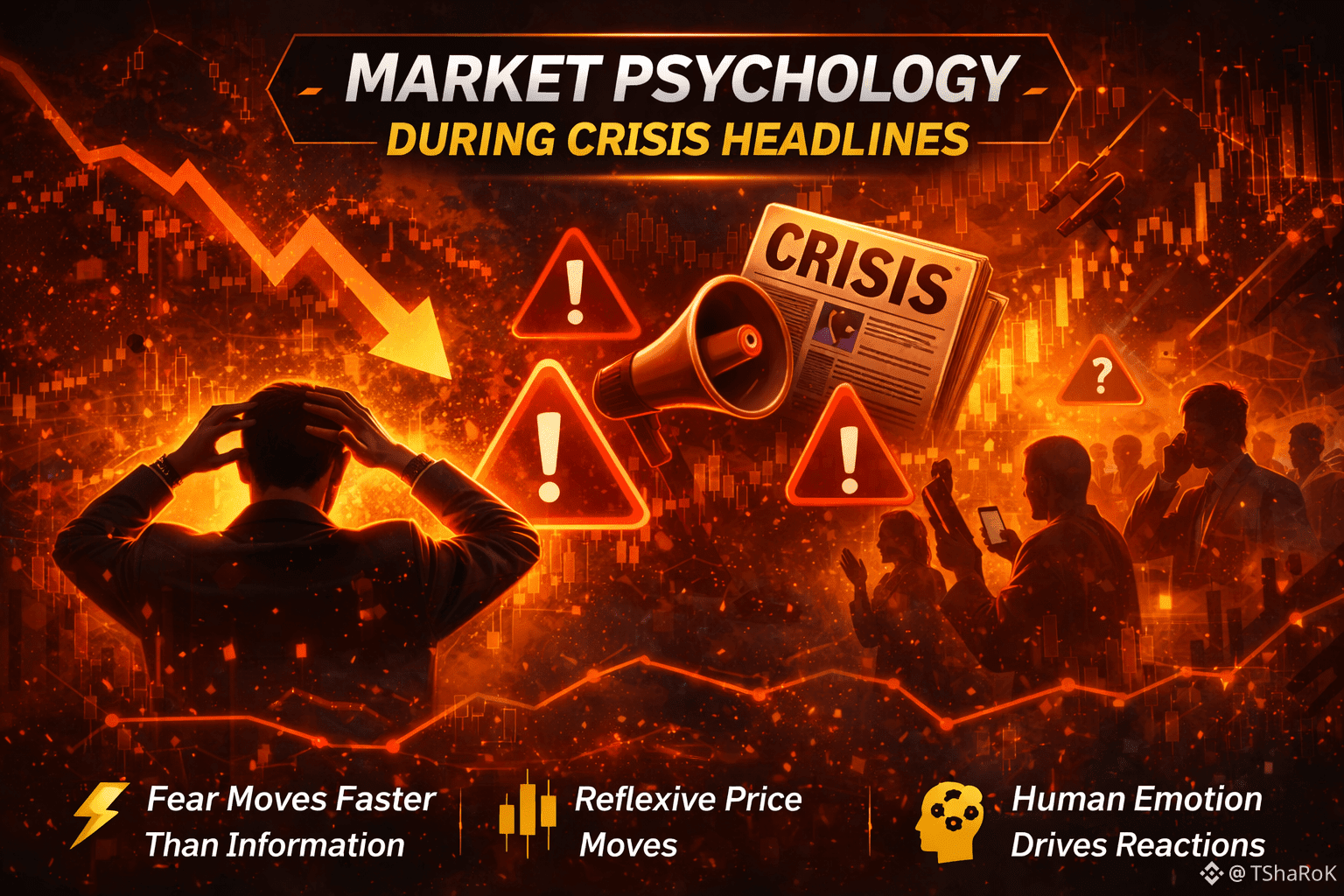
Fear Moves Faster Than Information
In moments of uncertainty, fear spreads faster than facts.
Traders respond to:
Headline risk, not full context
Potential outcomes, not confirmed ones
What others might do, not just their own analysis
This creates sharp, reflexive price movements driven by anticipation rather than evidence.
The First Move Is Often Emotional
Initial market reactions to crisis news are frequently exaggerated. Liquidity thins, spreads widen, and short-term traders rush to reposition.
This leads to:
Sudden volatility spikes
Overextended price moves
Temporary dislocations from fair value
History shows that the first move is often wrong, but it can still be powerful.
Positioning Amplifies the Reaction
Psychology alone doesn’t move markets—positioning does.
When traders are heavily skewed in one direction, unexpected headlines force rapid adjustments:
Bearish positioning can trigger short-covering rallies
Overconfidence can lead to panic exits
Crowded trades unwind violently
This mechanical behavior explains why markets sometimes move aggressively without new fundamental data.
Media, Speed, and Noise
Modern markets are hyper-connected. Social media, alerts, and breaking-news banners compress reaction time to seconds. In this environment:
Speed is rewarded, patience is punished
Narrative often overrides nuance
Noise disguises signal
Professional traders focus less on the headline itself and more on how the market reacts to it.
How Disciplined Traders Respond
Experienced market participants don’t chase fear-driven moves.
Instead, they:
Observe volume and follow-through
Assess whether reactions are sustained or fading
Wait for confirmation before committing capital
Psychological control becomes a competitive edge.
Bottom Line
Crisis headlines expose the true driver of short-term market behavior: human emotion. Fear, uncertainty, and crowd psychology can move prices faster than fundamentals ever could.
Understanding market psychology doesn’t eliminate risk—but it helps traders avoid becoming part of the panic.
In volatile moments, the goal isn’t to react first—it’s to think clearly when others can’t.
— TShaRoK
#MarketPsychology #RiskSentiment #GlobalMarkets #TradingMindset #MacroMarkets
#BinanceSquare #TShaRoK