
Ecco uno snapshot attuale dei principali conflitti di opinione nella politica interna statunitense dopo l'operazione militare statunitense in Venezuela e l'arresto del presidente Nicolás Maduro — basato su diverse notizie affidabili e sondaggi: (Reuters)
Reuters
PBS
CBS News
Al Jazeera
The Guardian
1. L'opinione pubblica è profondamente divisa
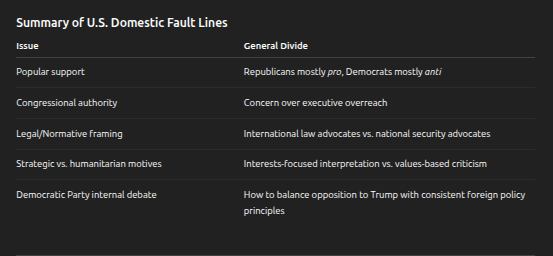
Opinioni pubbliche fortemente divise: un sondaggio Reuters/Ipsos mostra che solo circa 1 su 3 americani sostiene l'azione militare e l'arresto di Maduro. Il sostegno è prevalentemente repubblicano (circa il 65%), ma molto basso tra i democratici (circa l'11%) e modesto tra gli indipendenti. La maggior parte degli americani (circa il 72%) teme che gli Stati Uniti si impegnino troppo nelle questioni venezuelane. (Reuters)
Questo è allineato con altri sondaggi pubblici che mostrano divisioni quasi uguali tra sostegno e opposizione all'involvemento degli Stati Uniti in Venezuela. (Yahoo)
Perché ha importanza a livello interno:
I repubblicani in genere lodano l'azione come un esempio di leadership forte e decisa e un colpo contro l'autoritarismo e il traffico di droga.
I democratici criticano generalmente l'azione come un'operazione militare illegale o temeraria e avvertono del rischio di creare instabilità a lungo termine. Alcuni legislatori democratici ritengono inoltre che la critica del loro partito non debba essere un rifiuto automatico — sostenendo che gli Stati Uniti dovrebbero riconoscere quando la caduta di Maduro è stata un risultato positivo. (Axios)
2. Tensioni tra Congresso e istituzioni (poteri di guerra e controllo)
C'è crescente preoccupazione tra i legislatori — soprattutto democratici — sul fatto che l'amministrazione abbia agito senza il dovuto approvazione del Congresso in base alla Risoluzione sui Poteri di Guerra. I critici sostengono che il presidente abbia superato il suo potere esecutivo lanciando un attacco militare transfrontaliero e detenendo un capo di Stato straniero senza un'autorizzazione formale del Congresso per l'uso della forza. (PBS)
Questo dibattito si sovrappone a preoccupazioni più ampie riguardo al potere esecutivo e al controllo — un conflitto politico interno di lunga data.
3. Legittimità e norme internazionali vs. retorica sulla sicurezza nazionale
Preoccupazioni giuridiche: Avvocati e studiosi del diritto — menzionati sia a livello nazionale che internazionale — sostengono che catturare un presidente in carica senza l'autorizzazione delle Nazioni Unite potrebbe violare il diritto internazionale e gli impegni degli Stati Uniti rispetto alle norme, sollevando interrogativi sul ruolo degli Stati Uniti come "leader di un sistema internazionale basato sulle regole." (Chatham House)
Nel dibattito politico interno degli Stati Uniti:
I critici (tra cui alcuni democratici, indipendenti e accademici) vedono l'azione come potenzialmente dannosa per la credibilità degli Stati Uniti e per l'ordine globale basato sul diritto.
I sostenitori sottolineano ragioni legate alla sicurezza nazionale — come il contenimento delle reti di traffico di droga e delle minacce regionali — per giustificare l'operazione. (Reuters)
4. Interessi strategici e risorse vs. politica estera guidata da principi
C'è un dibattito sul perché gli Stati Uniti abbiano agito — al di là degli obiettivi superficiali:
Molti repubblicani definiscono pubblicamente l'azione come una battaglia contro il narcoterrorismo e il ripristino della democrazia.
I critici (anche all'interno degli Stati Uniti) sostengono che l'operazione sembra legata a interessi strategici — specialmente al petrolio venezuelano e alla posizione geopolitica — piuttosto che a imperativi puramente umanitari o legali. (Chatham House)
Gli oppositori temono che questo possa alimentare accuse di "imperialismo" e alimentare sentimenti anti-americani sia all'estero che in patria, complicando gli obiettivi dichiarati dall'amministrazione.
5. Messaggi partigiani e dibattito interno del Partito Democratico
All'interno del Partito Democratico stesso, c'è un conflitto su come rispondere:
Alcuni democratici ritengono che il partito dovrebbe emettere una condanna forte e inequivocabile dell'operazione.
Altri sostengono che gli oppositori di Trump non dovrebbero opporsi automaticamente a ogni azione e che l'autoritarismo di Maduro complica una critica generica, specialmente considerando le precedenti condanne democratiche delle elezioni di Maduro. (Axios)
Questo illustra le tensioni interne riguardo al modo (e se) separare la critica a Trump dalle sostanziali disaccordi sulla politica estera.
Riepilogo delle linee di frattura interne negli Stati Uniti
$BNB $BTC $ETH #Binance #BinanceSquare #worldeconomicforum #PopularTopic