
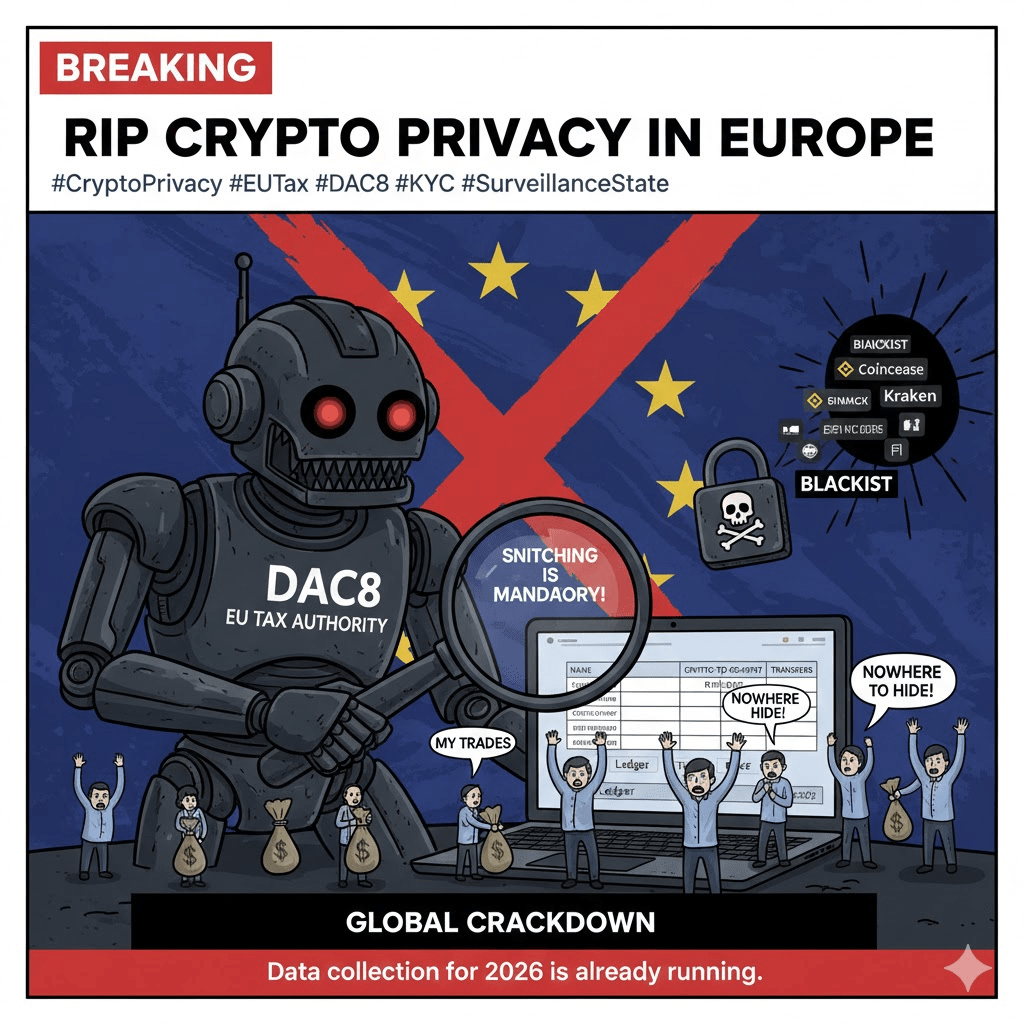
A partire dal 1 gennaio, il DAC8 è ufficialmente attivo in tutta l'UE — e cambia fondamentalmente il modo in cui viene monitorata l'attività cripto.
Se vivi in uno stato membro dell'UE, la visibilità normativa è appena aumentata notevolmente.
Ecco cosa sta succedendo 👇
🔍 1) Segnalazione obbligatoria
I fornitori di servizi cripto (scambi, broker, piattaforme) devono ora segnalare:
• La tua identità
• ID fiscale
• Cronologia delle transazioni
Tutto ciò va direttamente alle autorità fiscali.
🔄 2) Copertura delle transazioni più ampia
La segnalazione ora include:
• Crypto ↔ Fiat
• Cripto ↔ Cripto
• Trasferimenti che coinvolgono piattaforme custodiali
Questo amplia significativamente ciò che i regolatori possono vedere rispetto al passato.
🪪 3) KYC È OBBLIGATORIO
Se le informazioni fiscali richieste non vengono fornite, le piattaforme potrebbero essere costrette a limitare o sospendere gli account in base alle normative UE.
🌍 4) Raggio globale
Le borse non UE che servono residenti UE devono rispettare le normative — altrimenti rischiano di essere escluse dal mercato europeo.
📊 Cosa significa davvero
Le autorità fiscali dell'UE stanno creando un sistema centralizzato di segnalazione per gli asset digitali.
La raccolta dei dati per gli anni fiscali 2026 è già in corso.
Questo non ha lo scopo di vietare le cripto.
Si tratta di trasparenza totale e applicazione delle norme.
⚠️ Punto fondamentale:
Il cripto in Europa sta passando da una dichiarazione autonoma a un monitoraggio istituzionale.
La privacy dipende ora dalla struttura, dalla consapevolezza e dal rispetto delle normative, non dall'ignoranza.
Se non stai pensando a come la regolamentazione influisce sulla tua strategia cripto —
sei già in ritardo.
📉🇪🇺



SEGUI • MI PIACE • CONDIVIDI