For a long time, blockchains were built with a kind of optimism that only works early on.
One chain, one system, one set of nodes doing everything. Execute transactions. Store history. Reach consensus. Keep data available forever. As long as usage was light, that approach felt elegant.
Then systems grew up.
Data got heavier. State grew more complex. Hardware requirements crept higher. Running a full node slowly stopped being something regular users could justify. Nothing failed outright, but the cracks became harder to ignore.
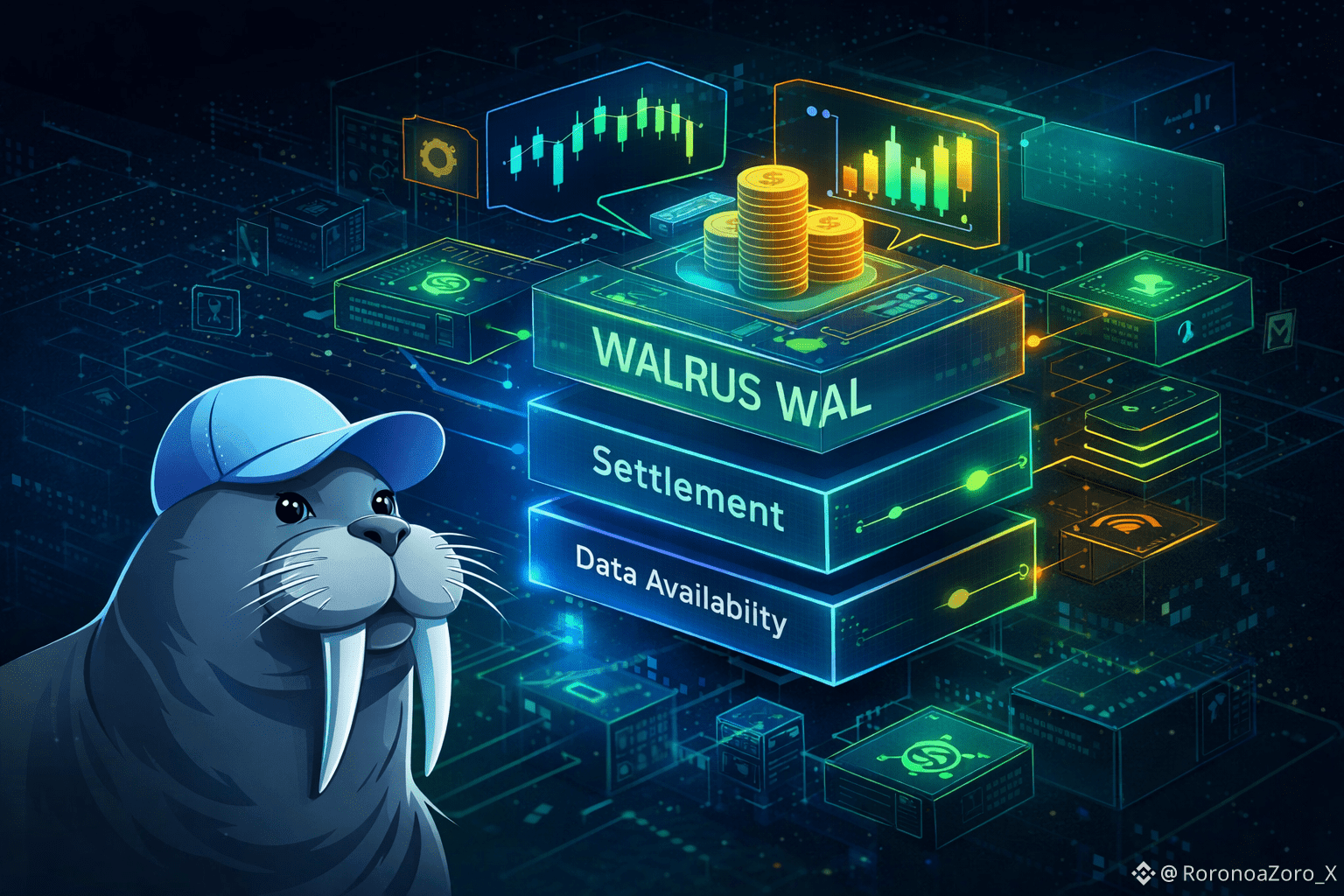
That is where modular architecture comes from. And it is why WAL exists.
Monolithic Chains Don’t Break, They Accumulate
The issue with monolithic design is not that it stops working.
It keeps working while quietly asking more and more from participants.
More storage.
More bandwidth.
More execution complexity.
More historical baggage.
Over time, fewer people can keep up. Verification becomes something you assume others are doing correctly. Decentralization turns into a property of the protocol, not of the people actually running it.
Modular architecture is an admission that this path does not age well.
Modular Design Is About Honesty, Not Performance
Modularity is often framed as a scaling strategy. Faster execution. More throughput. Better specialization.
The deeper reason is simpler. It is about being honest about what each layer should be responsible for.
Execution layers should execute.
Settlement layers should finalize.
Data layers should make data available.
When those roles blur, systems get fragile. When they stay clean, systems last longer.
Walrus was designed with that separation in mind from the start.
WAL Exists Because Data Outlives Everything Else
Execution is fleeting.
A transaction runs.
A block finalizes.
The system moves forward.
Data stays.
Rollups may need it months later.
Users may need it during exits.
Auditors may need it years down the line.
In a modular world, data availability becomes the shared dependency that everything else leans on. If it fails, nothing above it matters.
WAL is aligned with that reality. Not activity. Not hype. Persistence.
Why WAL Is Not an Execution Token by Design
Execution tokens are reactive by nature.
They respond to congestion.
They respond to new applications.
They respond to changing workloads.
Over time, they absorb complexity. Governance gets noisy. Incentives fragment. The token’s role keeps expanding.
Data availability does not behave that way.
Its requirements are boring and stable. Data must be there. It must be accessible. It must be verifiable even when conditions are bad.
WAL benefits from that stability. Its purpose does not need to evolve just because the ecosystem does.
Modular Systems Are Tested When Things Are Quiet
The real test of modular architecture is not during growth phases.
It is during quiet periods.
When:
Incentives thin out
Attention moves on
Usage stabilizes
History still matters
Execution demand can fall without breaking the system. Data availability cannot.
WAL is designed for that phase. The part of the lifecycle most systems ignore because it does not make for good marketing.
Walrus Fits Because It Refuses to Do Too Much
Walrus does not execute transactions.
It does not manage application state.
It does not compete for developers.
It focuses narrowly on data availability and nothing else.
That restraint is why Walrus fits naturally into modular stacks. It behaves like infrastructure, not like a platform fighting for attention.
In modular design, the most important layers are often the least visible.
This Shift Is Already Happening
Builders are slowly changing how they think.
Instead of asking:
How fast can this run?
They are asking:
What assumptions does this rely on long term?
Who is responsible when incentives drop?
Can users still verify things later?
Those questions point directly to data availability as foundational infrastructure, not an add-on.
WAL exists because that shift is already underway.
Final Takeaway
The move toward modular blockchain architecture is less about innovation and more about realism.
Realism about data growth.
Realism about participation.
Realism about how systems behave over years, not weeks.
WAL makes sense in that context because it is not trying to win the execution race. It is trying to make sure the race can still be verified after it is over.
Execution can change.
Applications can come and go.
Narratives can rotate.
But without accessible data, none of it can be trusted.