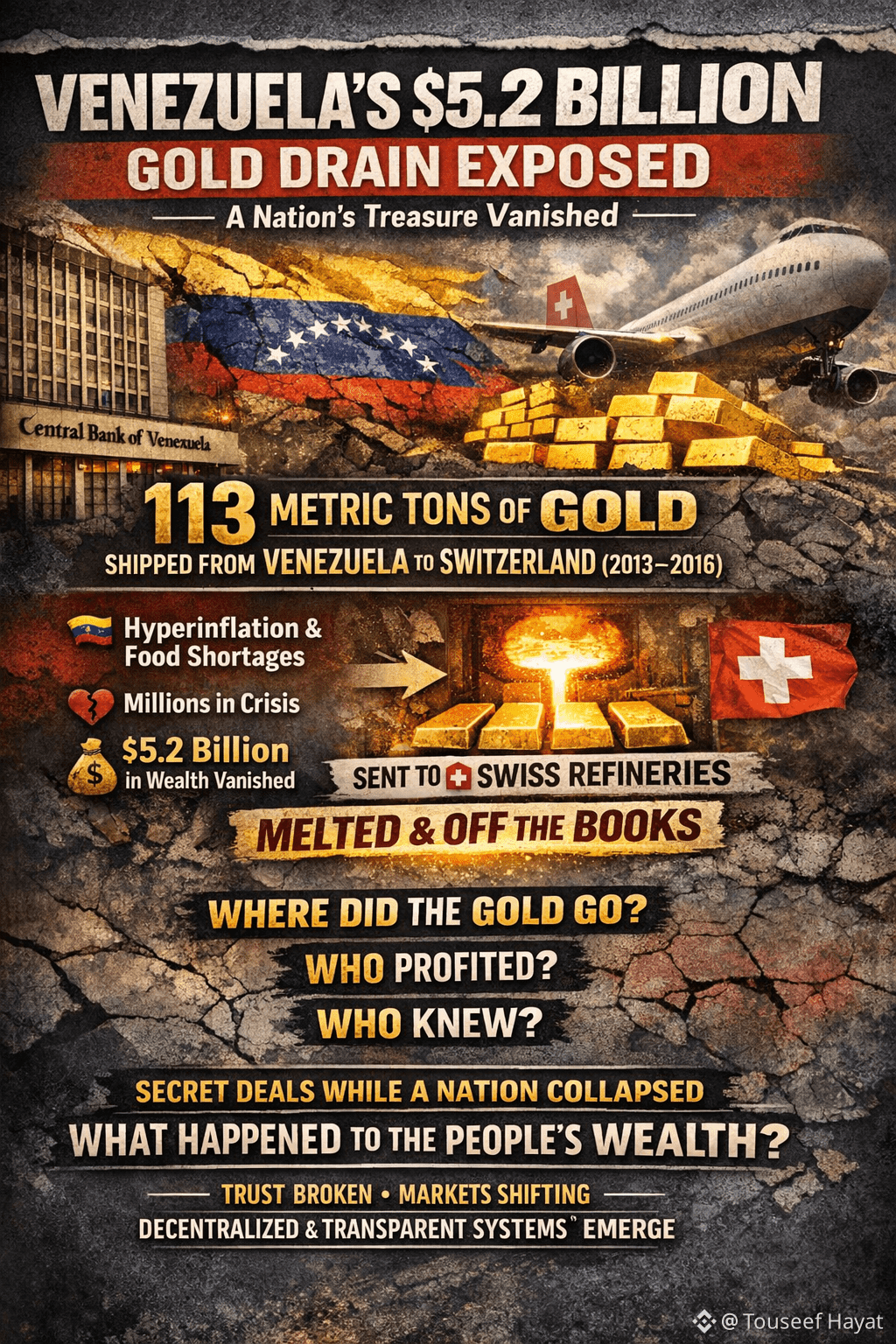
Between 2013 and 2016, Venezuela quietly shipped 113 metric tons of gold — worth nearly $5.2 billion — from its Central Bank reserves to Switzerland, according to recently released Swiss customs data and reporting by Reuters. �
CiberCuba +1
This sizeable transfer took place during the early years of President Nicolás Maduro’s rule, at a time when Venezuela’s economy was collapsing under falling oil prices, rising inflation, and mounting financial stress. Facing shrinking foreign exchange reserves and limited access to international credit, the government turned to its gold holdings as an emergency source of hard currency. �
LA NACION
Switzerland — one of the global hubs for gold processing and certification — received the shipments. Swiss refineries typically refine, verify and re-certify gold before it is redistributed into international markets. However, Swiss customs data does not reveal where the gold ultimately ended up or who benefited from these transfers once the metal left Swiss soil. �
CiberCuba
📉 The Economic Backdrop
Venezuela’s decision to move so much gold abroad occurred amid a deepening economic crisis. By 2014, the collapse in oil prices hit hard — oil was (and remains) Venezuela’s largest export. With foreign earnings drying up, gold became one of the few assets capable of generating liquidity. �
LA NACION
During this period:
Hyperinflation took hold.
Basic goods became scarce.
Millions of Venezuelans faced growing hardship.
Selling reserves that were meant to underpin the nation’s financial stability illustrates the severity of the crisis. �
LA NACION
🛑 A Sudden Stop
Gold exports to Switzerland halted after 2016. Customs records show no shipments from 2017 through 2025, a timeframe that overlaps with European Union sanctions against Venezuelan officials tied to corruption and human rights abuses — sanctions that Switzerland later adopted in part. �
CiberCuba
Analysts also suggest that the Venezuelan central bank’s gold reserves may have been largely depleted by 2017, leaving nothing significant left to export. �
CiberCuba
🔍 What We Still Don’t Know
Swiss customs figures do not disclose the final destination of the gold, nor whether proceeds from its sale ended up in accounts tied to Venezuelan officials or third parties. Swiss authorities have recently frozen assets held by Nicolás Maduro and 36 associates, but have not clarified whether any of those assets are linked to these past gold transfers. �
Moneycontrol
This opacity has raised concerns among economists, watchdog groups, and Venezuelans alike about transparency and accountability for national wealth sold during a period of crisis.
🧠 Broader Implications
The revelations underscore a stark reality: when economic trust erodes and traditional financial channels become restricted, governments may resort to secretive asset sales. This phenomenon also fuels interest in transparent, decentralized systems such as tokenized gold or on-chain verifiable assets — tools some analysts argue could help prevent future cases where national wealth vanishes from public view. �
Binance
In short: The Venezuela-Switzerland gold story is more than historical accounting — it’s a cautionary tale about wealth management in crisis, the limits of financial transparency, and the global systems that process and trade sovereign assets. �
CiberCuba
#USTradeDeficitShrink #ZTCBinanceTGE #WriteToEarnUpgrade #BTCVSGOLD