
Decentralized storage has been discussed for years, yet very few systems have managed to make it truly usable. Most solutions struggle with high costs, slow retrieval, and designs that work well on paper but fail under real application demands. Walrus Protocol approached the problem differently. Instead of forcing blockchain technology to do something it was never optimized for, Walrus redesigned the storage model from the ground up.
At its core, Walrus recognizes a simple truth. Blockchains are excellent at coordination, verification, and ownership, but poor at handling large data. Trying to store full files directly onchain leads to congestion, inefficiency, and unnecessary expense. Walrus solves this by separating responsibilities. The blockchain manages logic such as permissions, payments, and metadata, while the data itself is stored across a decentralized network of independent storage nodes.
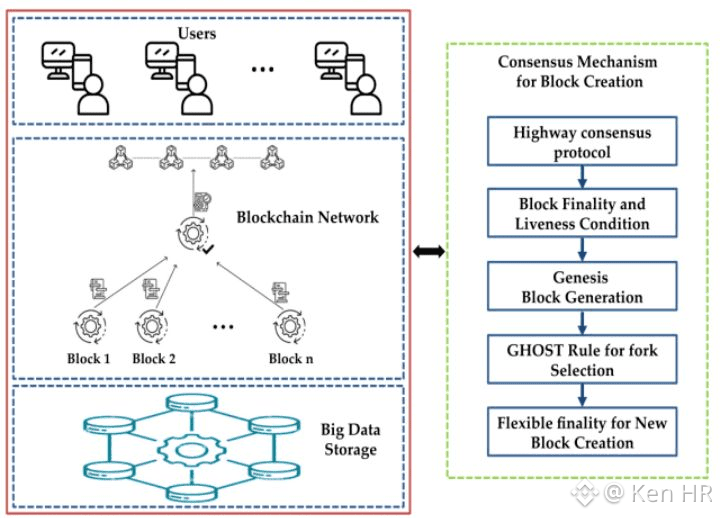
This architectural separation is what turns theory into a working system. By keeping heavy data operations off the blockchain, Walrus avoids the performance bottlenecks that plague many decentralized storage projects. At the same time, it retains the trust guarantees that users expect from blockchain-based systems.
A key innovation behind this system is erasure coding. Traditional decentralized storage often relies on full replication, where entire files are copied multiple times across different nodes. While this increases redundancy, it also multiplies costs and storage requirements. Walrus breaks files into smaller encoded fragments and distributes them across the network. The original file can be reconstructed even if some fragments are missing, allowing the system to remain reliable without wasteful duplication.
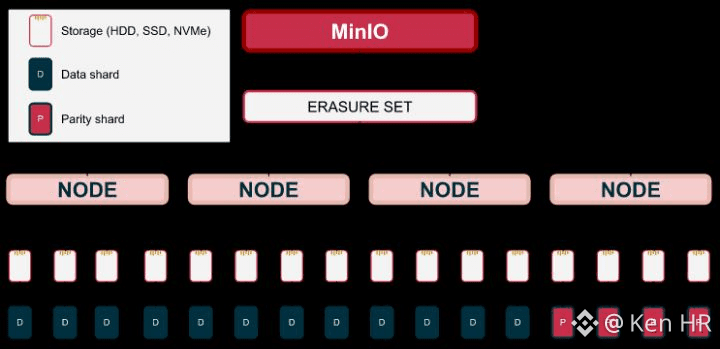
This approach dramatically improves efficiency. Storage providers are not burdened with unnecessary replication, and users benefit from lower costs without sacrificing durability. The system is resilient by design, not by excess.
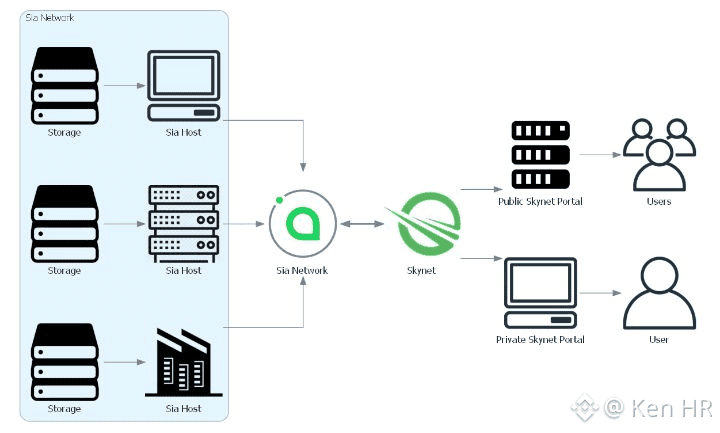
Walrus also treats decentralization as more than a buzzword. Storage responsibilities are spread across independent nodes, reducing reliance on centralized infrastructure. This distribution minimizes single points of failure and strengthens resistance against censorship or coordinated shutdowns. For applications that rely on uninterrupted access to data, this level of resilience is essential.
Privacy plays an equally important role. Many storage platforms depend on trusted gateways or centralized access layers that weaken privacy guarantees. Walrus avoids this by embedding privacy into the protocol itself. Data access rules are enforced cryptographically, and storage nodes do not require knowledge of the full dataset to perform their role. This design is particularly valuable for enterprise data, decentralized social platforms, and AI workloads that involve sensitive information.
To ensure the system remains sustainable, Walrus aligns incentives through staking and governance. Participants who contribute resources and maintain reliability have a direct stake in the network’s success. Governance mechanisms allow stakeholders to influence protocol upgrades and economic parameters, encouraging long-term participation rather than short-term speculation.
Operating on the Sui blockchain further strengthens this model. Sui’s high-throughput execution and object-based architecture complement Walrus’s modular design. Onchain operations remain fast and efficient, while offchain storage scales independently. This balance allows Walrus to support data-heavy applications without compromising performance or decentralization.
What truly sets Walrus apart is its focus on execution over abstraction. Instead of promising that decentralized storage will eventually work, it delivers a system that already does. Every design decision reflects an understanding of real-world constraints, from bandwidth limitations to economic sustainability.
As Web3 applications grow more complex and data-intensive, storage can no longer be an afterthought. Walrus turns decentralized storage into a working system by respecting the strengths and limits of blockchain technology. In doing so, it provides the kind of quiet, reliable infrastructure that real adoption depends on.

