
In most crypto conversations, infrastructure is invisible. People notice tokens, yields, and fast narratives long before they notice the systems quietly doing the heavy lifting. Walrus Storage sits firmly in that invisible layer. While many projects brand themselves as DeFi from day one, Walrus feels different because it is designed less like a financial product and more like a foundational utility. Its focus is not on speculation, but on making decentralized systems actually work at scale.
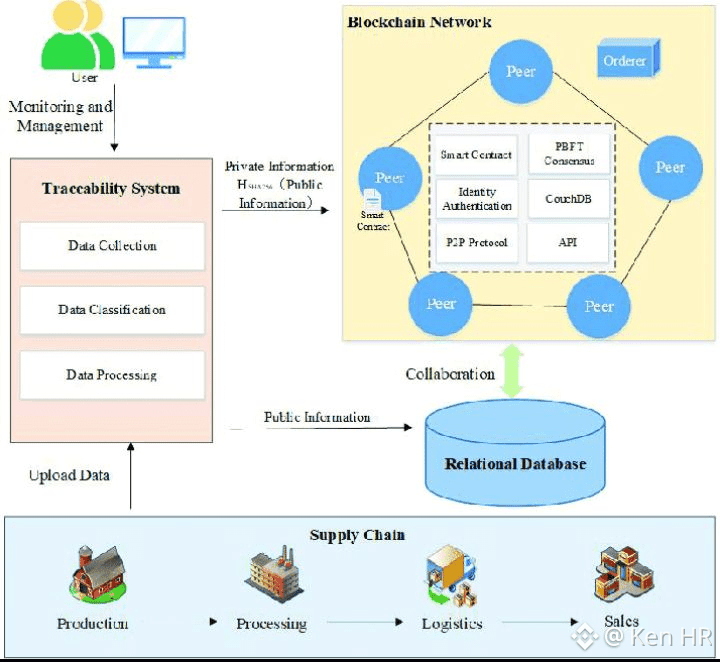
At its core, Walrus Protocol approaches blockchain storage as a long term infrastructure challenge. Instead of forcing large datasets directly onto a chain, it separates responsibilities. The blockchain manages ownership, permissions, and verification, while the storage network handles the heavy data. This architectural choice immediately places Walrus closer to cloud infrastructure than to yield driven DeFi applications.
Traditional DeFi protocols often prioritize composability and liquidity flows. Walrus prioritizes reliability, durability, and predictable performance. These are not metrics that pump overnight, but they are essential for builders who need guarantees. Applications handling media files, AI datasets, or decentralized social content cannot rely on fragile or temporary storage. Walrus is built to survive node failures, network congestion, and long usage cycles, which is the mindset of infrastructure, not finance.
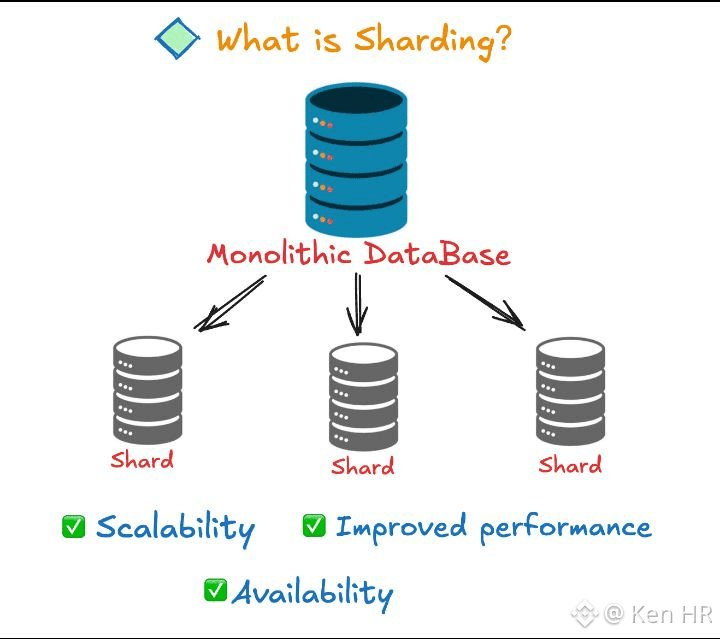
One of the strongest signals of Walrus being infrastructure first is how it treats redundancy. Instead of fully replicating data across many nodes, Walrus uses erasure coding to split files into encoded fragments. Only a portion of these fragments is required to reconstruct the original file. This reduces storage overhead while increasing resilience. The result is a system optimized for efficiency and uptime, not for token incentives alone.
Because Walrus runs on Sui, it benefits from fast finality and low latency for coordination. Yet the real work happens off chain in the storage layer. This mirrors how real world infrastructure operates. Control planes are lightweight, while data planes carry the heavy load. By adopting this model, Walrus aligns itself with how scalable systems are built outside of crypto.
Another reason Walrus feels closer to infrastructure is its neutral positioning. It does not compete with applications built on top of it. Instead, it enables them. Whether a developer is building a DeFi dashboard, an NFT marketplace, or a decentralized AI platform, Walrus provides storage without dictating use cases. This neutrality is a hallmark of true infrastructure layers.
Economic design also reflects this mindset. Storage costs are predictable and tied to actual resource usage rather than speculative loops. Incentives exist to keep nodes honest and available, not to encourage short term farming behavior. Over time, this creates a healthier network where participants are aligned around service quality rather than hype cycles.
From a user perspective, this means Walrus may not feel flashy. There are no constant yield updates or aggressive marketing narratives. Instead, there is quiet reliability. Files remain accessible. Data remains verifiable. Applications continue running even when parts of the network go offline. These outcomes are boring in the best possible way, because they signal maturity.
In the broader Web3 stack, Walrus occupies the same mental category as databases, cloud storage, and networking layers in traditional tech. DeFi protocols may come and go, but infrastructure compounds in value as more systems depend on it. Every new application that stores data through Walrus strengthens the network and validates its design choices.
This is why Walrus Storage feels closer to infrastructure than DeFi. It is built with patience, technical restraint, and a focus on real problems. In a space often driven by short term narratives, Walrus is positioning itself as something more durable. Not a trend, but a backbone.

