
Walrus Protocol is quietly solving one of the hardest problems in Web3: how to store large volumes of data without making the system economically unsustainable. For years, decentralized storage has promised censorship resistance and user ownership, yet high costs and inefficiencies have limited real adoption. Walrus WAL changes this dynamic by approaching storage as infrastructure rather than speculation, focusing on efficiency, durability, and long term viability.
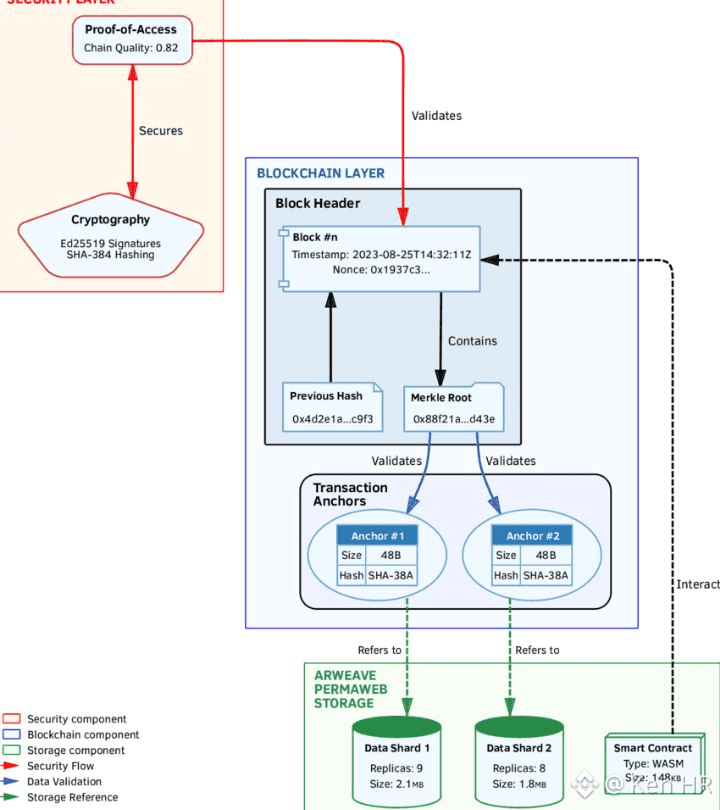
At the core of Walrus is a simple but powerful idea. Blockchains are excellent at coordination, permissions, and settlement, but they are not designed to store massive files. Walrus separates these responsibilities cleanly. On chain logic handles ownership, access rules, and payments, while the actual data lives on a decentralized storage layer optimized for scale. This separation dramatically reduces cost while preserving security and trust guarantees.
Walrus is built on Sui, which provides high throughput and low latency for coordination tasks. Instead of forcing every node to store full copies of files, Walrus relies on advanced erasure coding. Large files are split into many smaller pieces and distributed across independent storage providers. Only a subset of these pieces is required to reconstruct the original data, which means the network remains resilient even if multiple nodes go offline.
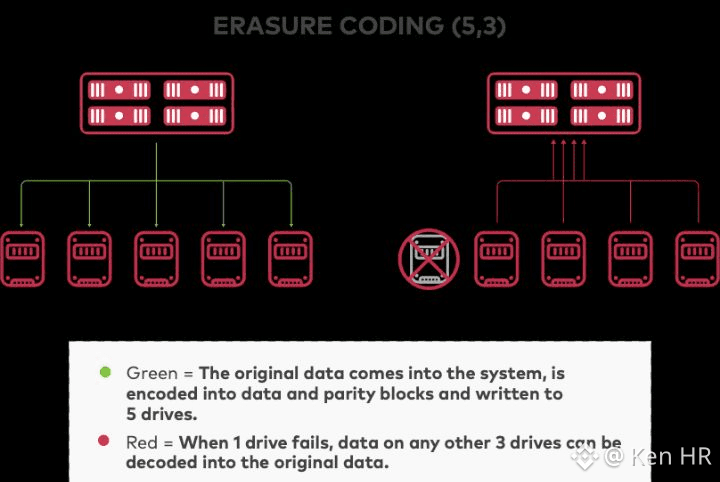
This design has a direct economic impact. Traditional decentralized storage systems often rely on heavy replication, multiplying storage costs several times over. Walrus avoids this overhead. By reducing redundant data while maintaining strong recovery guarantees, storage providers can operate profitably with lower hardware and bandwidth requirements. These savings are passed on to users, making decentralized storage competitive with centralized cloud solutions.
The WAL token plays a critical role in aligning incentives across the network. Storage providers earn WAL for reliably hosting data, while users pay predictable fees based on actual storage usage rather than speculative pricing models. This creates a sustainable market where supply and demand meet naturally. There is no need for artificial subsidies or short term incentives that collapse once rewards dry up.
Economic viability is also strengthened by Walrus’s long term focus. The protocol is designed to support data heavy applications such as decentralized social platforms, AI workloads, NFT media hosting, and large scale Web3 archives. These use cases generate consistent demand over time, which stabilizes revenue for storage providers and reinforces network security. Instead of chasing hype cycles, Walrus grows alongside real applications.
Another key factor is reliability. Enterprises and developers need confidence that their data will remain accessible years into the future. Walrus’s recovery guarantees, combined with decentralized governance and staking mechanisms, encourage honest behavior and long term participation. Providers who act maliciously or fail to meet performance standards risk losing rewards, while reliable operators are consistently incentivized.
From a user perspective, the experience is straightforward. Developers interact with Walrus as an infrastructure layer, not a complex financial product. They pay for storage, retrieve data efficiently, and build applications without worrying about underlying economic fragility. This simplicity is essential for mainstream adoption and sets Walrus apart from many experimental storage networks.
In a broader Web3 context, Walrus represents a shift in mindset. Decentralized storage no longer needs to be an idealistic experiment that sacrifices efficiency for ideology. With Walrus WAL, it becomes a practical service that balances cost, security, and scalability. By making decentralized storage economically viable, Walrus lays the groundwork for a more resilient and data rich decentralized internet.
As Web3 continues to mature, infrastructure will matter more than promises. Walrus WAL shows that with thoughtful design and aligned incentives, decentralized systems can compete on economics, not just principles. This is how decentralized storage moves from theory into real world adoption.

