

All'inizio di quest'anno, presentiamo un nuovo insieme di indicatori che portano le metriche fondamentali cripto nei tuoi grafici. Questi indicatori riassumono oltre 30 metriche in quattro categorie analitiche principali: Finanziario, Rete, Proprietà e Sociale.
Con questi strumenti, puoi studiare gli asset crittografici non solo attraverso i movimenti dei prezzi, ma anche tramite dati on-chain, struttura di proprietà e dinamiche sociali. Puoi leggere riguardo a ciascun indicatore nella nostra base di conoscenza. Ora, approfondiamo ogni categoria.
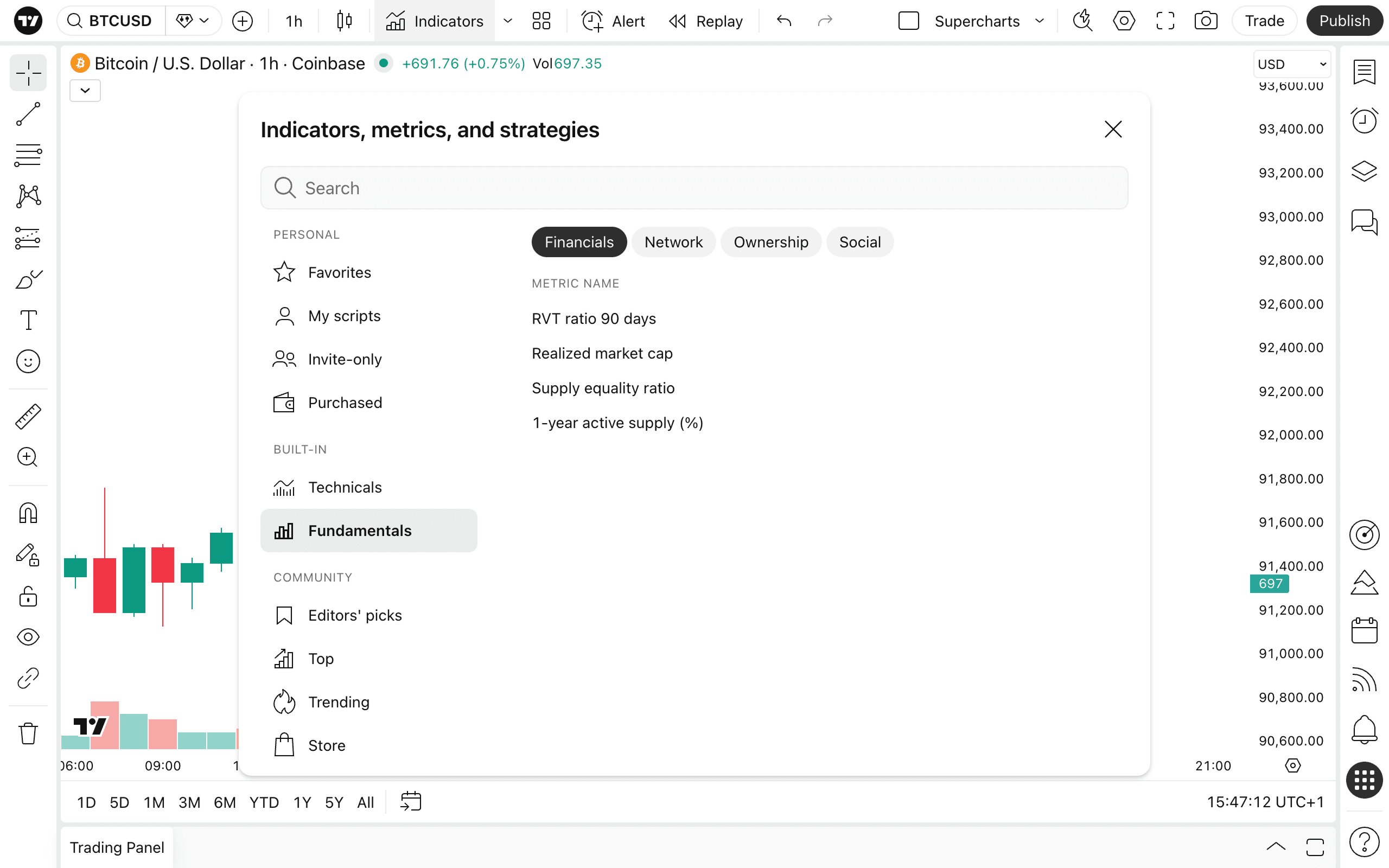
Finanze
Questa categoria collega le metriche economiche con l'attività di rete e la valutazione di mercato.
Ad esempio, la capitalizzazione di mercato realizzata calcola il valore totale di tutte le monete in base al loro ultimo prezzo di movimento sulla blockchain, offrendo un'immagine più accurata di quanto effettivamente pagato dai partecipanti rispetto alla capitalizzazione di mercato classica. È utile per valutare il fair value, individuare le fasi di accumulazione e distribuzione e identificare le zone di maggiore interesse a lungo termine dei partecipanti.
Il rapporto RVT (90 giorni) confronta la capitalizzazione di mercato con il volume delle transazioni on-chain per verificare se i prezzi correnti sono supportati da un'attività di rete reale. Altre metriche, come il rapporto qualità dell'offerta e la fornitura attiva a 1 anno (%), contribuiscono all'analisi fornendo informazioni sulla quota di possessori a lungo termine e sul comportamento dei wallet "dormienti".
Rete
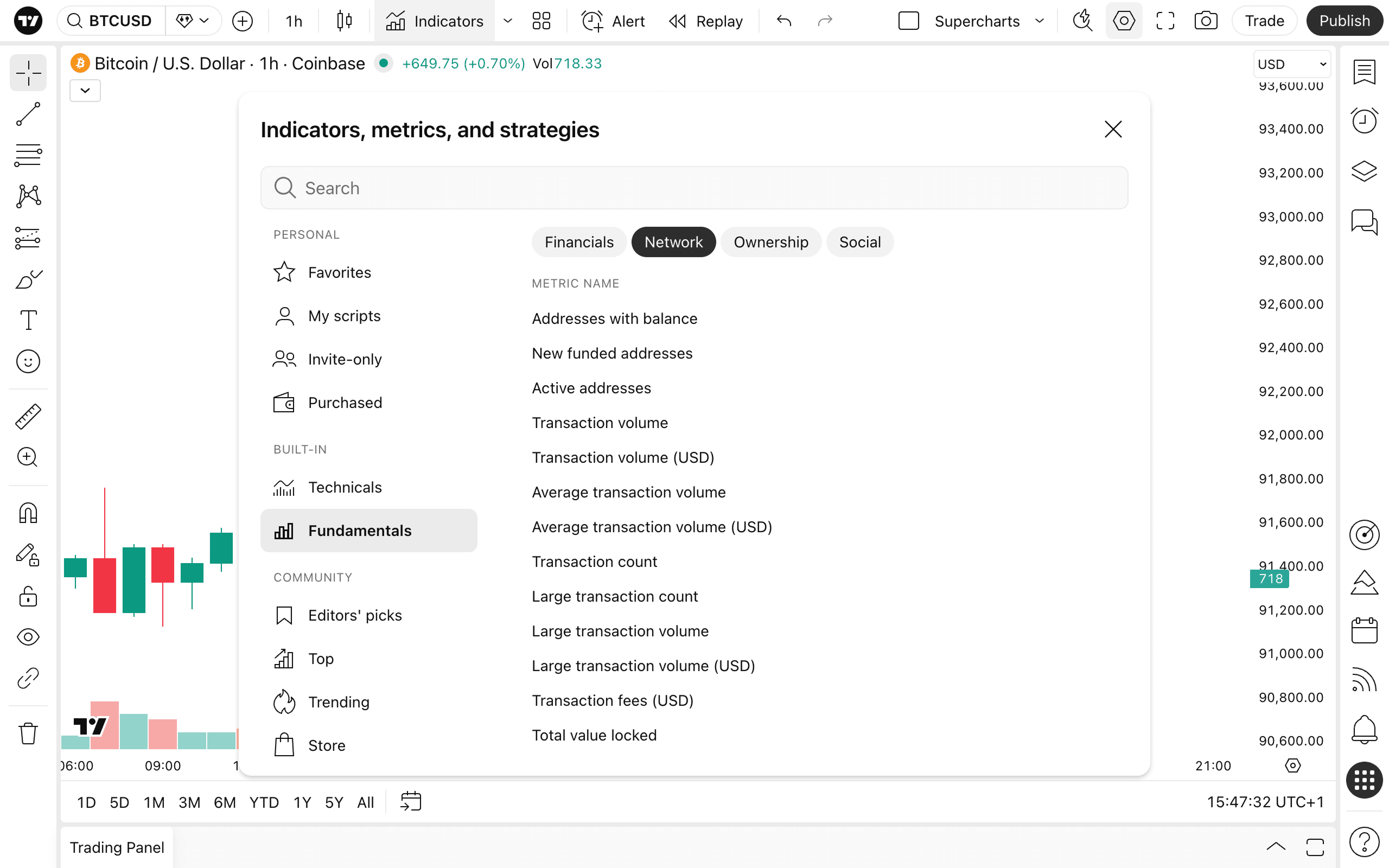
Le metriche di rete registrano l'effettiva attività degli utenti e l'intensità di utilizzo della rete. L'aumento degli indirizzi attivi, del numero di transazioni e del volume delle transazioni (sia in token che in USD) spesso conferma la solidità dell'andamento dei prezzi, mentre le divergenze tra prezzo e attività on-chain possono suggerire una crescita speculativa.
Altri parametri, come il numero elevato di transazioni e il volume elevato delle transazioni, monitorano l'attività dei principali operatori e gli afflussi di capitale istituzionale. Inoltre, il valore totale bloccato (TVL) aiuta a valutare la portata e la domanda degli ecosistemi crypto, in particolare per i protocolli DeFi.
Proprietà
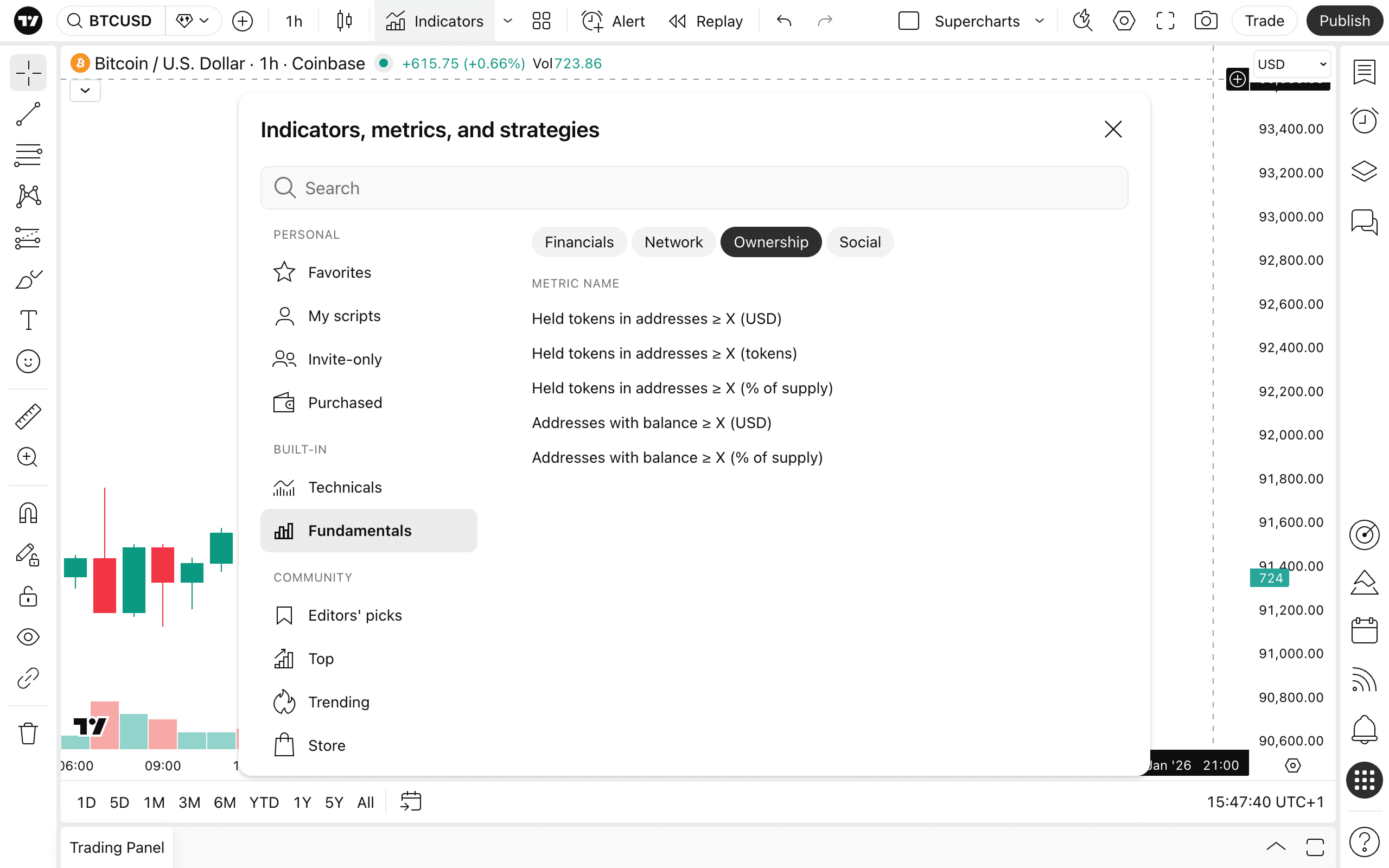
Gli indicatori di proprietà mostrano come i token vengono distribuiti tra gli indirizzi in base a una soglia scelta, X. Ogni indicatore riflette il comportamento combinato degli indirizzi che superano tale saldo, consentendo l'analisi di diversi gruppi di titolari, dagli utenti al dettaglio alle balene:
I valori X bassi coprono un ampio spettro di indirizzi, compresi i piccoli detentori e i portafogli attivi, ideali per analizzare l'impegno complessivo.
I valori X medi si concentrano sui detentori di medie e grandi dimensioni, escludendo i saldi più piccoli per ottenere dinamiche più chiare.
Valori X elevati isolano il comportamento delle balene, il che è utile per monitorare gli spostamenti di capitale e i potenziali cambiamenti del mercato.
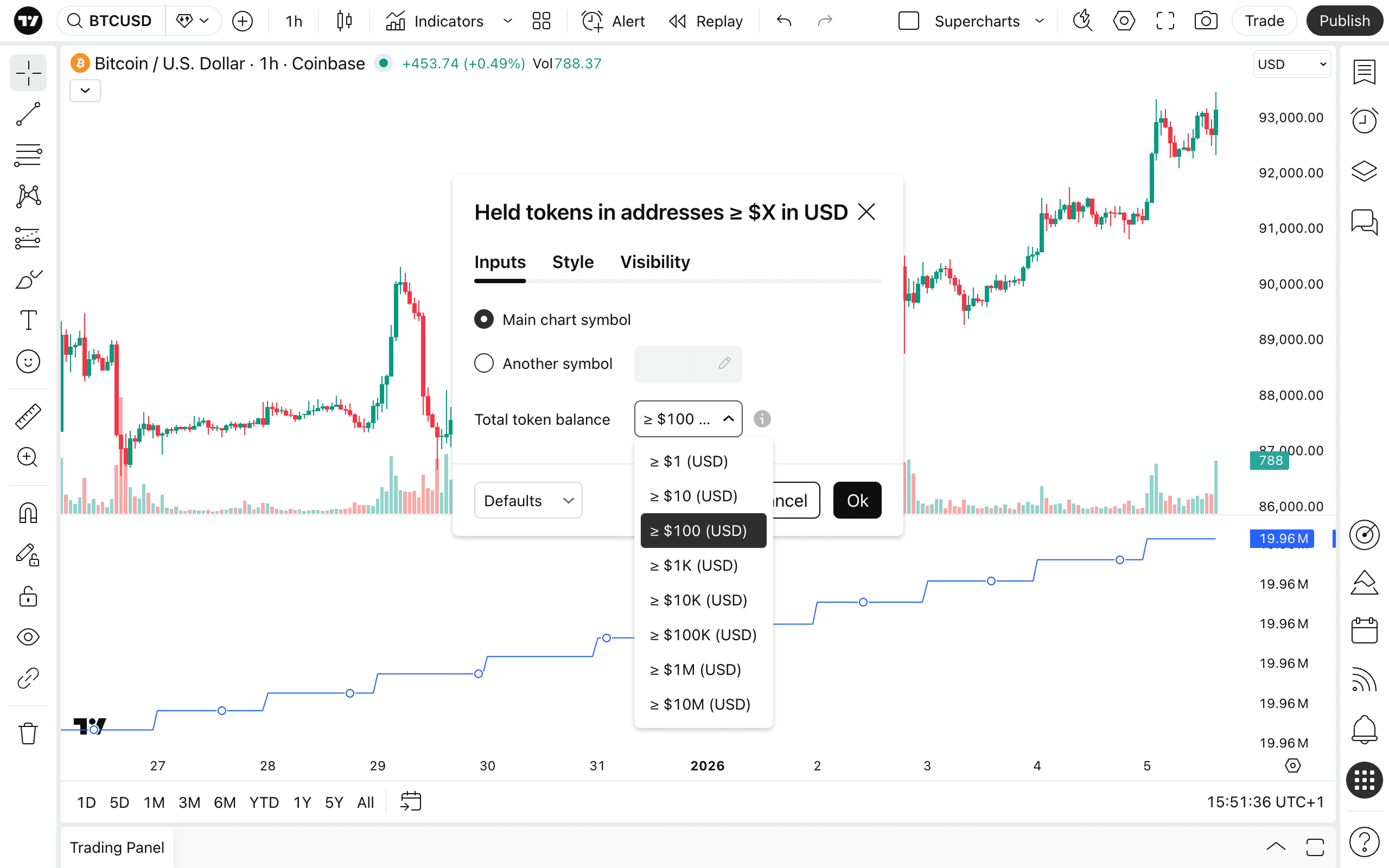
Questi indicatori utilizzano un valore X predefinito, ma è possibile modificare la soglia nelle impostazioni dell'indicatore per adattare l'analisi a un asset, un intervallo di tempo o un obiettivo di trading specifico.
Sociale
Gli indicatori social riflettono il sentiment e l'attenzione degli utenti verso una criptovaluta. La metrica del sentiment (%) mostra l'umore generale: valori vicini a 100 indicano aspettative positive, mentre valori vicini a 0 indicano una negatività prevalente.
Metriche come post attivi, post creati, contributori attivi e contributori creati misurano l'interesse della community verso una risorsa e il coinvolgimento complessivo, mentre la dominanza social (%) confronta le menzioni di una risorsa con quelle di altri progetti. Queste informazioni sono particolarmente utili per individuare le prime fasi di interesse crescente e valutarne la stabilità.
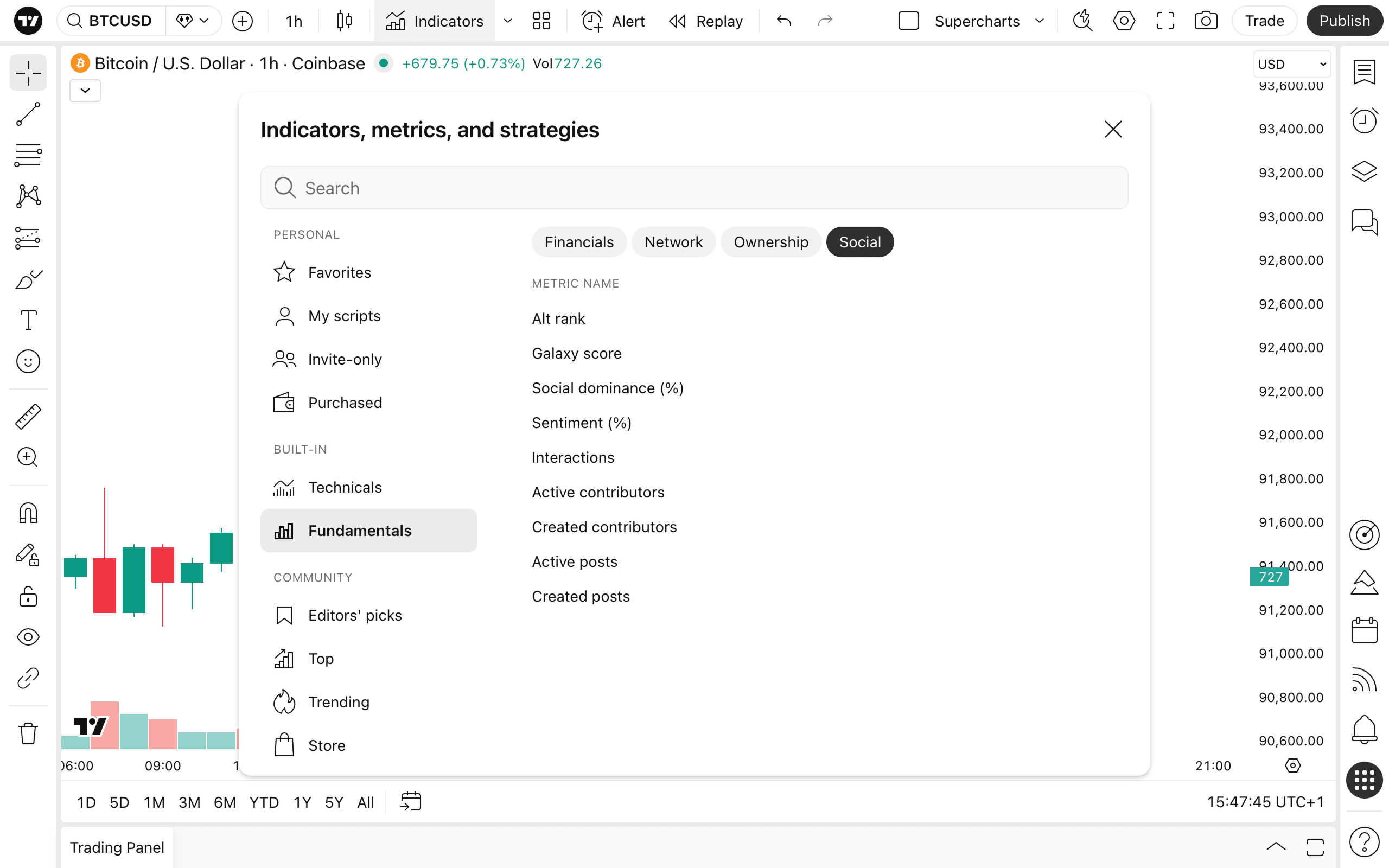
Combinando indicatori finanziari, di rete, di proprietà e sociali, è possibile ottenere una visione più approfondita del mercato e prendere decisioni più consapevoli, che vanno oltre la semplice analisi dell'andamento dei prezzi.
Ci auguriamo che questa aggiunta ai nostri grafici vi aiuti ad approfondire l'analisi del mercato delle criptovalute. Fateci sapere cosa pensate che il vostro feedback sia alla base dei miglioramenti della nostra piattaforma.
Mi piace Commenta Condividi e seguimi per altre informazioni interessanti