
Dusk Network is positioning itself as one of the most forward-thinking blockchain infrastructures by addressing a problem many networks avoid: how to combine privacy, compliance, and decentralization in a way that actually works for real-world finance. While most public blockchains prioritize transparency at the cost of confidentiality, Dusk takes a different approach by integrating zero-knowledge cryptography directly into its protocol. This allows transactions, smart contracts, and asset data to remain private while still being verifiable and auditable when required by regulators. This design choice is especially important for institutions that want to move on-chain but cannot expose sensitive financial or identity data publicly. 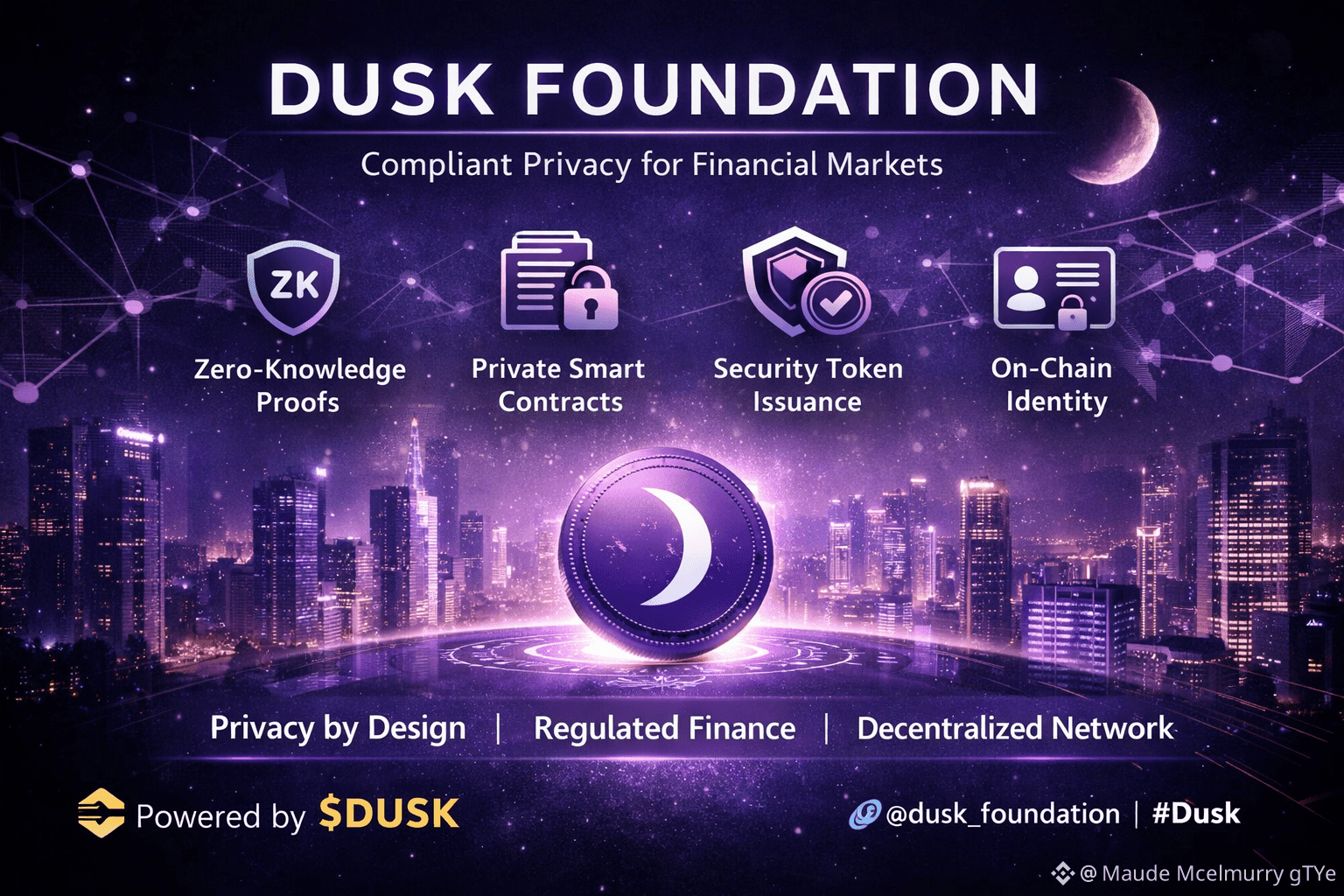 The work led by @dusk_foundation focuses on enabling regulated use cases such as security token issuance, compliant DeFi, on-chain identity, and privacy-preserving governance, all built on a Layer 1 blockchain specifically designed for these needs. One of the standout aspects of Dusk is its emphasis on “privacy by design,” meaning confidentiality is not an optional feature or add-on, but a core principle of the network’s architecture. Through technologies like zero-knowledge proofs, Dusk allows parties to prove compliance without revealing unnecessary information, striking a balance between transparency and discretion that regulators and enterprises increasingly demand. The network’s consensus mechanism and smart contract model are also optimized for confidential computation, allowing developers to build applications that protect user data while remaining decentralized. At the center of the ecosystem is the $DUSK token, which plays a critical role in securing the network through staking, enabling governance participation, and aligning incentives among validators, developers, and users. Token holders can contribute to the long-term direction of the protocol while supporting network security, reinforcing a sustainable and community-driven model. As global regulations around digital assets continue to evolve, projects that proactively design for compliance are more likely to survive and thrive. Dusk’s approach demonstrates that privacy does not have to be in conflict with regulation, and that blockchain can serve institutional finance without compromising user rights. Beyond finance, the technology also opens doors for private voting, confidential data sharing, and compliant digital identity solutions, expanding the network’s relevance beyond a single sector. Rather than chasing hype cycles, Dusk Network is building infrastructure meant to last, focusing on research, cryptography, and real adoption. In a market increasingly shaped by regulatory clarity and demand for privacy, Dusk stands out as a serious contender for bringing traditional finance and blockchain together responsibly. For builders, institutions, and users who value confidentiality, compliance, and decentralization equally, Dusk represents a compelling vision of what the next generation of blockchain technology can look like.
