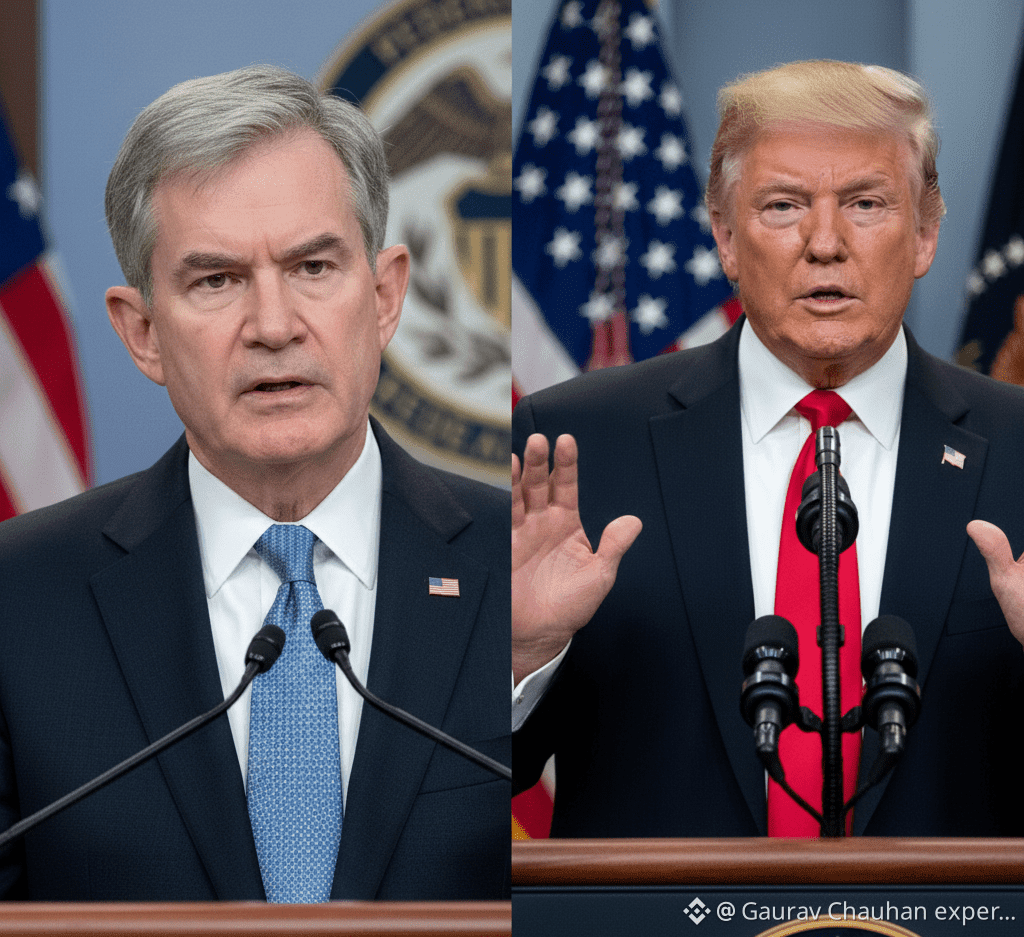
A rare moment for the Federal Reserve — and why markets are paying attention
Something unusual has surfaced in U.S. monetary history.
For the first time, a sitting Federal Reserve Chair has openly suggested that political pressure is influencing central bank decisions. That alone makes this moment important — because the Fed’s power is built on independence, not authority.
So what’s actually unfolding?
Federal investigators have reportedly issued subpoenas related to the Federal Reserve’s headquarters renovation. On paper, the issue revolves around construction approvals and cost overruns.
But Jerome Powell publicly pushed back on that framing, stating that the dispute is not really about a building, but about pressure to accelerate interest rate cuts.
Markets didn’t wait for confirmation.
The U.S. dollar softened almost immediately.
Gold moved higher.
Risk-sensitive assets reacted fast.
That reaction tells us something deeper is being priced in.
Why Fed independence matters more than people realize
The strength of the U.S. dollar isn’t driven only by economic output or interest rates.
It’s driven by trust.
Global investors hold dollars and U.S. Treasuries because they believe:
Monetary policy follows data, not directives
Inflation will be addressed when necessary
Rules matter more than politics
If that belief weakens, consequences don’t arrive overnight — but they accumulate.
A loss of confidence can lead to:
Gradual erosion of currency credibility
Rising inflation expectations
Higher risk premiums demanded by investors
These shifts happen quietly, then suddenly.
Two possible paths markets are weighing
1️⃣ Easier policy and liquidity expansion (short-term supportive)
If political pressure succeeds, rate cuts could arrive earlier or faster than economic conditions justify.
Historically, that environment leads to
A softer dollar
Increased liquidity
Higher asset valuations
This is why some investors argue that modern politics can act like indirect monetary easing. Not through immediate money printing, but by steering policy toward looser conditions.
With Powell’s term approaching its end, speculation around the next Fed leadership is also feeding expectations. Markets tend to price the future before it arrives.
In this scenario:
Equities benefit
Crypto responds positively to liquidity
Risk appetite improves
But this path carries hidden costs.
2️⃣ Long-term credibility damage (structural risk)
The more serious concern is not short-term stimulus — it’s perception.
If investors begin to doubt the Fed’s independence:
Dollar weakness becomes structural, not temporary
Foreign demand for U.S. debt softens
Long-term yields rise even if short-term rates fall
Why? Because stability matters as much as returns.
When rules feel flexible, investors demand compensation for uncertainty. That means higher borrowing costs and reduced policy effectiveness.
Inflation, once unanchored, becomes harder to contain.
History offers a warning
This isn’t without precedent.
In the early 1970s, political influence over monetary policy led to artificially low rates. The short-term outcome looked positive — growth improved, unemployment eased.
But inflation surged into double digits within years.
Markets eventually collapsed.
The cure required extreme rate hikes under Paul Volcker, triggering a deep recession.
The sequence was clear:
Political influence → temporary growth → long-term instability
The real takeaway
This moment isn’t about one investigation or one statement.
It’s about whether confidence in rule-based monetary policy remains intact.
Markets can handle volatility.
They struggle with uncertainty around credibility.
Short-term rallies are easy to generate.
Long-term trust is much harder to rebuild once lost.
This is why macro investors are watching closely — not reacting emotionally, but tracking how policy, perception, and liquidity interact over time.