
One of the biggest changes I’ve noticed recently is that regulation in crypto is no longer just a policy discussion it’s becoming operational. Institutions aren’t asking “what might be allowed someday?” anymore. They’re asking “what can we deploy now without creating compliance risk?” That shift is exactly why Dusk Network feels increasingly well-positioned in the current market. Dusk is a Layer 1 blockchain built specifically for regulated and privacy-focused financial infrastructure. That focus aligns closely with how real institutional pilots are being structured today. Tokenized securities, regulated funds, and settlement workflows are being tested in environments where disclosure rules are strict, audits are expected, and data minimization is required. In those setups, full transparency is not a feature it’s a liability. What’s becoming clear in active tokenization pilots is that auditability matters more than visibility. Regulators don’t need to see every transaction detail; they need cryptographic assurance that rules are enforced correctly. Dusk’s zero-knowledge architecture is designed around that exact requirement. Transactions and smart contracts remain private, while assent can be proven mathematically. This reduces data exposure while still satisfying regulatory oversight a key constraint in live institutional environments.
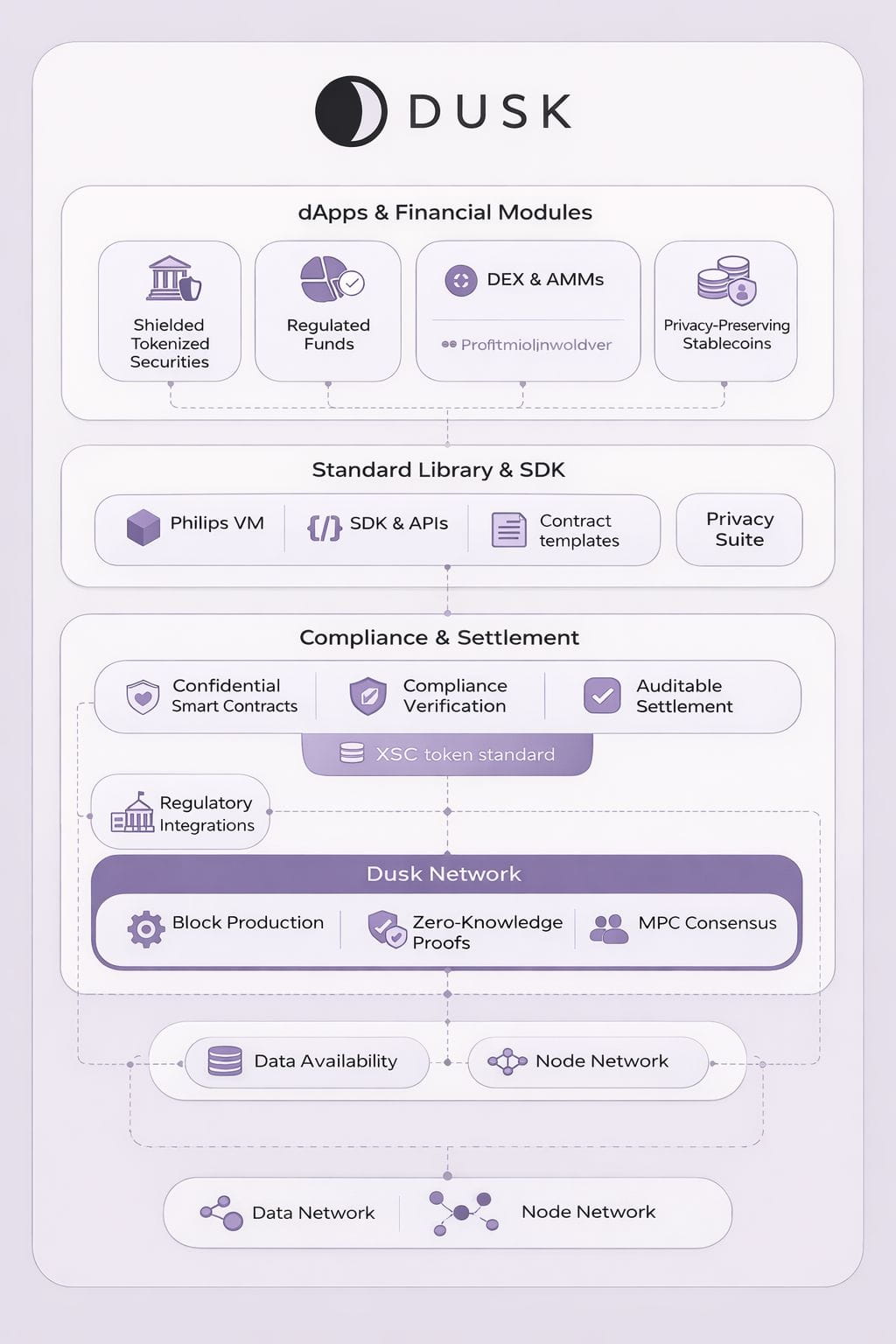
Another increasingly relevant data point is how compliance workflows are evolving. Audits are moving closer to continuous monitoring rather than periodic reporting. Systems that require manual reunion or off-chain verification are friction-heavy. Dusk’s design allows compliance proofs to be generated natively on-chain, which shortens audit cycles and reduces operational overhead. That’s not just a theoretical advantage it directly addresses how institutions are restructuring risk management today. Dusk’s modular architecture also fits well with the current regulatory reality. Different asset classes are being treated very differently. Tokenized equities, debt instruments, and settlement layers all face unique disclosure and reporting requirements depending on jurisdiction. @Dusk allows privacy and auditability to be defined at the application level, rather than enforced uniformly across the chain. As regulation becomes more rough, this give becomes essential.
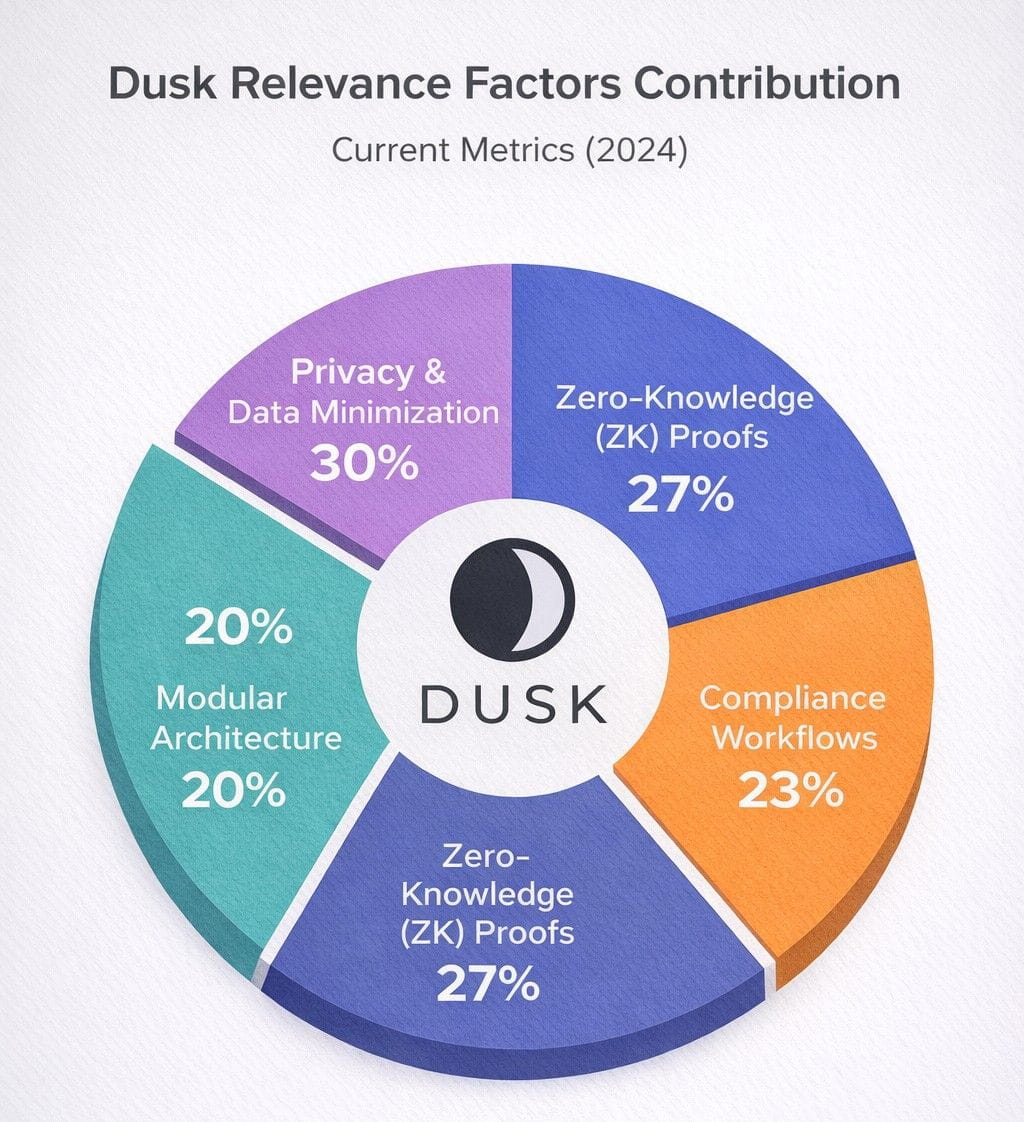
Market behavior supports this shift. Institutional crypto activity is becoming more nice, with fewer sample but higher standards. Capital is being allocated toward infrastructure that can survive legal review, compliance testing, and long integration timelines. Many general-purpose Layer 1s struggle here because they weren’t built for scrutiny. $DUSK feels like it was. That doesn’t mean success is guaranteed. Competition in compliant DeFi and tokenized finance continues to grow, and execution remains the deciding factor. Ecosystem maturity, developer adoption, and real-world deployments will ultimately determine outcomes. But structurally, Dusk aligns with how on-chain finance is being implemented right now carefully, under regulation, and with privacy treated as a compliance requirement rather than a workaround. I don’t see #dusk as a project waiting for regulatory clarity. I see it as infrastructure that assumes regulation is already here and builds accordingly. As on-chain finance continues moving from experimentation into production, that assumption feels less conservative and more realistic.
