
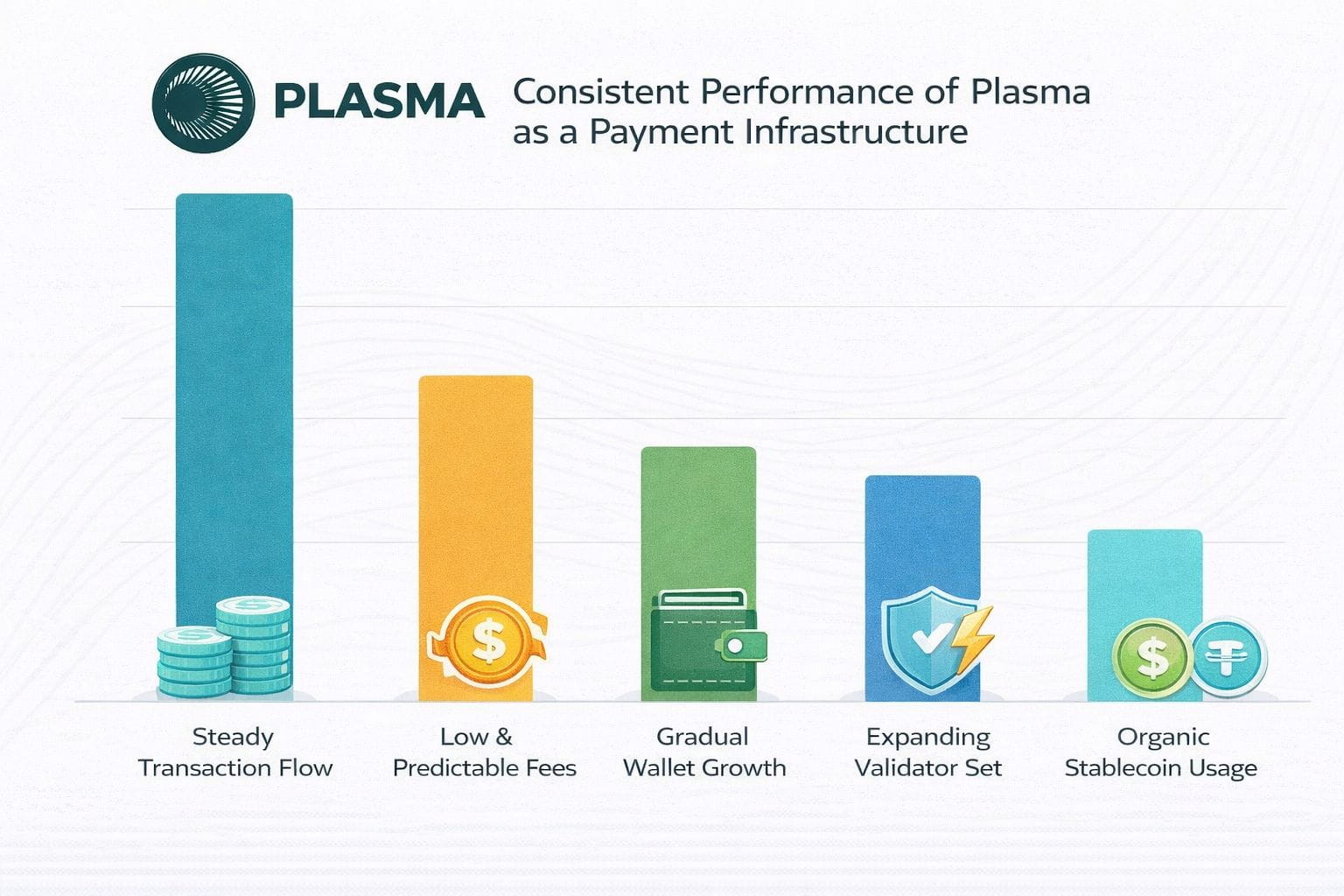
When I check in on @Plasma lately, the thing that keeps standing out isn’t growth explosions or big announcements. It’s consistency. And for infrastructure, that’s usually the metric that matters most. Plasma feels like it’s settling into its role instead of constantly trying to reinvent the narrative. Recent onchain activity shows Plasma continuing to process steady transaction flow, with stablecoins still dominating usage. That hasn’t changed much, and honestly, that’s a good sign. Networks built for payments don’t need wild swings in activity. They need reliability. Plasma looks like it’s being used the same way week after week, which suggests people are treating it like a utility rather than a trend. Another useful data point is how the network behaves during higher-volume periods. Even when deal counts pick up, fees stay low and predictable. That’s not easy to pull off, especially when usage isn’t being throttled by artificial limits. For anyone building payment rails or treasury tooling, that kind of cost stability is usually non-negotiable.
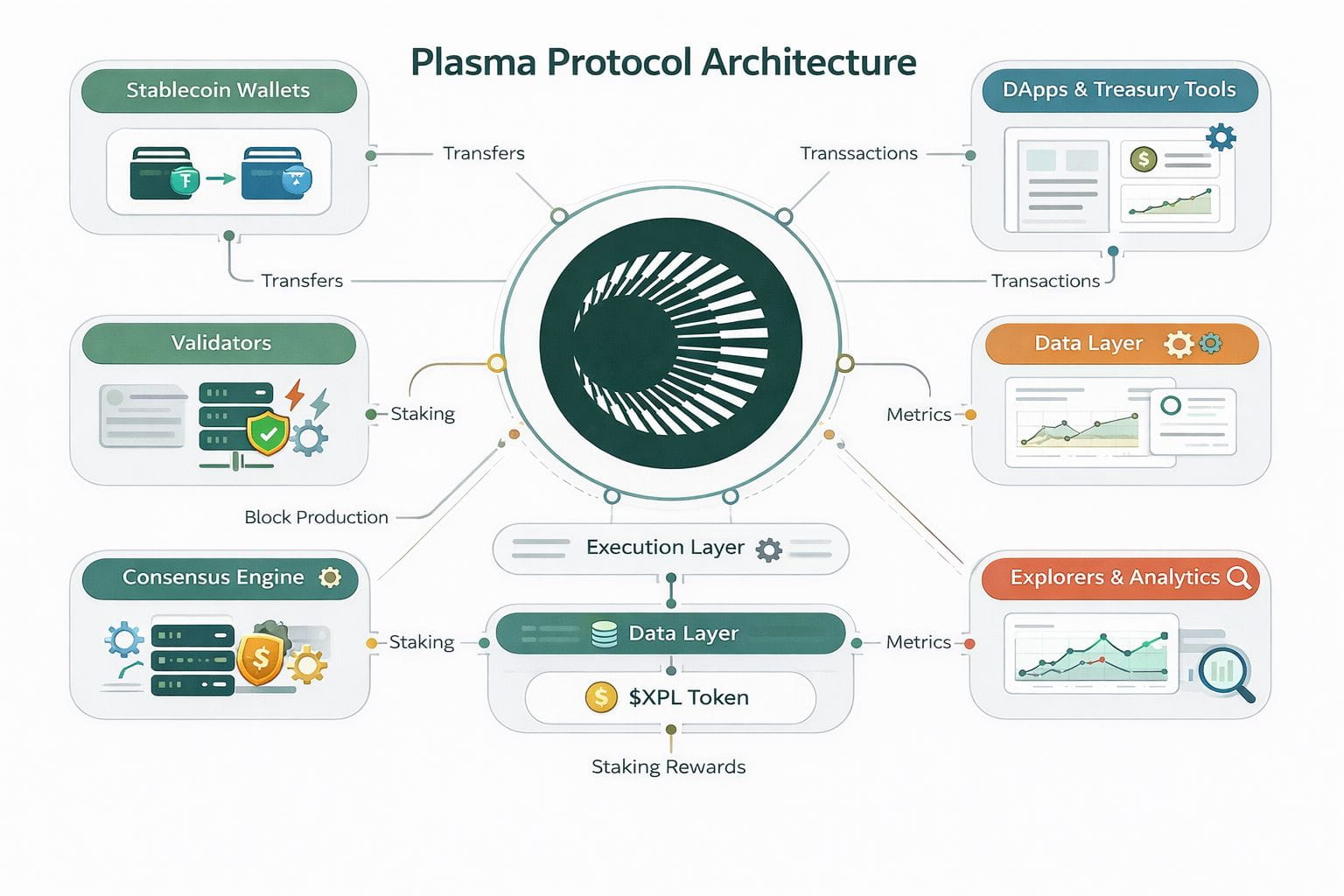
Wallet activity also looks healthier now than it did earlier on. Transfers are spread across a broader set of addresses instead of being dominated by a small cluster. That usually points to organic usage rather than scripted transactions or short-term incentive farming. It’s slow growth, but it’s real growth. Validator participation continues to move in the right direction as well. The validator set has been expanding gradually, which tells me the network is progressing operationally instead of staying locked in an early, centralized phase. That transition is rarely exciting, but it’s critical if the goal is long-term trust and resilience. When you compare Plasma to other chains chasing the payments narrative, the difference is restraint. Some networks push aggressive incentives to juice volume early, then watch activity fall off once rewards fade. Plasma seems more comfortable letting usage grow naturally around its core purpose. That makes the data look boring on the surface, but it also makes it harder to fake.
The $XPL token fits that same pattern. It isn’t leading the story right now, and that’s probably appropriate. Infrastructure tokens usually follow usage, not the other way around. If stablecoin settlement keeps growing and the network continues to behave predictably, the token’s relevance becomes clearer over time. There are still obvious risks. #Plasma operates in a competitive space, and payment-focused chains don’t get unlimited chances to prove themselves. Regulatory pressure around stablecoins is also something the project will need to keep navigating carefully. Still, when I look at Plasma’s recent data, it feels aligned. The network is doing what it says it wants to do, and it’s doing it consistently. That doesn’t guarantee success, but it’s a strong foundation. Sometimes the most interesting signal isn’t growth that screams. It’s growth that just keeps showing up.

