
Lately, I’ve been thinking less about flashy apps and more about what’s happening under the hood in Web3. One question keeps coming up for me: who actually controls the data? Because if we’re being honest, a lot of “decentralized” apps still rely on centralized storage somewhere in the stack. And that kind of defeats the point. That’s where Walrus Protocol starts to click for me. Walrus is built on the Sui, and it’s focused on decentralized, privacy-first data storage and transactions. The native token, $WAL , is used for staking, rule, and securing the network. Nothing exotic there. What is interesting is how focused Walrus is on solving one problem really well instead of trying to be everything.
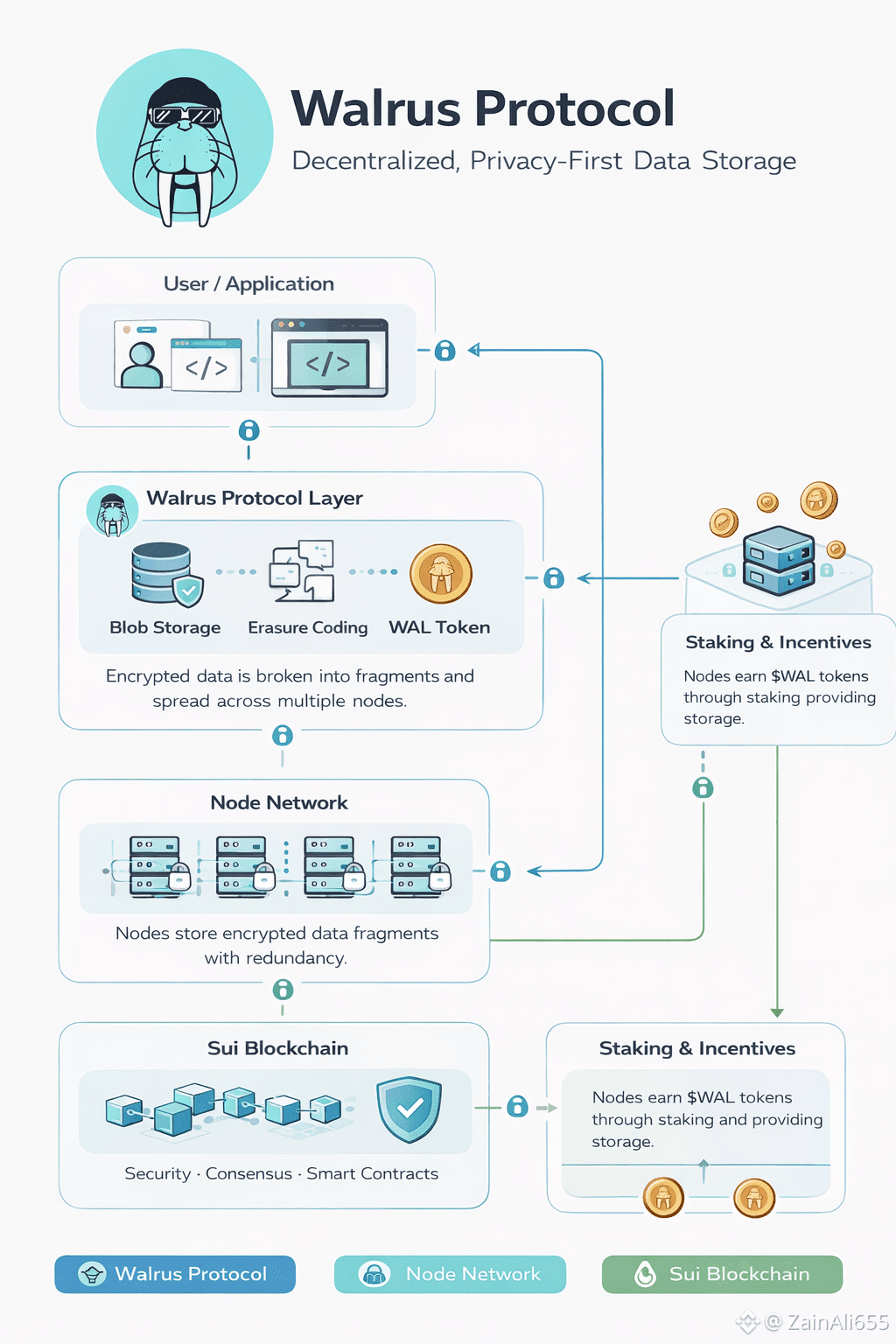
Here’s the simple version. Walrus uses blob storage combined with erasure coding. Big files get broken into encrypted pieces and spread across a bunch of nodes. No single node has the full file. Even if part of the network goes down, the data can still be recovered. That’s a big deal if you care about censorship resistance or reliability. And this isn’t just theory. Think about decentralized social apps storing user content, NFT platforms hosting large media files, on-chain games with constantly changing assets, or even companies experimenting with blockchain-based document storage. All of those apps need storage that’s reliable, affordable, and private. Centralized cloud providers are convenient, sure, but they’re also a single point of failure. Walrus is clearly trying to be the alternative. When I compare Walrus to older decentralized storage networks like Filecoin or Arweave, I don’t see it as a replacement. I see it as a different angle. Those networks leaned heavily into long-term or archival storage. Walrus feels built for active application data, especially inside a fast, high-throughput ecosystem like Sui. Lower latency and smoother integration actually matter once real users show up.
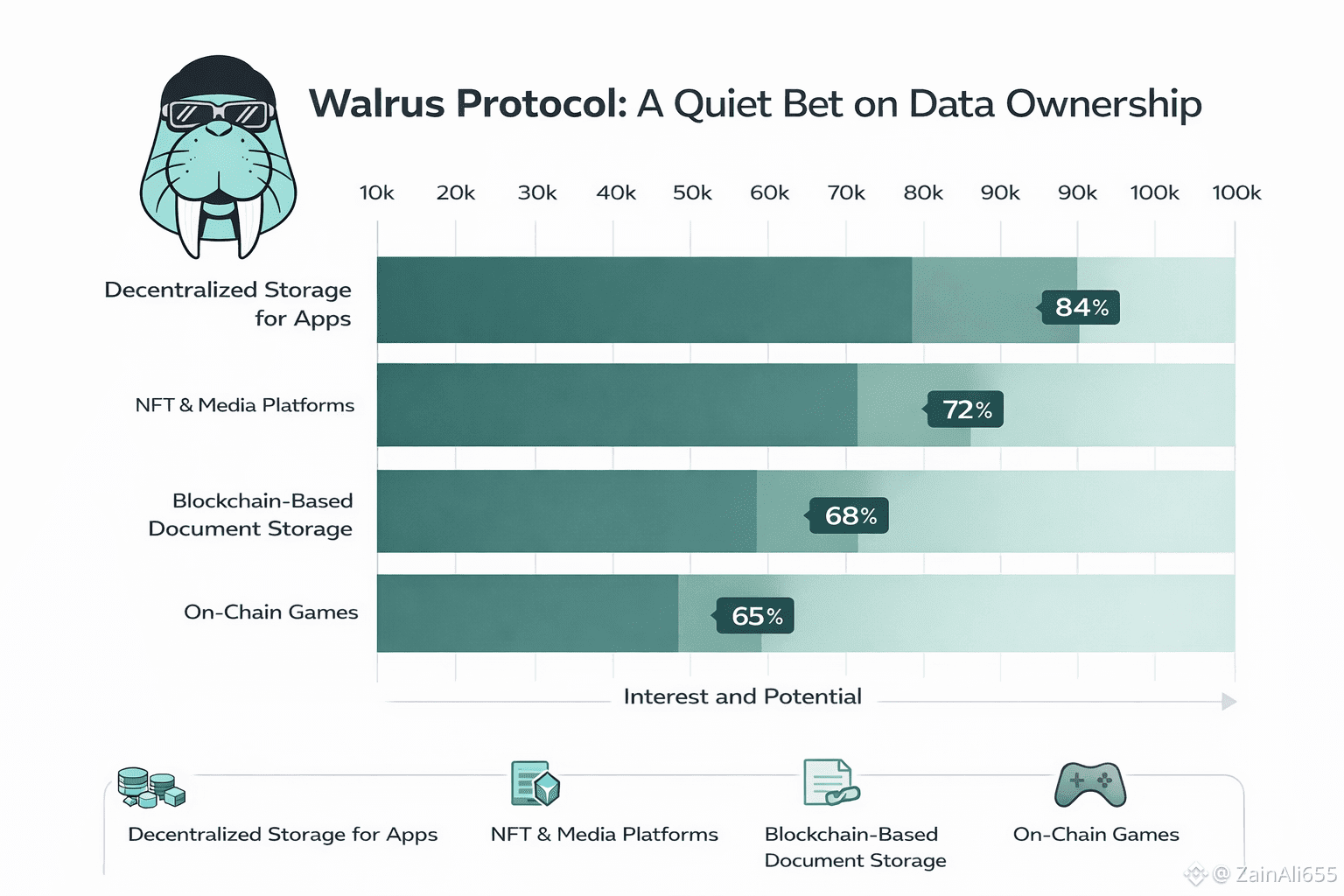
Of course, there are real risks here. Walrus is still early. Developers are used to centralized tools, and habits are hard to break. Adoption won’t happen automatically. The Sui ecosystem needs to keep growing, and Walrus needs strong tooling and incentives to pull builders in. And like any infrastructure token, @Walrus 🦭/acc only really works if usage shows up. Still, the bigger trend feels obvious to me. Data privacy is becoming regulated. Outages are getting more expensive. Users are getting more aware of where their data lives. In that kind of environment, decentralized storage stops being ideological and starts being practical. I’m not looking at #walrus as a hype play. I’m looking at it as quiet infrastructure that could end up being necessary. And in crypto, those are often the projects that matter most over time.


