
One detail that keeps standing out to me as institutional crypto matures is that adoption isn’t being driven by products it’s being driven by process. Risk teams, compliance officers, and auditors care less about what can be built and more about whether workflows can be verified end-to-end. That’s where Dusk Network quietly separates itself from most Layer 1s. Dusk is a Layer 1 blockchain designed specifically for regulated and privacy-focused financial infrastructure, and the key word here is designed. Most blockchains treat compliance as something external: reports, APIs, off-chain checks. @Dusk treats compliance as a first-class on-chain primitive. Its zero-knowledge architecture doesn’t just hide data it proves that financial rules were followed, step by step, without exposing sensitive information.
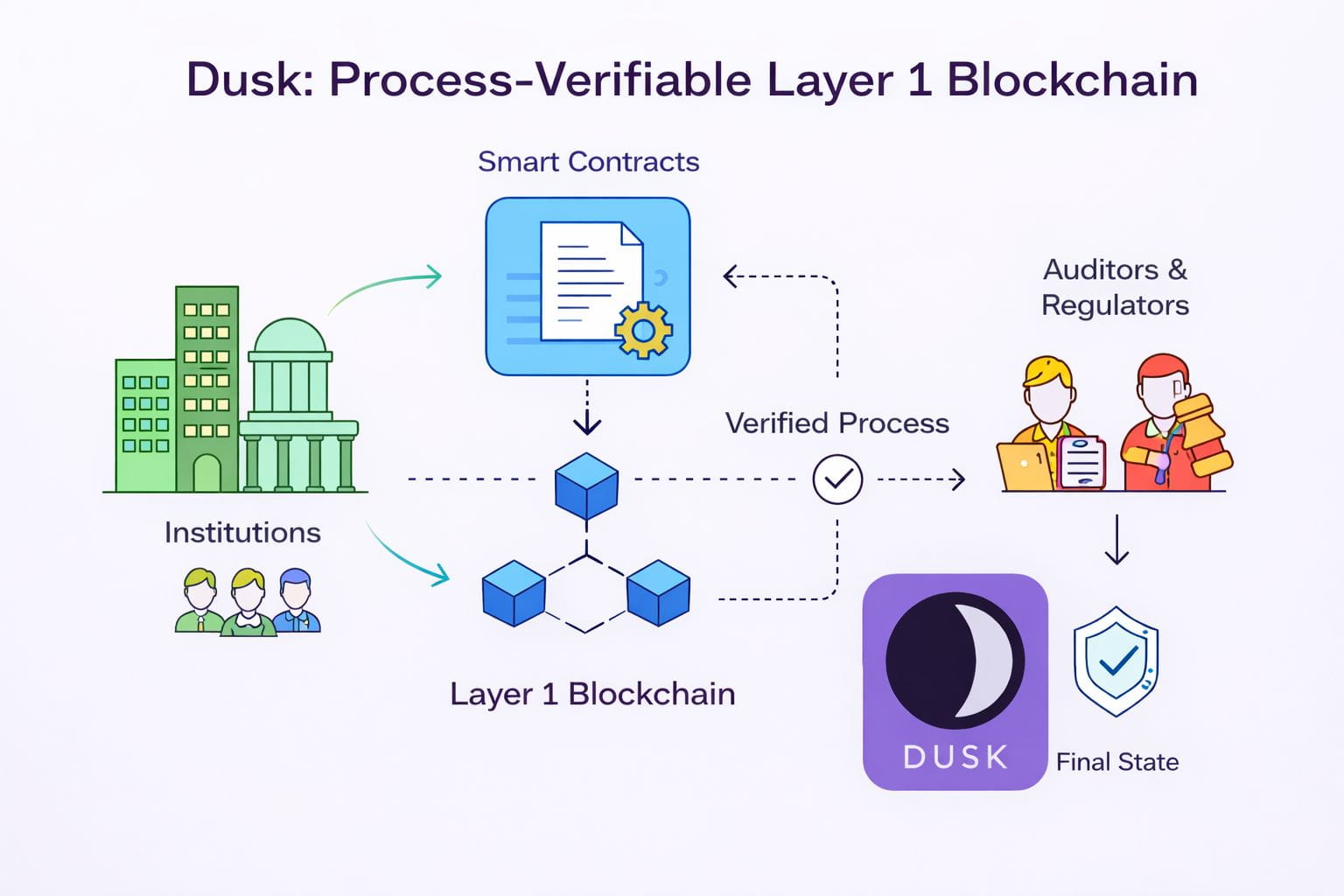
This matters because institutional workflows are increasingly evaluated holistically. In real tokenization and settlement pilots, regulators aren’t just checking final balances they want assurance that issuance rules, transfer restrictions, and lifecycle events were enforced correctly throughout the process. Dusk’s approach allows these constraints to be enforced natively inside smart contracts, with cryptographic proof available for audits. That’s a meaningful shift from “trust plus monitoring” to “verify by design.” Another under-discussed aspect is how Dusk handles determinism. In regulated finance, ambiguity is risk. Contracts need predictable execution paths, clear state change, and consistent results. Dusk’s execution model prioritizes fate and verifiability over maximal flexibility. That makes it less appealing for chaotic DeFi experimentation, but far more suitable for safety, funds, and settlement layers where legal enforceability matters.
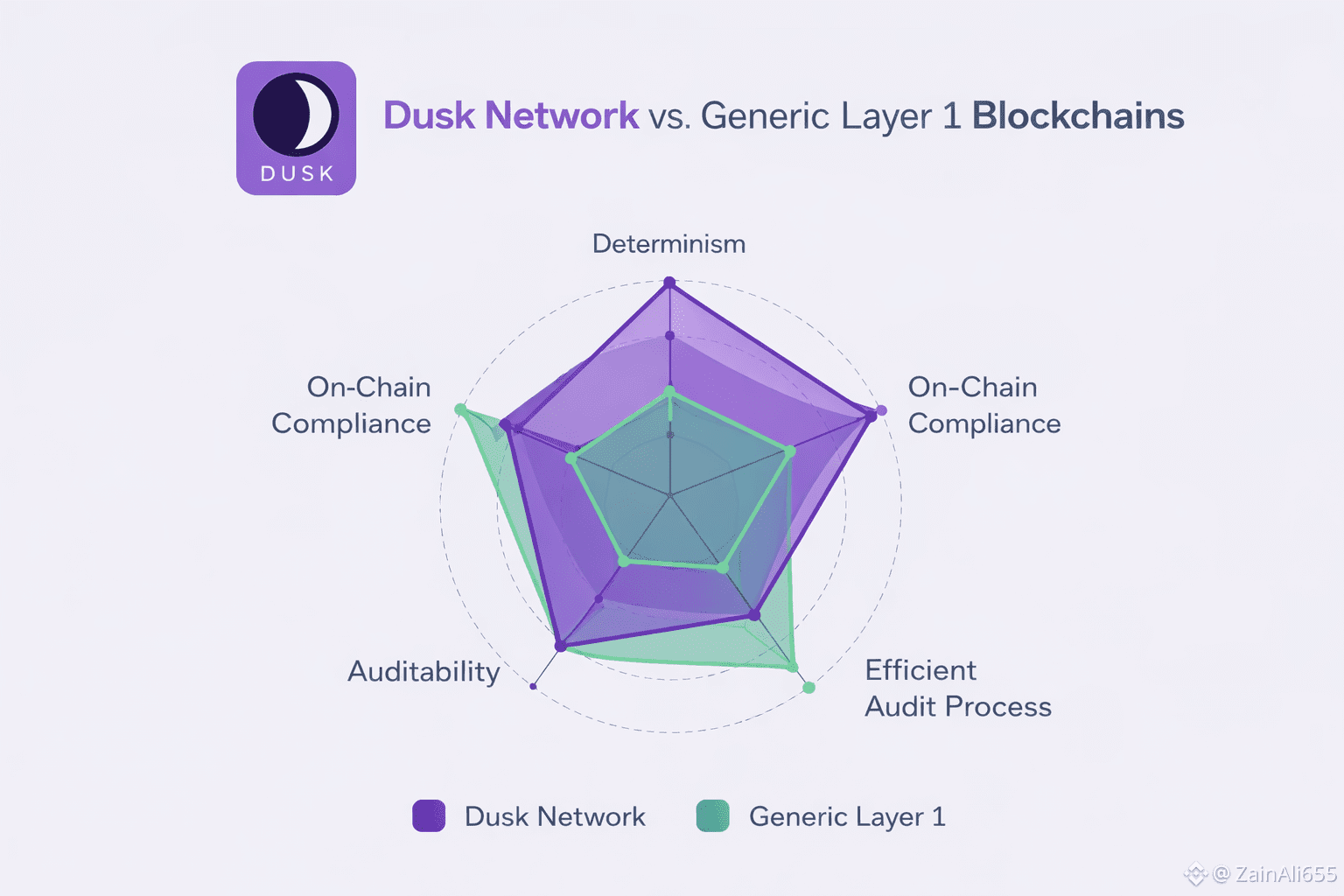
This also aligns with how audit processes are grow. Institutions are moving away from snapshot-based audits toward continuous bond. Systems that can produce cryptographic proofs on demand reduce reconciliation work and shorten audit cycles. Dusk’s architecture supports this shift by keeping compliance logic on-chain rather than safety across off-chain systems. That’s a practical efficiency gain, not just a theoretical one. The market context reinforces this direction. Institutional blockchain initiatives today are fewer, slower, and far more selective. Projects are judged on whether they reduce operational risk, not whether they attract attention. Many Layer 1s struggle here because they were optimized for openness and speed. $DUSK feels optimized for scrutiny and repeatability the traits institutions actually reward.
That doesn’t mean Dusk is guaranteed success. Execution, ecosystem growth, and real deployments will ultimately decide outcomes. But structurally, #dusk aligns with a very current institutional requirement: blockchain systems that don’t just execute transactions, but prove that processes were followed correctly. I don’t think Dusk’s long-term value lies in being a “privacy chain.” I think it lies in being a process-verifiable Layer 1 one that understands that regulated finance is less about hiding data and more about proving discipline. As on-chain finance continues shifting from experimentation to accountability, that distinction feels increasingly important.
