
One of the most important changes in the last year isn’t happening inside crypto markets it’s happening around them. Regulation in Europe has moved from uncertainty to implementation, and that’s changing how institutions evaluate blockchain infrastructure. In this post-framework environment, @Dusk Network feels increasingly aligned with what regulated capital actually needs today. Dusk is a Layer 1 blockchain designed specifically for regulated and privacy-focused financial infrastructure. That design choice is becoming more relevant as regulatory frameworks like MiCA shift from policy discussion into operational reality. Institutions are no longer planning in theory they’re stress-testing systems against real compliance requirements, real audits, and real data-protection rules. One thing current pilots and sandbox programs are making very clear is that data minimization is now a first-class requirement. Financial entities are expected to expose only what is strictly necessary, even to regulators. Full transparency isn’t just impractical in many cases, it’s non-compliant. Dusk’s zero-knowledge architecture fits this reality well. Transactions and smart contracts can remain private by default, while still generating cryptographic proofs that regulatory rules have been followed. That allows oversight without unnecessary disclosure, which is increasingly important under modern data-protection standards.
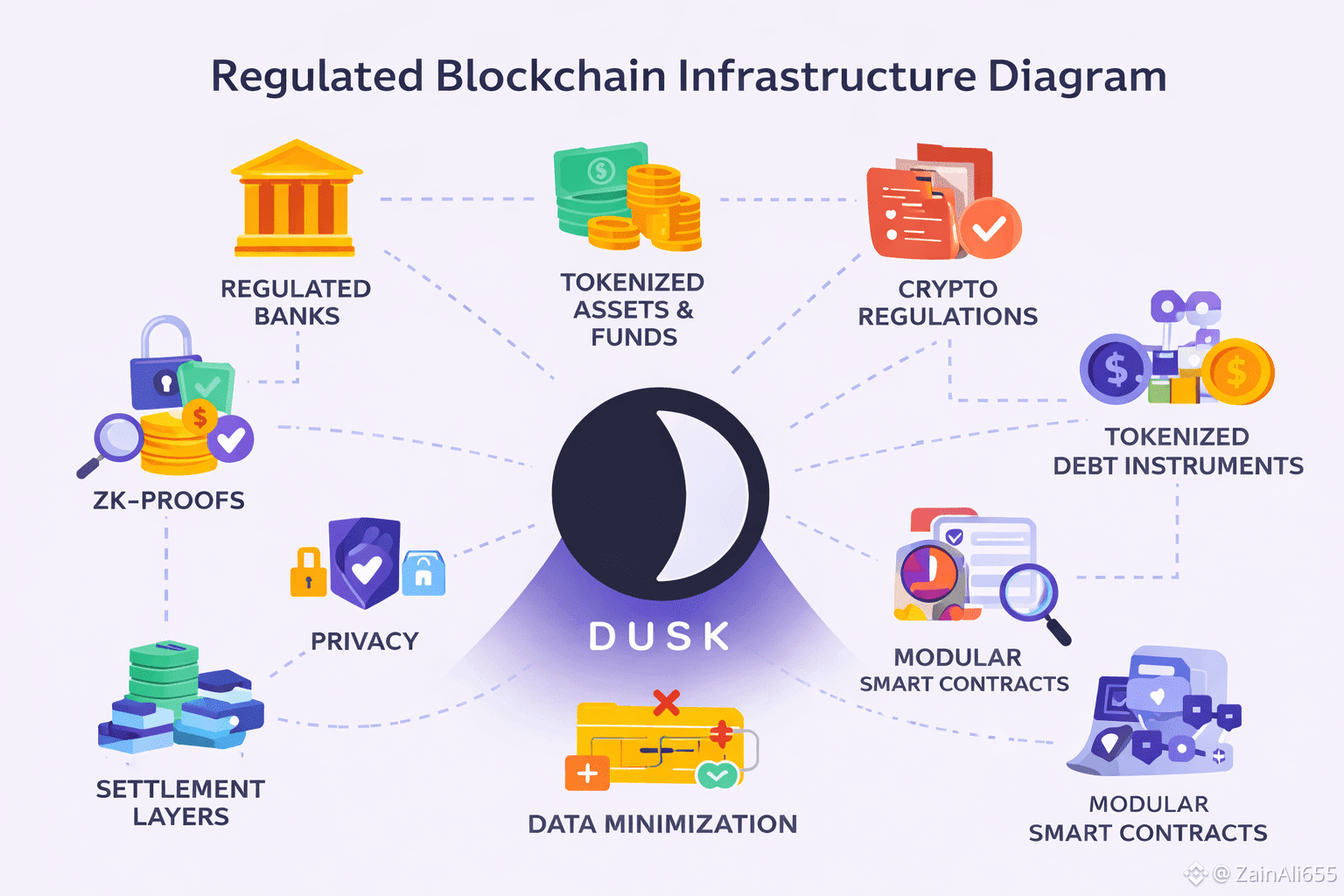
Another shift that’s easy to miss is how compliance workflows are develop. Audits are becoming more continuous and less document-driven. Institutions want systems where compliance evidence can be generated on demand, not reconstructed retroactively. Dusk’s approach set compliance logic directly into smart contracts supports this shift. Instead of relying on off-chain reporting layers, proofs are produced natively, decrease reconciliation work and audit friction. Dusk’s modular architecture also feels particularly relevant in the current regulatory climate. Frameworks are becoming clearer, but not simpler. Tokenized equities, debt instruments, funds, and settlement layers are all governed differently, even within the same jurisdiction. $DUSK allows privacy and auditability to be configured at the application level, rather than enforced uniformly across the chain. As regulation becomes more granular, this flexibility becomes essential.
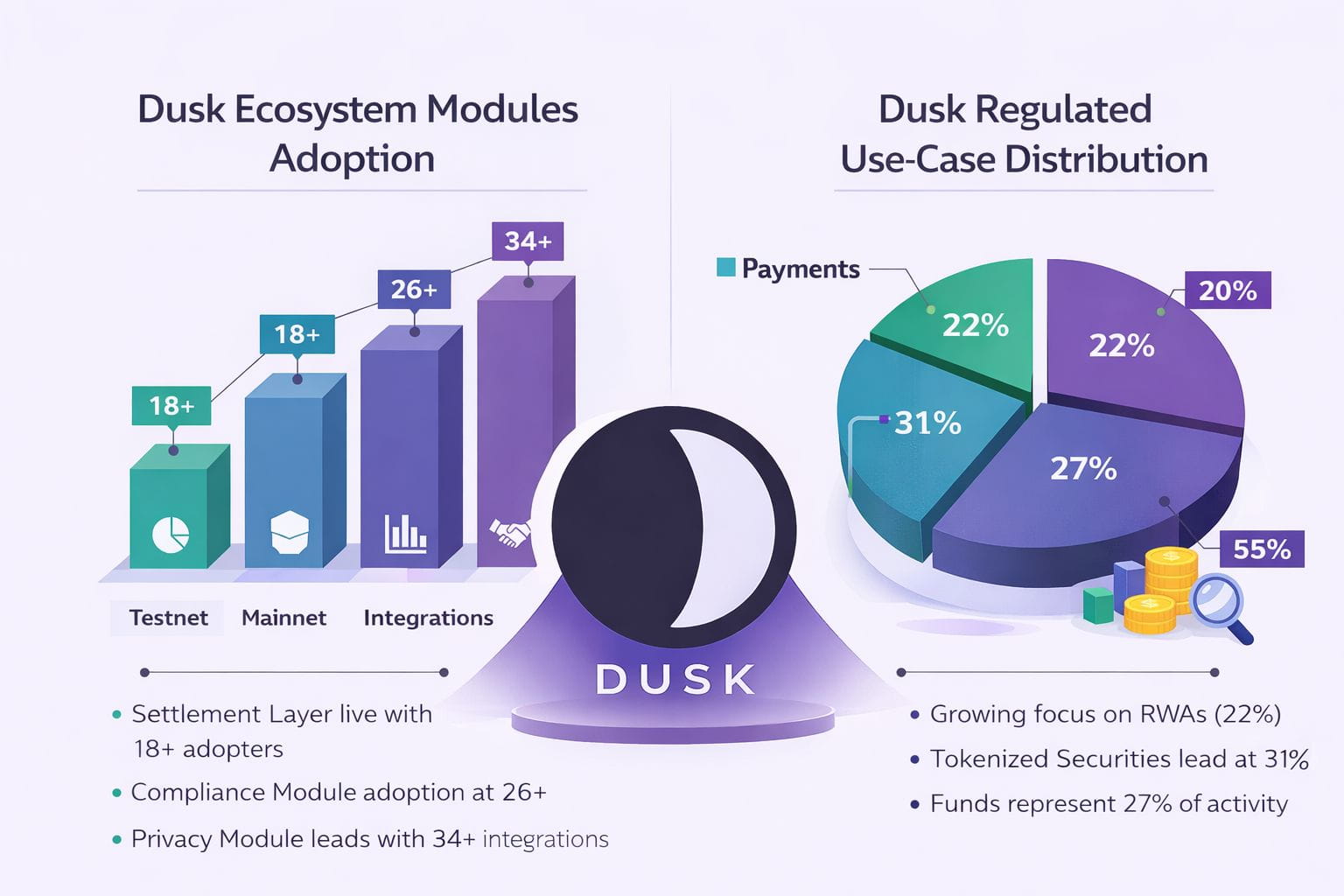
Market behavior reflects these check. Institutional blockchain initiatives are fewer, slower, and more deliberate. Capital is being allocated toward infrastructure that can survive legal review, compliance testing, and long deployment timelines. Many general-purpose Layer 1s struggle in these environments because they were built for openness first. Dusk feels built for scrutiny first. That doesn’t guarantee success. The regulated blockchain space is competitive, and execution will matter more than positioning. Ecosystem maturity, real integrations, and sustained usage will ultimately decide outcomes. But structurally, #dusk aligns with how regulated on-chain finance is being implemented right now cautiously, under clear frameworks, and with privacy treated as a compliance requirement, not a workaround. I don’t see Dusk as a project waiting for regulation to arrive. I see it as infrastructure that assumed regulation would arrive and built accordingly. As blockchain continues transitioning from experimentation into regulated financial plumbing, that assumption looks less conservative and more accurate by the day.
