
There’s something different happening with Vanar Chain, and I’ve spent the last few weeks trying to wrap my head around what they’re actually building. Most blockchain projects sound the same after a while. Everyone’s claiming to be faster, cheaper, or more decentralized. But Vanar’s doing something that genuinely caught my attention because they’re not really playing the same game as everyone else.
They call themselves the first AI-native blockchain, and honestly, I was skeptical at first. The crypto space loves throwing around buzzwords. AI-powered this, machine learning that. Most of the time it’s just marketing speak. But the more I dug into Vanar, the more I realized they’ve actually embedded artificial intelligence into the core of how their blockchain works. That’s not the same as running AI apps on top of a chain. They’ve built it into the foundation itself.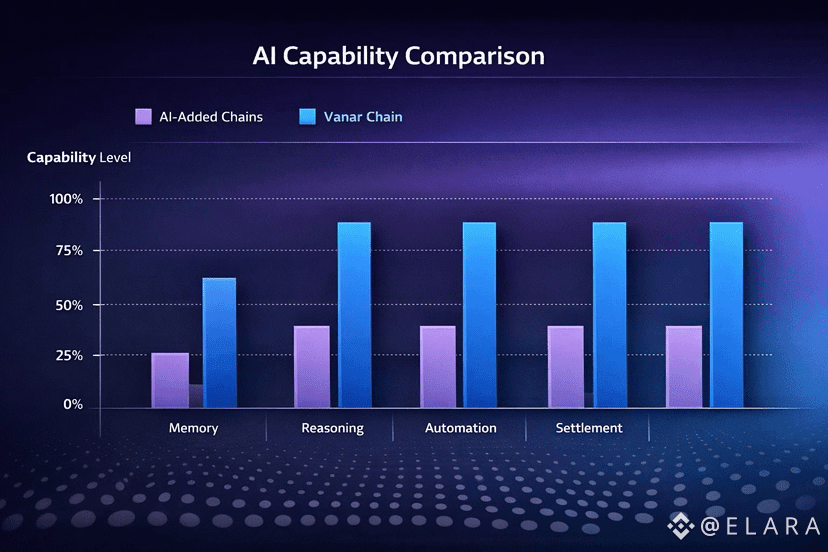
What AI-Native Actually Means
Here’s the thing with most blockchains. They’re really good at one thing, recording transactions and making sure nobody can mess with the records. Bitcoin does this brilliantly. Ethereum added smart contracts so you can program conditions. But they all struggle with data. Like, really struggle.
Storing actual information on blockchain is painfully expensive and inefficient. That’s why most projects cheat a bit. They store their NFT images on IPFS or some cloud service and just put a link on the blockchain. Works fine until that external storage goes down. Then your supposedly decentralized app suddenly depends on Amazon Web Services staying online.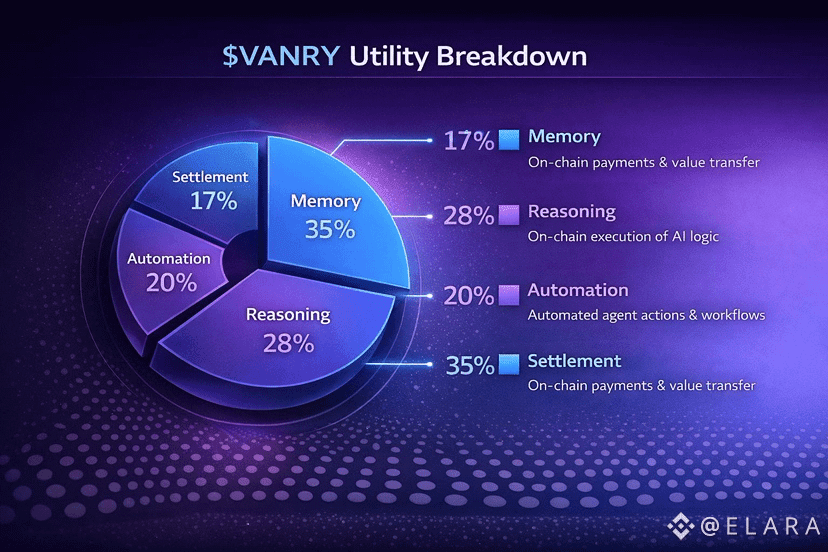
Vanar’s approach with Neutron is pretty wild when you think about it. They use AI to compress files by up to 500 to 1. So a document that would normally be way too big to store on-chain becomes small enough to actually live there. They call these compressed files Seeds, and here’s where it gets interesting. You can still query and use this data without unpacking it first. The AI maintains the structure and meaning while shrinking the size.
This isn’t just clever engineering. It solves a real problem. When AWS had that massive outage back in 2025, crypto exchanges and services went down left and right. Meanwhile, stuff built on Vanar kept running because nothing depended on external storage. Everything was already on-chain.
The Brain Behind the Data
Compression’s great, but Vanar takes it further with something called Kayon. Think of it as the reasoning engine that can actually understand all that compressed data. Regular smart contracts are pretty dumb, right? They follow if-then logic. If you send me money, I send you tokens. Very mechanical.
Kayon changes that by letting smart contracts query information, understand relationships between different pieces of data, and make decisions based on context. It’s not using ChatGPT or anything like that. This is structured AI logic that runs on-chain, deterministically, so everyone gets the same results.
The use case that makes the most sense to me is real estate. Normally you’d tokenize a property and maybe store some basic info on-chain. The actual inspection reports, legal documents, title history, all that stays somewhere else. With Vanar, you compress all those documents into Seeds and store them on-chain. Then Kayon can automatically check if the property meets certain conditions, verify compliance, enforce complex contract terms based on actual data.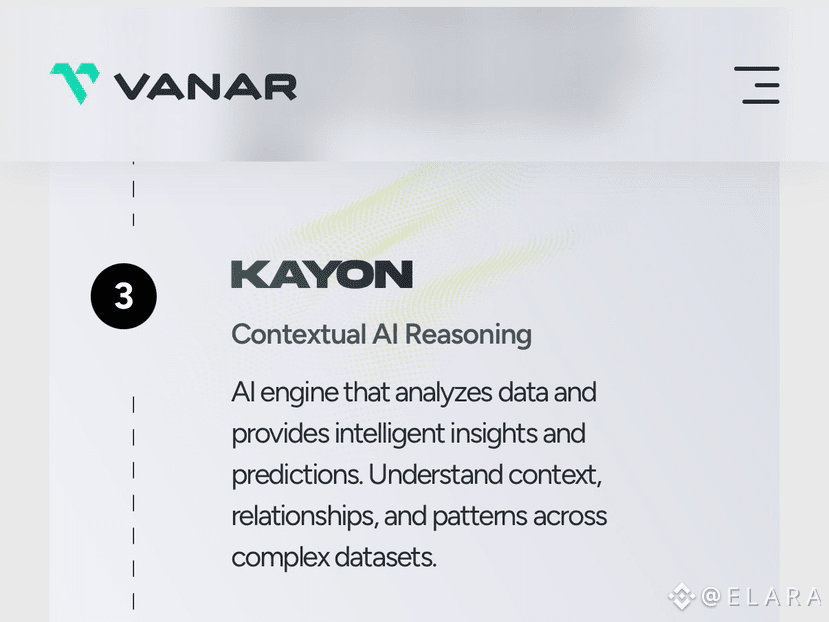
They’re calling this PayFi, which is short for payment finance. Basically tokenizing real-world assets and creating financial products that are fully on-chain. Traditional finance drowns in paperwork and intermediaries. If you can bring the documents on-chain and make them queryable, you open up possibilities that didn’t exist before.
I’ve got to talk about the environmental side because it’s actually one of the more thoughtful approaches I’ve seen. Blockchain’s gotten beat up pretty badly over energy consumption, and for good reason. Bitcoin mining uses as much power as some countries.
Vanar partnered with Google Cloud from the start, and their validators run in data centers powered by renewable energy. Google’s been carbon neutral since 2007 and they’re working toward running everything on carbon-free energy by 2030. So Vanar’s piggybacking on that infrastructure.
But it goes deeper than just using green energy. They’ve got tools to measure and report exactly how much energy the network uses. The CEO, Jawad Ashraf, said something that stuck with me. He said they’re not aiming for carbon neutrality, that’s just the baseline. They want positive environmental impact. They calculate what power usage would’ve been without Google’s renewable initiatives and push projects to contribute that difference as carbon credits.
That’s a level of environmental thinking you don’t see much in crypto. Most projects either ignore it or slap some carbon offsets on at the end. Building it into the foundation feels different.
Gaming’s Where It Gets Fun
While all the PayFi stuff targets enterprises and financial institutions, gaming shows what the tech can do for regular people. They’ve got this partnership with World of Dypians, which has over 30,000 active players and runs entirely on Vanar.
Most blockchain games keep gameplay off-chain and only put NFTs on the blockchain. Makes sense because you can’t run a real-time multiplayer game on-chain when fees are high and storage costs a fortune. But Vanar’s low fixed costs and Neutron compression flip that equation.
World of Dypians is fully on-chain. Not just the items, the entire game state. Every player action, all the data, everything gets recorded and verified on blockchain. Players actually own their progress and achievements in a way that’s impossible with traditional games or hybrid blockchain games.
They recently added AI-powered NPCs that can answer questions and interact with players naturally. There’s even a Vanar-themed zone in the game where you can explore and learn about blockchain while playing. It’s education disguised as entertainment, which is honestly the best way to onboard people who don’t care about crypto.
The partnership with Viva Games is potentially huge. These guys have 700 million downloads and work with Disney, Hasbro, and Sony. They know how to make games that appeal to mainstream audiences. If they can combine that with Vanar’s infrastructure that makes blockchain invisible to players, you could see Web3 gaming actually break through to casual gamers.
How It Actually Works
The technical architecture is pretty clever. They’ve built five layers that each handle specific jobs. The base is an EVM-compatible Layer 1, which means if you know how to build on Ethereum, you can build on Vanar. No learning curve for developers already in the space.
Second layer is Neutron handling data storage. Third is Kayon doing AI reasoning. Then you’ve got layers for cross-chain stuff and developer tools. Each piece does its thing well, and they all work together.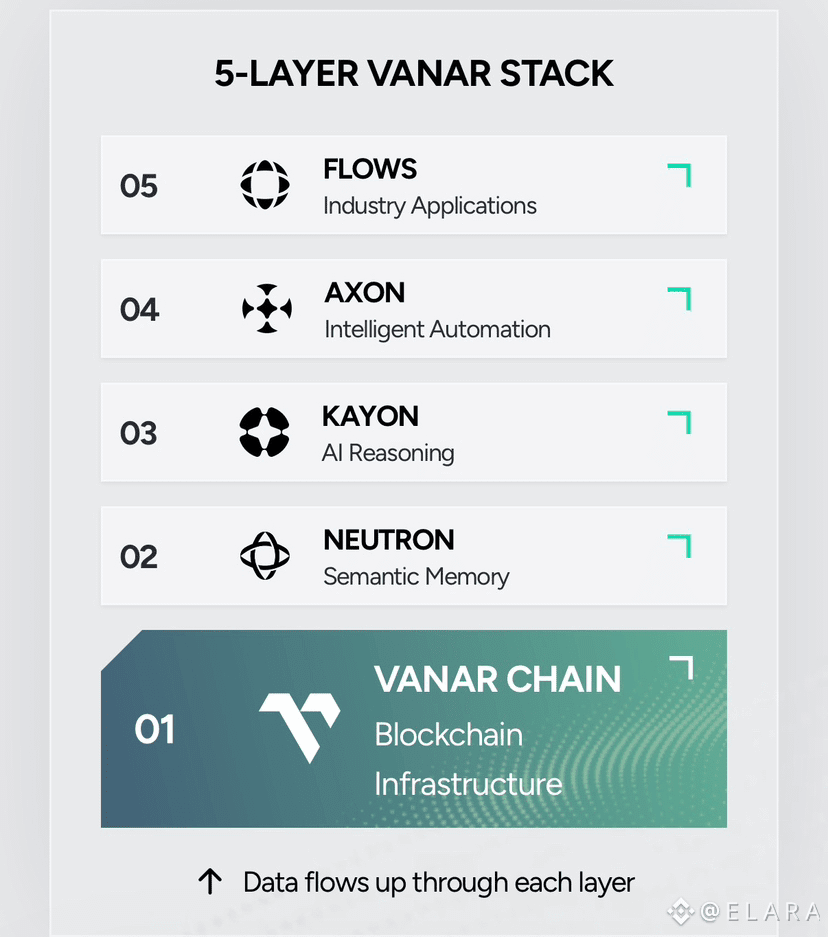
Consensus uses a hybrid proof of stake and delegated proof of authority system. Validators stake 100,000 VANRY tokens to participate. That’s enough to keep bad actors out but not so much that only whales can validate. Block times average around three seconds, which isn’t the fastest out there. Solana’s way quicker. But Vanar’s optimizing for consistency and data handling over pure speed.
The Token Story
VANRY’s the native token that makes everything work. Total supply caps at 2.4 billion with about 2 billion already circulating. That’s actually good because you don’t have a huge overhang of locked tokens waiting to dump on the market.
You need VANRY for gas fees, but unlike most chains where fees spike randomly, Vanar uses fixed costs. Developers can actually budget their transaction expenses instead of gambling on network congestion.
The staking system lets validators earn rewards for securing the network. Regular users can delegate tokens to validators and share the rewards. Pretty standard stuff.
What’s interesting is the burn mechanism tied to Neutron. When data gets compressed into Seeds, some VANRY gets burned. More usage means more burns, which creates deflationary pressure. If companies start storing tons of documents and data on-chain, the burn rate could really add up. It ties token value to actual utility instead of pure speculation.
The Real Challenges
Look, I’m not going to pretend this is a sure thing. The blockchain space is brutal. Ethereum’s got this massive ecosystem and network effect. Solana’s fast and has momentum. Avalanche has its niche. Vanar’s trying to convince developers to build on a smaller, newer platform.
The whole AI-native concept requires education. Most devs don’t immediately get why they need on-chain data compression or intelligent contracts. The value proposition makes sense once you start building certain apps, but there’s a learning curve. They’re putting resources into documentation and education, but it takes time.
Market conditions aren’t helping either. When Bitcoin’s pumping and dominating attention, infrastructure tokens like VANRY often get ignored. The token’s been volatile, which is normal for crypto but doesn’t help perception. Tech quality and price action don’t always line up, especially short term.
Competition’s heating up too. [Fetch.ai](http://Fetch.ai) and Bittensor are doing AI and blockchain stuff from different angles. They’re all fighting for attention in the AI plus Web3 space. Having unique tech isn’t enough, you’ve got to make people understand why your approach matters.
The Partnership Game
Vanar’s been smart about partnerships. Google Cloud’s obviously the big one. When Google commits infrastructure to support your blockchain, that’s real validation. This isn’t some token investment for speculation. It’s Google Cloud providing enterprise-grade infrastructure for production workloads.
NVIDIA brings GPU access for AI development. As more AI-native apps emerge on Vanar, having cutting-edge compute matters. Plus NVIDIA’s involvement signals broader tech industry interest in what they’re building.
BCW Group runs validators on Google’s renewable energy infrastructure. ThirdWeb provides developer tools. Galxe handles community engagement and rewards. Each partnership serves a specific purpose rather than just collecting impressive names.
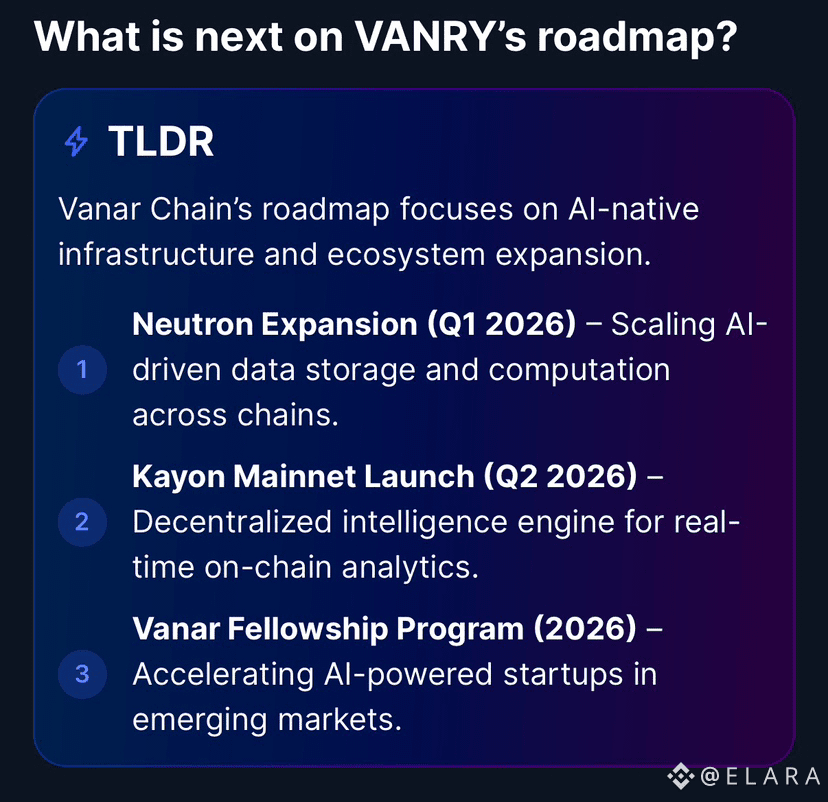
They just announced this fellowship program with Google Cloud in Pakistan. Pakistan’s got a huge concentration of Web3 developers, top five globally. By targeting high-potential markets, they can attract talented builders who might otherwise default to Ethereum or Solana. Smart geographic expansion strategy.
What Happens Next
Trying to predict where this goes is tricky. Best case scenario, PayFi takes off. Real-world assets start moving on-chain at scale. Financial institutions discover that Vanar’s mix of on-chain document storage, queryable data, and intelligent contracts solves problems they’ve been struggling with. Major tokenization happens on Vanar, usage explodes, token burns accelerate.
Gaming could be the real catalyst though. If World of Dypians and games from Viva Games attract millions of players who don’t even know they’re using blockchain, that’s when you know the tech works. People just want fun games with true ownership. If Vanar can deliver that without making it feel like a crypto game, that matters more than enterprise adoption.
More realistic middle ground has Vanar finding its niche. Maybe they become the platform for document-heavy apps, complex financial products, and data-rich games. They don’t win everything but establish themselves as the best choice for specific use cases. In a multi-chain future, that’s actually pretty valuable.
Worst case, the tech doesn’t matter as much as execution and timing. Adoption comes slower than hoped. Developers stick with established platforms despite Vanar’s advantages. Competition copies the good ideas. Market conditions stay rough. Even good projects struggle sometimes.
The Bigger Question
Beyond Vanar specifically, there’s this broader thing happening with blockchain and AI. For years, blockchain’s been about making things faster, cheaper, more scalable. Important stuff, but it’s really just improving what already exists.
Making blockchain actually intelligent opens up different possibilities. Financial products that adapt to market conditions automatically. Games with truly smart NPCs that don’t need centralized servers. Supply chains that optimize themselves. Identity systems with selective disclosure. When blockchain can understand and reason about data, not just store it, everything changes.
AI and blockchain feel like they’re meant to merge. AI needs verifiable data you can trust. Blockchain needs intelligence to handle complex real-world stuff. The question’s not if but how. Vanar’s betting that building AI into the infrastructure layer beats adding it on top later.
We’re still early in figuring out what AI-native blockchain really means. The tech works and it’s in production. Apps are starting to emerge. But nobody’s found that killer use case that makes everyone go “oh, now I get it.” We’re in the experimentation phase where builders are testing ideas and pushing boundaries.
Next couple years will tell the story. If developers and users respond to this approach, Vanar could define a whole new category. If not, at least they tried something genuinely different. Either way, watching someone build AI into blockchain from the ground up instead of treating it as an afterthought is pretty interesting.
For anyone paying attention to where blockchain’s headed, Vanar’s worth keeping an eye on. They’re not just making incremental improvements. They’re proposing a fundamentally different architecture based on a clear idea about what blockchain needs to enable the next wave of real applications. Whether it works depends on execution, timing, and luck. But the ambition and technical depth make it one of the more compelling experiments happening in the space right now.
