
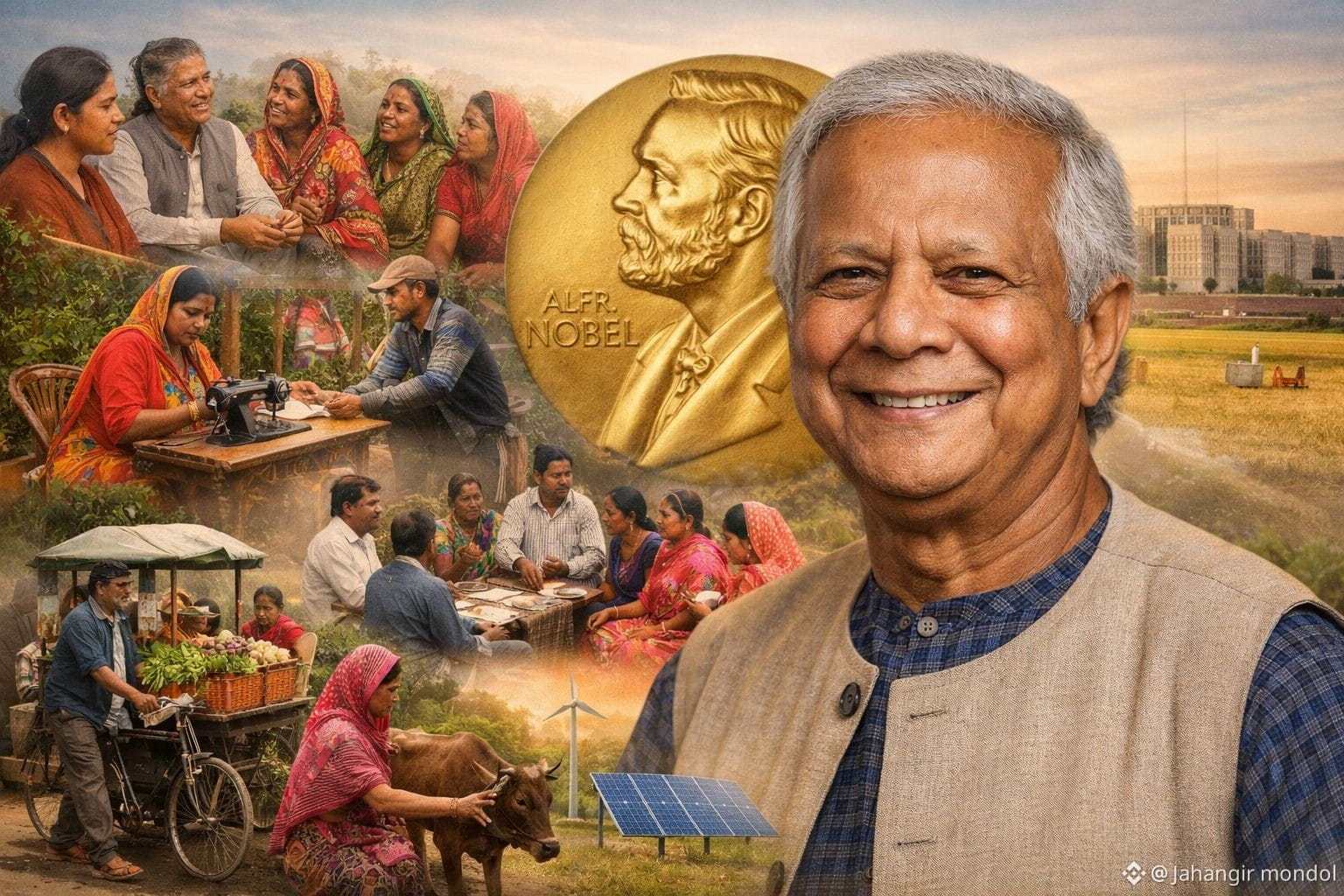
 #MarketCorrection In a world where poverty often feels like an unsolvable problem, one man proved that small ideas can create massive change. Dr. Muhammad Yunus, the Nobel Peace Prize laureate from Bangladesh, reshaped the global approach to poverty by introducing microfinance and social business models. His journey from a university professor to a global humanitarian icon is not just a biography—it is a blueprint for hope.
This article explores the life, philosophy, achievements, and lasting global impact of Dr. Yunus in a unique and reader-friendly way.
Early Life and Education
Dr. Muhammad Yunus was born in 1940 in Chittagong, Bangladesh. Growing up in a modest family environment, he learned the value of discipline, compassion, and responsibility from an early age. His academic brilliance took him to the United States, where he completed his PhD in Economics.
Despite opportunities to build a comfortable career abroad, Yunus chose to return to Bangladesh after the country’s independence. The poverty he witnessed around him deeply disturbed him, pushing him to rethink traditional economic theories taught in classrooms.
The Birth of Microfinance
In the 1970s, while teaching at a university, Yunus noticed that poor villagers were trapped in cycles of debt due to exploitative moneylenders. He personally lent small amounts of money to a group of struggling women. To his surprise, they repaid every cent.
This simple experiment led to the creation of the Grameen Bank, a revolutionary financial institution that provided small loans to people without collateral. The idea was radical: trust the poor, and they will prove their reliability. Over time, millions of people benefited from microloans, enabling them to start small businesses and achieve financial independence.
Nobel Peace Prize and Global Recognition
In 2006, Dr. Muhammad Yunus and Grameen Bank were awarded the Nobel Peace Prize for their efforts to create economic and social development from below. The Nobel Committee recognized microfinance as a powerful tool for fighting poverty and promoting peace.
This recognition transformed Yunus into a global figure. He was invited to speak at international forums, universities, and policy summits, where he advocated for ethical capitalism and inclusive economic systems.
The Concept of Social Business
Beyond microfinance, Yunus introduced the idea of social business—companies designed to solve social problems without focusing on profit maximization. These enterprises reinvest profits into social missions such as healthcare, education, and renewable energy.
The social business model challenged traditional capitalism by proving that businesses can exist to serve humanity, not just shareholders. Today, social businesses inspired by Yunus operate in multiple countries, addressing issues like malnutrition, clean water, and sustainable development.
Challenges and Criticism
Like all pioneers, Dr. Yunus faced criticism and political challenges. Some questioned the interest rates of microloans, while others debated the long-term sustainability of microfinance. However, independent studies and real-life success stories demonstrate that microfinance has played a crucial role in empowering marginalized communities, especially women.
Yunus has always welcomed constructive criticism, using feedback to improve and evolve his models. His openness to dialogue highlights his commitment to real-world solutions rather than ideological perfection.
Global Impact and Legacy
Dr. Muhammad Yunus’s work has influenced governments, NGOs, and entrepreneurs across the globe. Microfinance institutions now operate in more than 100 countries, inspired by the Grameen model. His vision continues to motivate young innovators to create impact-driven startups.
More than a Nobel laureate, Yunus is a symbol of practical compassion—proving that dignity, opportunity, and trust can change lives more effectively than charity alone.
Conclusion
The biography of Dr. Muhammad Yunus is not just the story of one man—it is the story of millions of lives transformed through small opportunities. His ideas remind us that poverty is not created by the poor but by systems that fail them. By redesigning those systems, Yunus showed the world a path toward a more inclusive and humane economy.
For anyone seeking inspiration in social entrepreneurship, ethical finance, or humanitarian leadership, the life of Dr. Muhammad Yunus stands as a timeless example of how one person’s vision can reshape the future.#CZAMAonBinanceSquare