

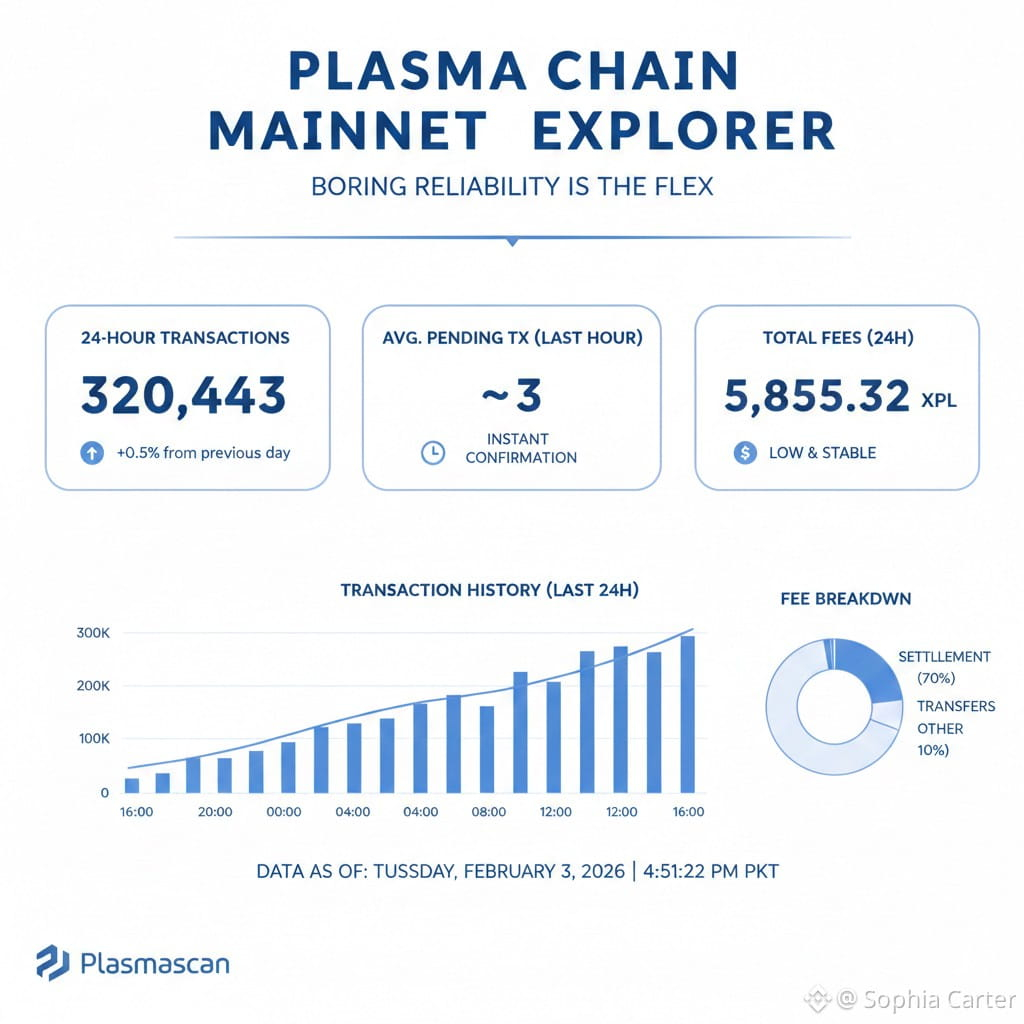
In the last 24 hours, Plasma has looked less like a “crypto project” and more like a piece of quiet plumbing that’s doing its job. Plasmascan shows 320,443 transactions in 24h, ~3 pending transactions on average in the last hour, and 5,855.32 XPL in total transaction fees (24h).
That little trio of numbers is honestly the most “human” update you can get: it suggests people are actually using the rail, blocks are getting processed without drama, and the cost of moving value isn’t spiking into surprise-mode. If you’re trying to win stablecoin settlement, boring reliability is the flex.
The way I’ve started thinking about Plasma is like this: most L1s are trying to be a bustling new downtown. Plasma is trying to be the airport baggage system—the part you never praise, but everyone panics when it breaks. The project is opinionated about what the network should optimize for: stablecoin movement that feels normal to people who already live in dollars.
That’s why the “stablecoin-native” features matter more than the buzzwords. Plasma’s zero-fee USD₮ transfer lane isn’t pitched as a magical “free gas forever” promise; it’s engineered as a narrowly-scoped sponsored path (direct USD₮ transfers only), with controls meant to reduce abuse and keep the system operationally sane for real integrators. The framing here is different from typical crypto UX patches: Plasma is treating stablecoin transfer like a protected highway lane that exists because the economy needs it, not because a wallet team added a clever trick.
Then there’s the second pain point that’s so basic it’s almost embarrassing the industry normalized it: “I have dollars, but I can’t move my dollars because I don’t have the gas token.” Plasma’s docs lean into the idea of predictable, low-cost fees and keeping the EVM model familiar, while building the network around the expectation that stablecoin users shouldn’t have to become gas-token hobbyists. Even when you strip away the marketing language, that design choice is a philosophical stance: settlement should be denominated in the unit people think in.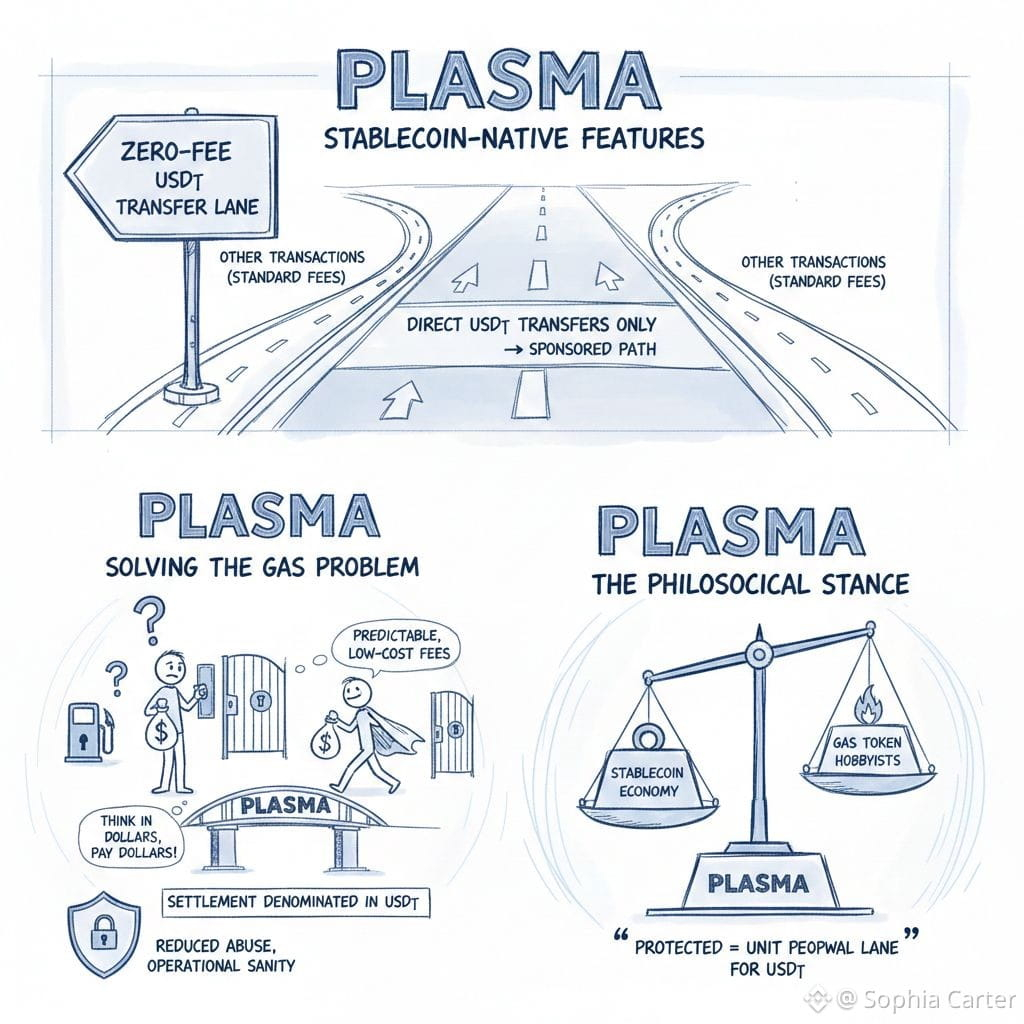
The chain-level data supports that “this is about dollars” vibe. On DefiLlama, Plasma’s stablecoin market cap is shown around $1.874B with USDT dominance ~81%, and the 1-day change is positive (a few percent up, depending on the moment you check). That’s not a vanity metric; it’s the kind of concentration you’d expect if the network’s job is basically “move stablecoins efficiently,” not “host every experimental asset under the sun.”
Even more telling is the bridged composition. DefiLlama shows Plasma bridged TVL around $6.9B, with large positions like USDT0 (~$1.5B) and other big stablecoin-related entries sitting near the top. In plain terms: liquidity isn’t arriving as a cute demo—it’s arriving in chunks that look like they’re meant to be used.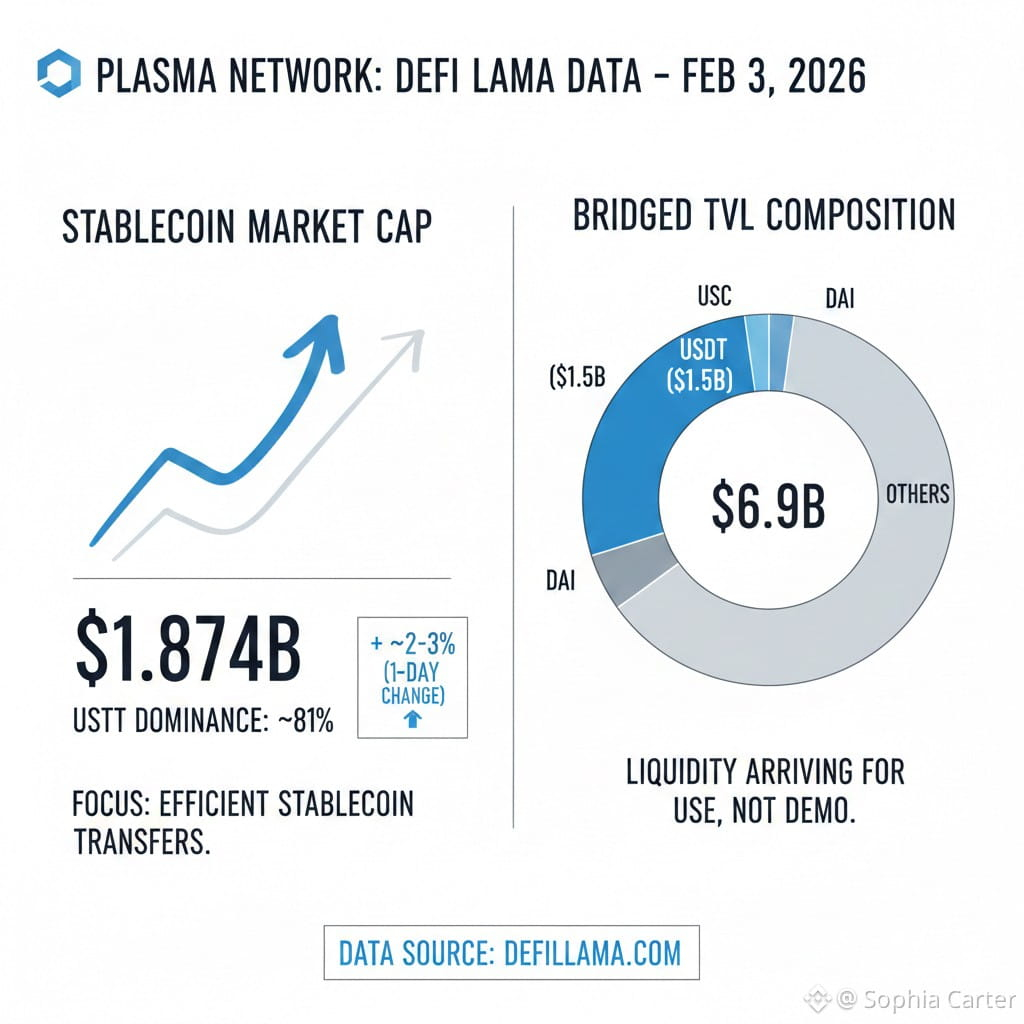
Now zoom out to token utility, because settlement rails can’t escape economics forever. Plasma’s own docs describe 10B XPL initial supply at mainnet beta, and validator rewards that start at 5% annual inflation and step down toward 3%, with details about when inflation activates and how rewards flow. What I find interesting isn’t the numbers by themselves it’s the intent: Plasma seems to want XPL to function like an operator/security budget, while the everyday user experience is pushed toward stablecoin-native behavior. That’s the opposite of most chains, where the native token is treated like a membership fee for basic participation.
If I had to sum up Plasma’s “why it matters” in one image: it’s trying to turn stablecoin settlement into something that feels like swiping a card where you don’t need to understand the payment network’s internal fuel, and you don’t need to do a small scavenger hunt before you can move money. The last 24 hours of activity says the conveyor belt is running.