

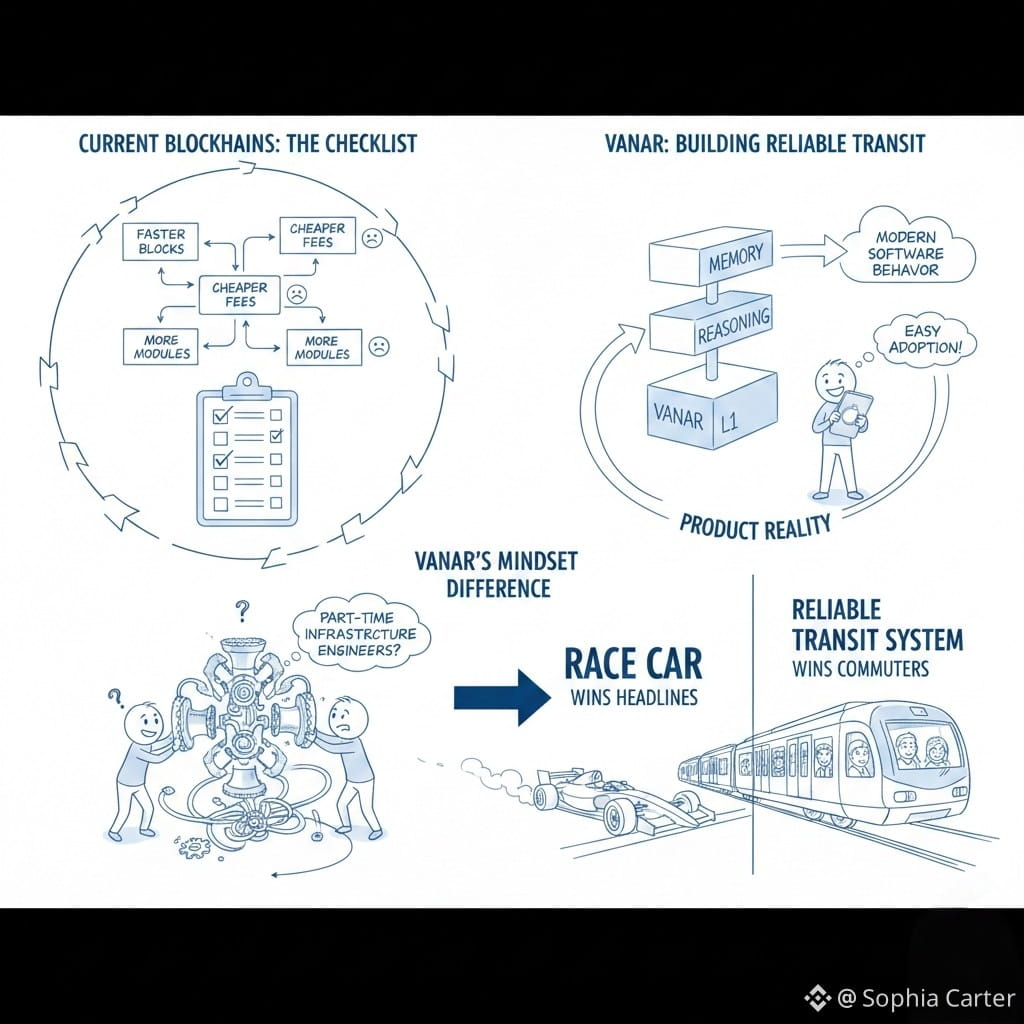
Most blockchains feel like a checklist: faster blocks, cheaper fees, more “modules.” Vanar feels like it’s chasing something closer to product reality: the idea that adoption doesn’t fail because people dislike crypto, it fails because the experience asks normal users to become part time infrastructure engineers.
When I read through Vanar’s own material, what stood out wasn’t a single big claim, it was the shape of the stack. It’s presented less like “here’s an L1, build whatever,” and more like “here’s an L1 plus memory plus reasoning, so apps can behave like modern software.” That mindset is very different from the usual chain narrative. It’s the difference between building a race car and building a reliable transit system. One wins headlines, the other wins commuters.
Vanar’s network details are intentionally straightforward, which sounds boring until you’ve watched teams abandon a chain because integration becomes a weekly fire drill. The published mainnet parameters are clear: RPC and WebSocket endpoints, an explorer, and a specific chain identifier, Chain ID 2040. That kind of standard surface area matters more than people admit, because mainstream teams want the chain to feel like plumbing, not a personality.
The more interesting part is what Vanar is trying to do above the chain. Neutron is described as a semantic memory layer that compresses and restructures data into programmable “Seeds” that remain fully onchain and verifiable. The number they put on it is wild: 25MB compressed into 50KB. Even if you treat it cautiously, the intention is clear. They don’t just want to store hashes or pointers. They want data to stay usable and provable, not just “present.”
That matters because real world apps aren’t made of transactions, they’re made of context. A receipt isn’t valuable because it exists somewhere, it’s valuable because you can pull it up, check it, and make a decision with it. An audit trail isn’t useful because it’s immutable, it’s useful because it’s readable. Most chains leave that meaning layer offchain, which is why so many Web3 products end up with a Web2 backend doing the actual thinking, and the chain acting like a glorified log.
Vanar’s pitch is basically, what if the chain could hold more “meaning” close to the execution layer so apps don’t have to rebuild that logic offchain every time. Their own examples point in that direction: turning documents and data into compact, verifiable objects that are easier to query and automate against.
Then there’s Kayon, which Vanar describes as an AI reasoning layer that can work across Neutron, blockchains, and enterprise backends. The way they frame it is blunt: blockchains can store and execute, but they can’t reason. Kayon is supposed to make Seeds and other datasets usable through a more natural interface, including integrations that connect to explorers, dashboards, and business systems. Again, you can read that as aspirational, but the direction is consistent: they’re trying to make “ask a question, get an answer” part of the onchain workflow instead of something you bolt on with scripts and spreadsheets.
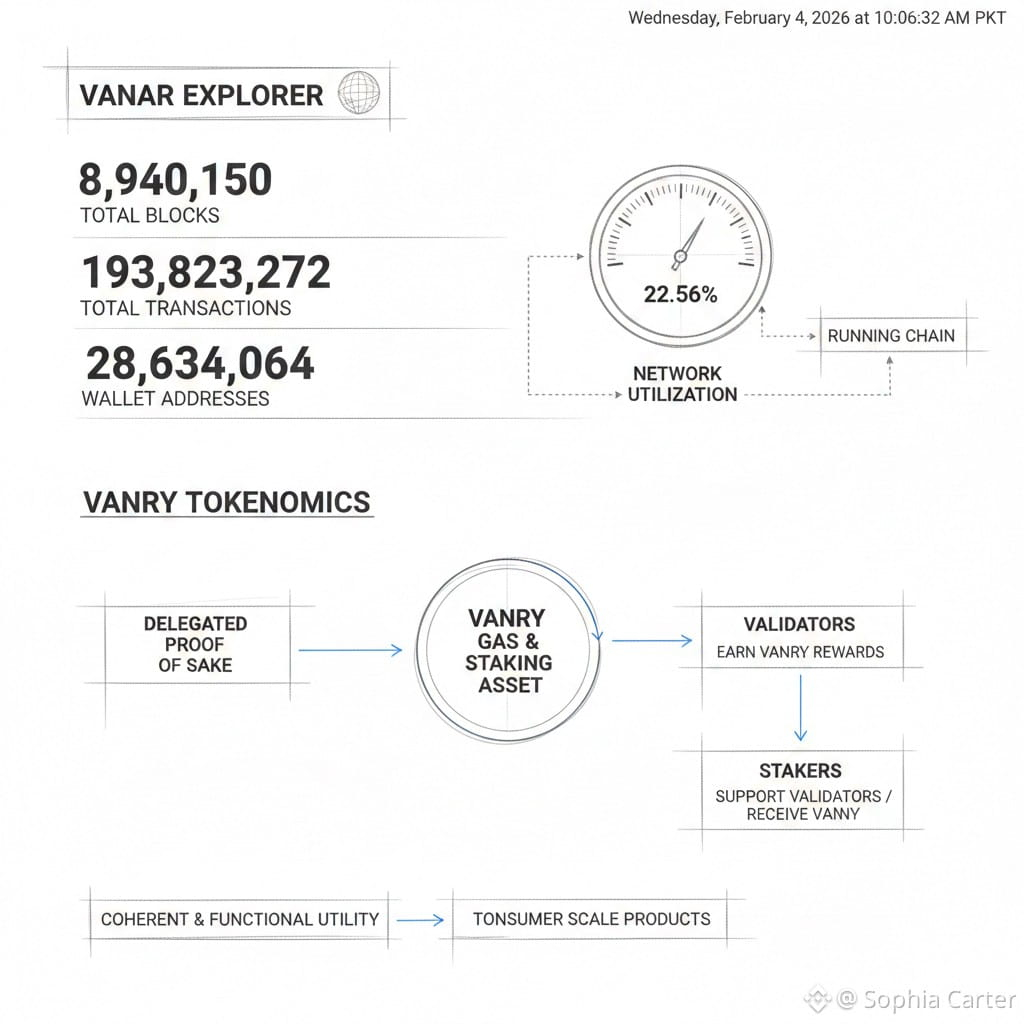
I also like grounding any narrative in observable signals. Vanar’s explorer displays very large headline counts: 8,940,150 total blocks, 193,823,272 total transactions, and 28,634,064 wallet addresses, with network utilization shown around 22.56% on the same page. Those top line stats don’t automatically equal meaningful adoption, but they do suggest Vanar wants to present itself as a chain that’s already running, not a concept waiting for traffic.
On the token side, their docs describe VANRY as the gas and staking asset in a delegated proof of stake setup, with validators earning rewards in VANRY and stakers supporting validators to receive rewards. It’s not flashy, but it’s coherent. Consumer scale products don’t need a token that tries to be the main character. They need a token that does its job and stays out of the way.
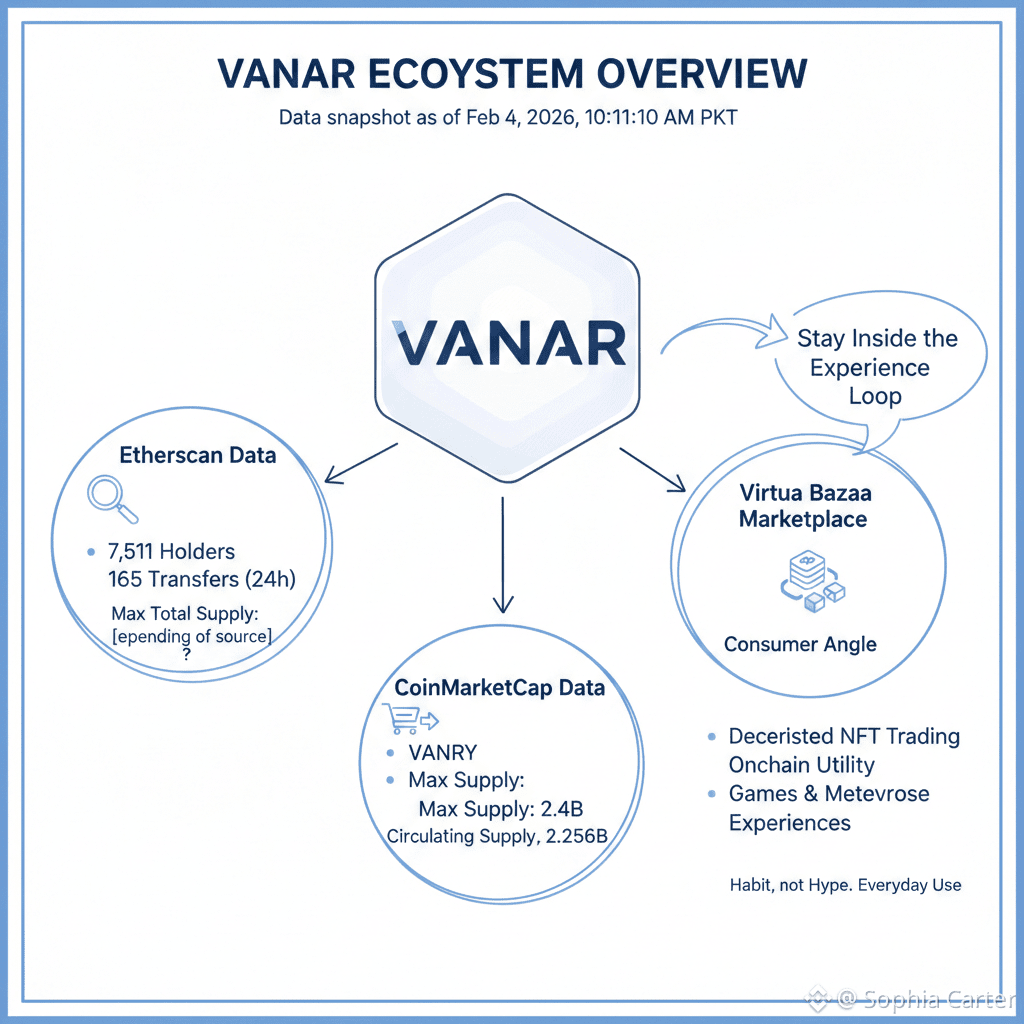
From the Ethereum contract you linked, Etherscan shows an onchain snapshot that helps make the story concrete: about 7,511 holders and 165 transfers in the last 24 hours at the time of viewing. It also displays a max total supply figure on that page. Meanwhile, CoinMarketCap lists VANRY with a max supply of 2.4B and a circulating supply around 2.256B, which is a reminder that supply figures can vary by source and methodology.
Where Vanar’s consumer angle becomes more believable is when you see ecosystem pieces that naturally fit that “stay inside the experience” loop. Virtua, for example, describes Bazaa as a fully decentralized marketplace built on the Vanar blockchain, aimed at trading NFTs that have onchain utility across games and metaverse experiences. Marketplaces like that are less about hype and more about habit. They give users an everyday reason to touch the chain without making it feel like they’re “doing crypto.”
If I had to put the whole thesis in plain language, it would be this. Vanar isn’t only trying to be a faster road. It’s trying to build the street signs, the map, and the navigation system too. Neutron is about making data compact and provable. Kayon is about making that data understandable and usable. The chain underneath is meant to be familiar enough that builders can ship without rearchitecting their entire toolchain.
And that’s the quiet bet: people won’t adopt blockchains because they love blockchains. They’ll adopt them when the experience feels like any other good app, and the complexity disappears behind the scenes.