
I was looking through some old digital files the other day and realized how many things I have lost over the years because a service shut down or I forgot to pay a monthly bill. It is a strange feeling to realize your personal history is held by companies that do not really know you. I started using Walrus because I wanted a different way to handle my data that felt more like owning a physical box in a real room. It is a storage network that does not try to hide the reality of how computers work behind a curtain.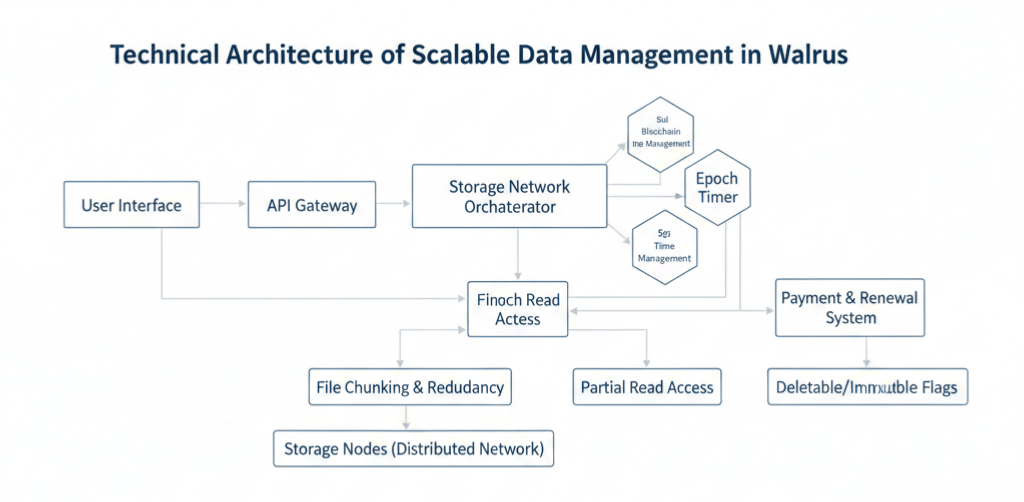
You know how it is when you just want a file to stay put without worrying about a middleman. In this system everything is measured in epochs which are just blocks of time on the network. When I put something into storage I can choose to pay for its life for up to two years. It was a bit of a reality check to see a countdown on my data but it makes sense when you think about it. If you want something to last forever you have to have a plan for how to keep the lights on.
"Nothing on the internet is actually permanent unless someone is paying for the electricity."
I realized that the best part about this setup is that it uses the Sui blockchain to manage the time. I can actually set up a shared object that holds some digital coins and it acts like a battery for my files. Whenever the expiration date gets close the coins are used to buy more time automatically. It is a relief to know I can build a system that takes care of itself instead of waiting for an email saying my credit card expired and my photos are gone.
The rules for deleting things are also very clear which I appreciate as a user who values my space. When I upload a blob I can mark it as deletable. This means if I decide I do not need it later I can clear it out and the network lets me reuse that storage for something else. It is great for when I am working on drafts of a project. But if I do not mark it that way the network gives me a solid guarantee that it will be there for every second of the time I paid for.
"A guarantee is only as good as the code that enforces the storage limits."
One thing that surprised me was how fast I could get to my data. Usually these kinds of networks are slow because they have to do a lot of math to put your files back together. But Walrus has this feature called partial reads. It stores the original pieces of the file in a few different spots. If the network can see those pieces it just hands them to me directly without any extra processing. It makes the whole experience feel snappy and responsive even when I am dealing with bigger files.
I also had to learn how the network handles stuff it does not want to keep. There is no central office that censors what goes onto the network. Instead every person running a storage node has their own list of things they refuse to carry. If a node finds something it does not like it can just delete its pieces of that file and stop helping. As long as most of the nodes are fine with the file it stays available for everyone to see.
"The network decides what to remember and what to forget through a messy democratic process."
It is interesting to see how the system gets better as it grows. Most platforms get bogged down when too many people use them but this one is designed to scale out. When more storage nodes join the network the total speed for writing and reading actually goes up. It is all happening in parallel so the more machines there are the more bandwidth we all get to share. It feels like a community effort where everyone bringing a shovel makes the hole get dug faster.
"Capacity is a choice made by those willing to pay for the hardware."
I think the reason I keep using this project is because it treats me like an adult. It does not promise me magic or tell me that storage is free when it clearly is not. It gives me the tools to manage my own digital footprint and shows me exactly how the gears are turning. There is a certain peace of mind that comes from knowing exactly where your data is and how long it is going to stay there. It makes the digital world feel a little more solid and a little less like it could vanish at any moment.
"Data ownership is mostly about knowing exactly who is holding the pieces of your life."
I have started moving my most important documents over because I like the transparency of the whole process. I can check the status of my files through a light client without needing to trust a single company to tell me the truth.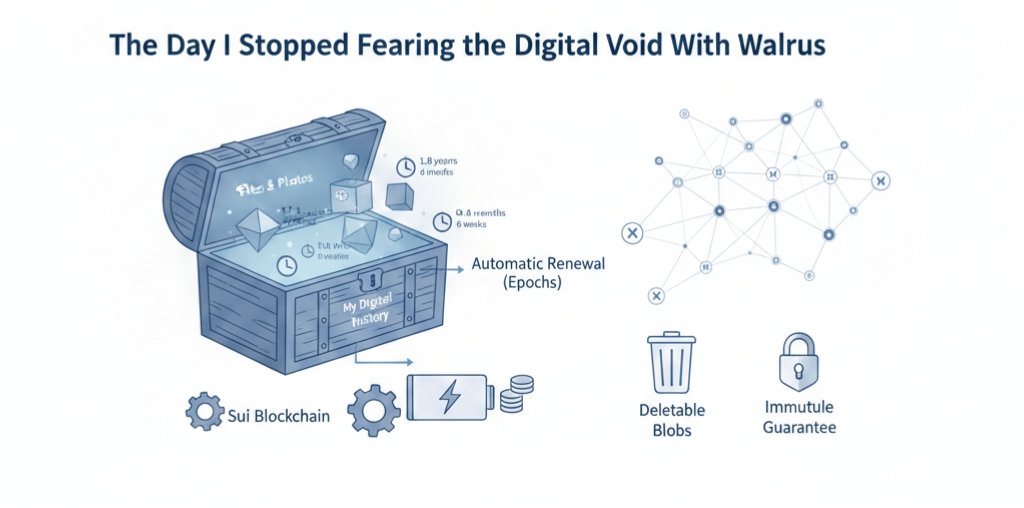 It is a shift in how I think about my digital life but it is one that makes me feel much more secure. Having a direct relationship with the storage itself changes everything about how I value what I save.
what you think about this? don't forget to comment 💭
Follow for more content 🙂