
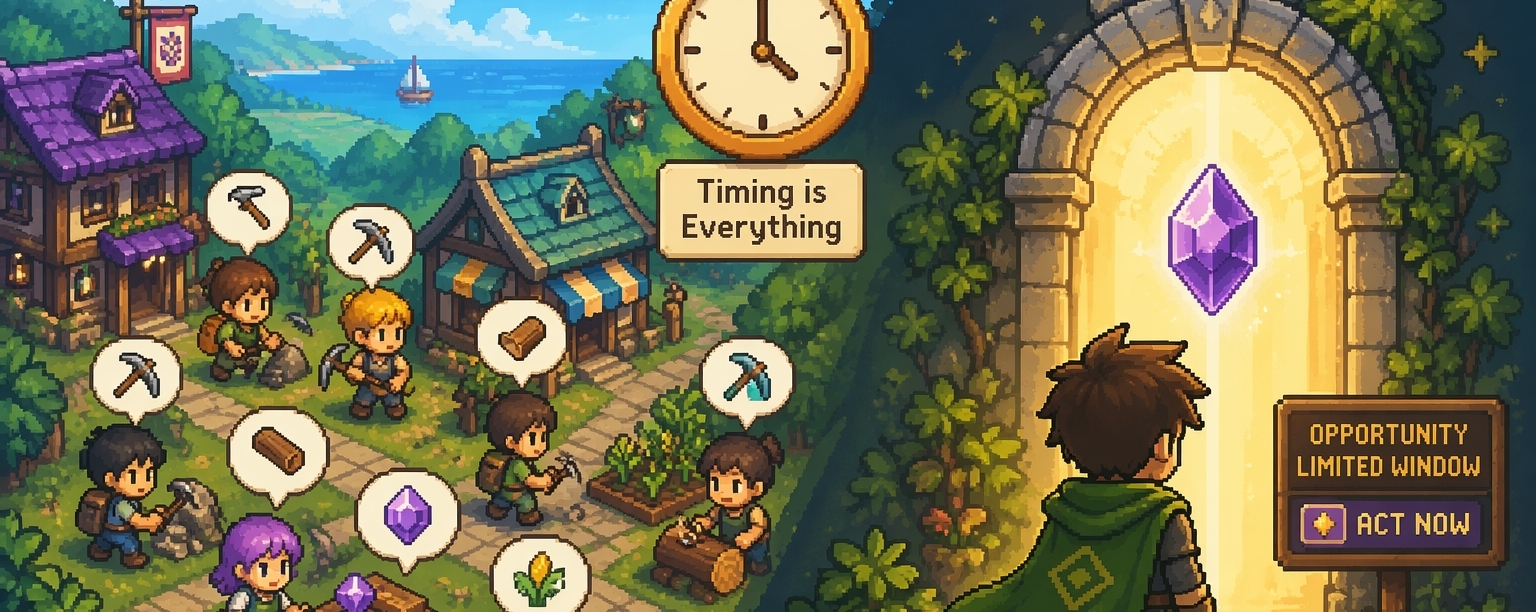
You can spend hours inside Pixels.
Grinding.
Using energy.
Completing every available task.
And still… watch others move ahead of you.
At first, it doesn’t make sense.
From the outside, everyone looks busy. Everyone looks active.
But the outcomes don’t line up.
That’s when you start to notice something subtle:
The game isn’t rewarding effort the way you think it is.
Pixels doesn’t reward time.
It rewards timing.
And once you see that, everything shifts.
Most players operate in “activity mode.”
They log in, clear tasks, spend energy, stay constantly engaged.
It feels productive. It feels like progress.
But the system isn’t designed to treat all actions equally.
Some actions simply keep the system moving.
Others actually move you forward.
That’s the difference most players miss.
Because in Pixels, progress isn’t gradual.
It doesn’t climb.
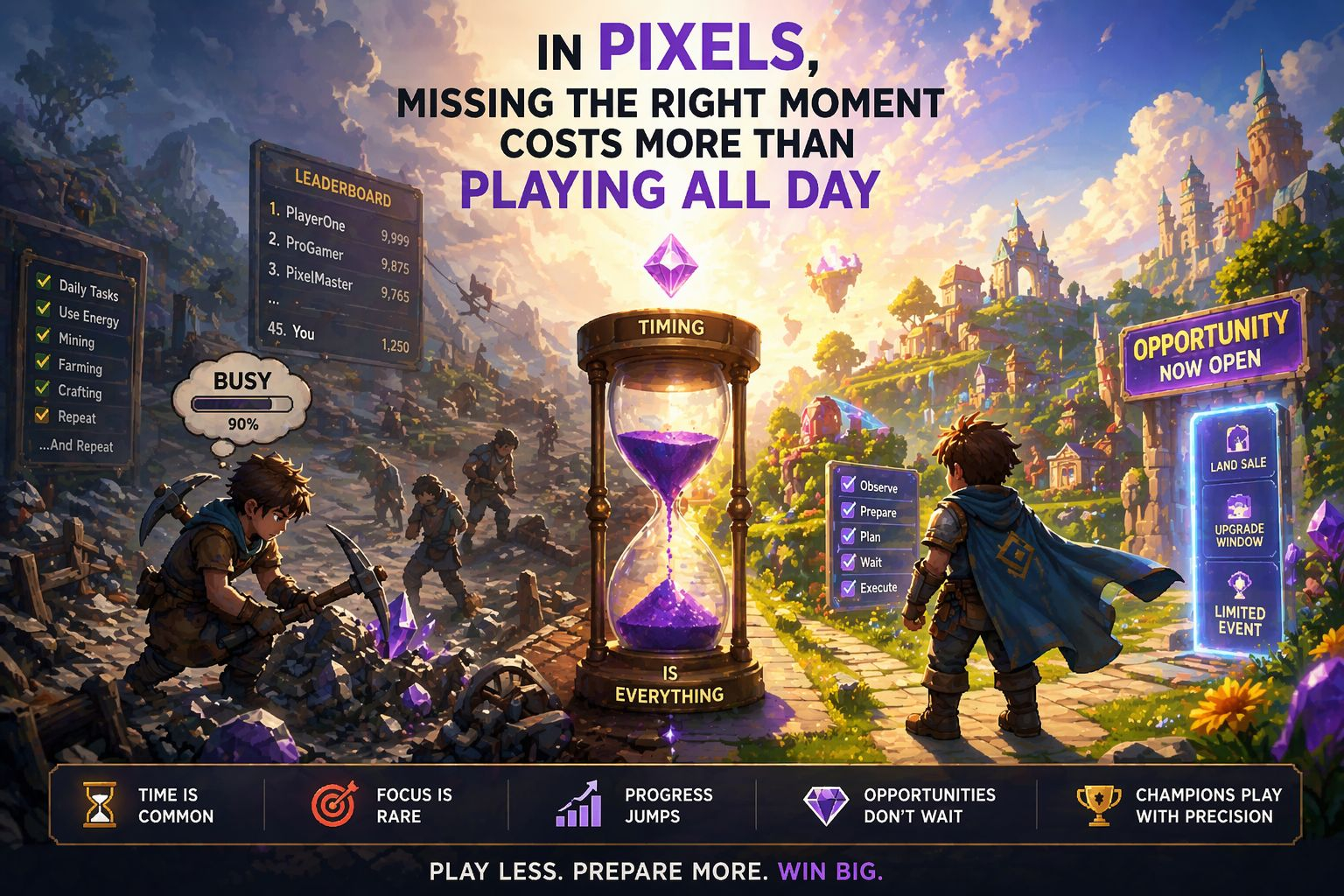
It jumps.
And those jumps don’t happen randomly.
They happen in specific, limited windows.
A land release.
A key upgrade.
A time-sensitive opportunity.
Moments where value doesn’t just circulate it locks in.
And in those moments, hesitation has a cost.
Now look at two players.
The first is consistent, hardworking, always active.
But reactive.
He responds to whatever the game puts in front of him.
He stays busy, but rarely ahead.
The second player looks different.
Less visible. Less active.
But intentional.
He watches.
He prepares.
He waits.
And when the moment comes… he doesn’t hesitate.
Because the decision was already made.
The best players don’t do more.
They miss less.
That’s where separation begins.
At a deeper level, the system is structured in layers.
Most of what you do is off-chain.
It’s fast, flexible, almost unlimited.
You can grind as much as you want.
But the moments that actually define progress?
They sit behind constraints.
On-chain actions.
Limited opportunities.
Finite windows.
That’s where outcomes get decided.
Which means:
You’re not just competing on effort.
You’re competing on readiness.
This is why the gap appears.
Two players can put in the same hours…
but only one converts those hours into real progress.
Because when the moment arrives:
One is still thinking.
The other is already acting.
One is preparing.
The other is executing.
And by the time the first catches up
The opportunity is gone.
Top players don’t look busy all the time.
But when it matters, they’re already positioned.
They have resources ready.
They’ve already chosen their targets.
They understand their risk.
So when speed is required, they don’t create it in the moment
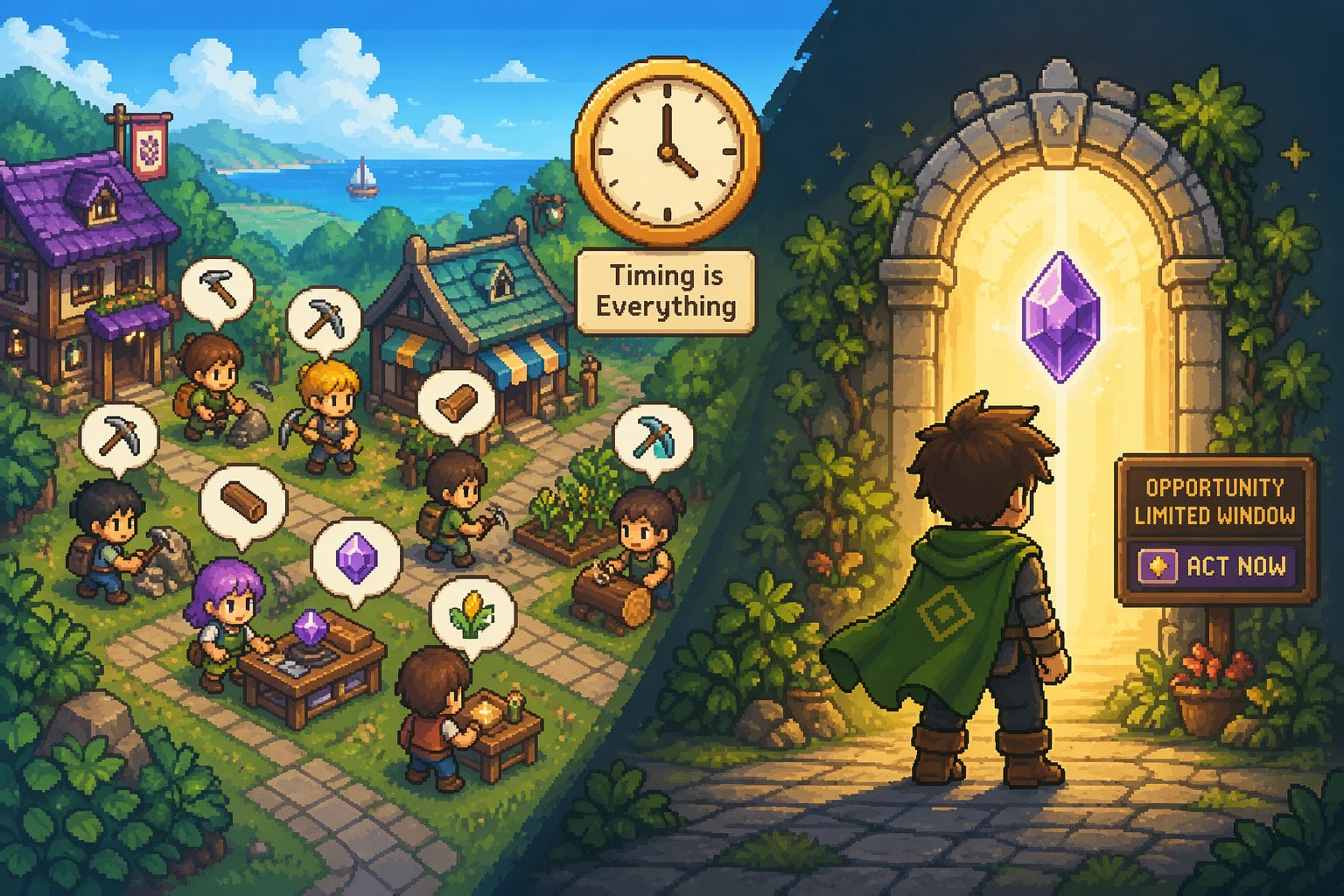
They reveal it.
Because real speed comes from preparation.
This isn’t a game of constant action.
It’s a game of controlled action.
Trying to do everything spreads you thin.
Your energy gets diluted.
Your focus disappears.
Your resources get misallocated.
And when the moment that actually matters shows up—
You’re not ready for it.
That’s why control matters.
Choosing what not to do
is just as important as choosing what to do.
Not every opportunity is yours to chase.
But the ones that are?
You need to meet them prepared.
Patience, in this system, isn’t passive.
It’s precision.
And precision is where advantage lives.
Average players stay inside the game at all times.
Strong players show up when it counts.
The difference feels small in the moment.
But over time, it compounds into everything.
If you shift your focus
From staying busy
to staying ready
your entire trajectory changes.
In the end, remember this:
Everyone is playing Pixels.
But not everyone is competing.
And the difference isn’t effort.
It’s presence.
Who is there
at the exact moment
when value locks in
…and who is still grinding
when it’s already too late.