This one caught me off guard...😅 In 2023, after the Axie Infinity collapse, most people I knew in this space had quietly written off the Ronin blockchain. And honestly... I didn't blame them. When a network's flagship game crumbles that publicly, the instinct is to move on. So when I started seeing Ronin's numbers climbing again, not because of some massive studio launch or a hyped airdrop, but because of a pixelated farming game, I had to stop and actually look at what was happening.
I kept asking myself one thing. Why Ronin?🤔
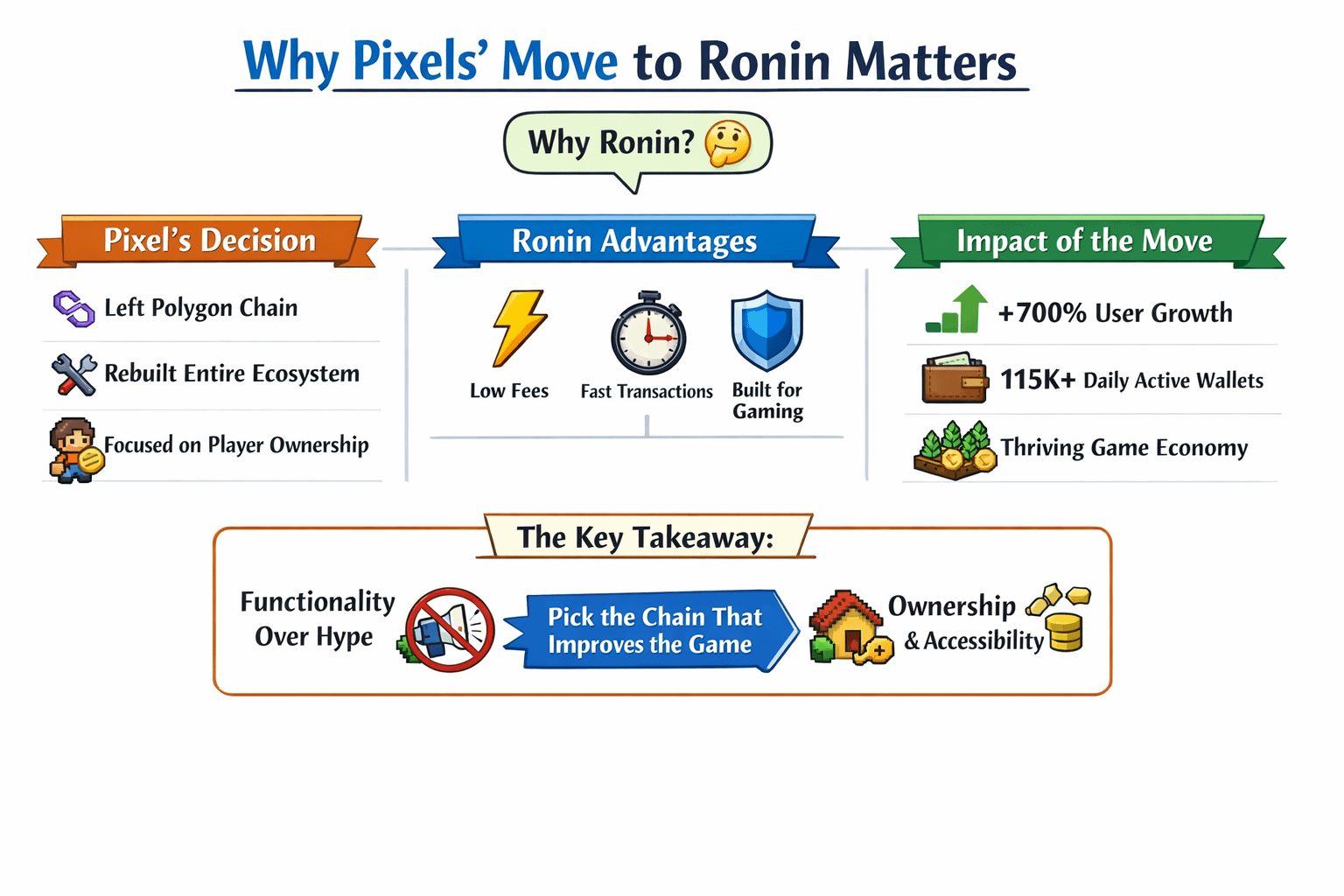
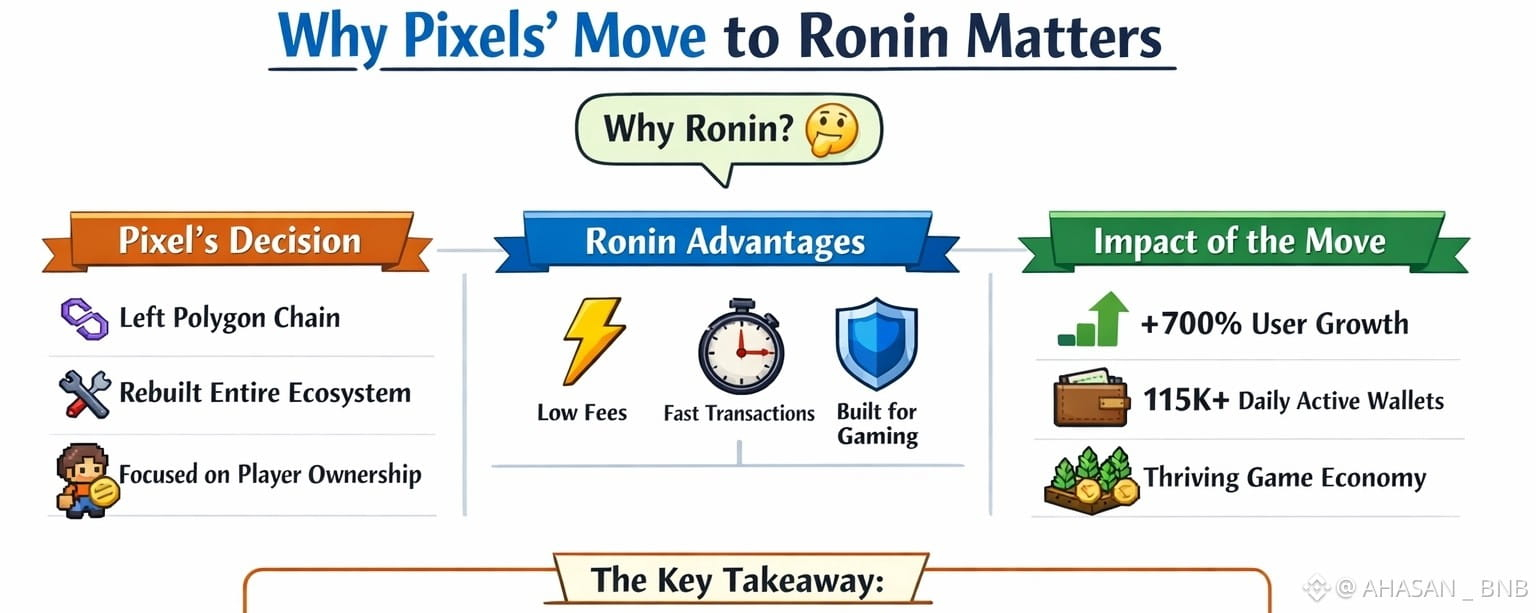
Pixels didn't start there. It was on Polygon first, which is a perfectly functional chain. Moving an entire game ecosystem mid-flight is not a small decision. It means rebuilding wallet infrastructure, retraining your community, and betting that the new environment will hold the weight of your growth. That kind of move tells you something about how the team thinks. They weren't chasing hype. They were solving a specific problem... and Ronin happened to be the answer.
Here's what I think people miss when they talk about blockchain gaming. The chain itself is part of the product. A gamer who has never touched crypto does not care about "decentralization" in the abstract. What they care about is whether the game loads fast, whether a transaction costs them nothing, and whether their progress actually belongs to them. Ronin was built with that logic at its core. Low fees, fast finality, and an architecture designed specifically for gaming workloads. When Pixels moved there, it wasn't a branding decision. It was a product decision.
And the numbers reflected that almost immediately. Over 700% growth in Ronin's user base after Pixels settled in. More than 115,000 daily active wallets at peak.📈 These are not "crypto native" metrics. These are "gaming metrics." That distinction matters more than people acknowledge.
What I find genuinely interesting, and a little surprising, is how a retro-style low-graphics game became the proof of concept that high-end studios couldn't deliver. There's something worth sitting with there. The assumption was always that Web3 gaming would take off once the visuals caught up with AAA titles. Pixels quietly made that argument irrelevant. What it offered instead was actual ownership, a functioning in-game economy, and a reason to come back every day. The Ronin integration made all of that feel accessible rather than complicated.
That said, I'm not going to pretend there are no real questions here. The PIXEL token launched at over a dollar and has since dropped significantly.📉 That's a pattern anyone who's spent real time in this space has seen before. A strong network effect during a bull cycle, followed by a slow bleed when attention shifts. The question I keep returning to is whether Pixels has built something that survives that cycle... or whether the Ronin integration was simply "the right move at the right moment in the right market."
My honest read is that the integration itself was structurally sound. The decision to leave Polygon, absorb the friction of migration, and commit to a chain that had already survived one brutal collapse shows a kind of strategic patience that most projects don't have. Whether the game's economy can hold long-term is a separate conversation... But the infrastructure choice? That one ages well regardless of price action.
What I keep coming back to is this. Most projects pick a blockchain because of grants, because of marketing alignment, or because it's trending. Pixels picked Ronin because it made the game better. That's a different kind of reasoning... and in this space, it's rarer than it should be.
I'm still watching... But I'm watching more carefully now than I was before I started digging into this.
@Pixels #pixel $PIXEL #CryptoVibes