
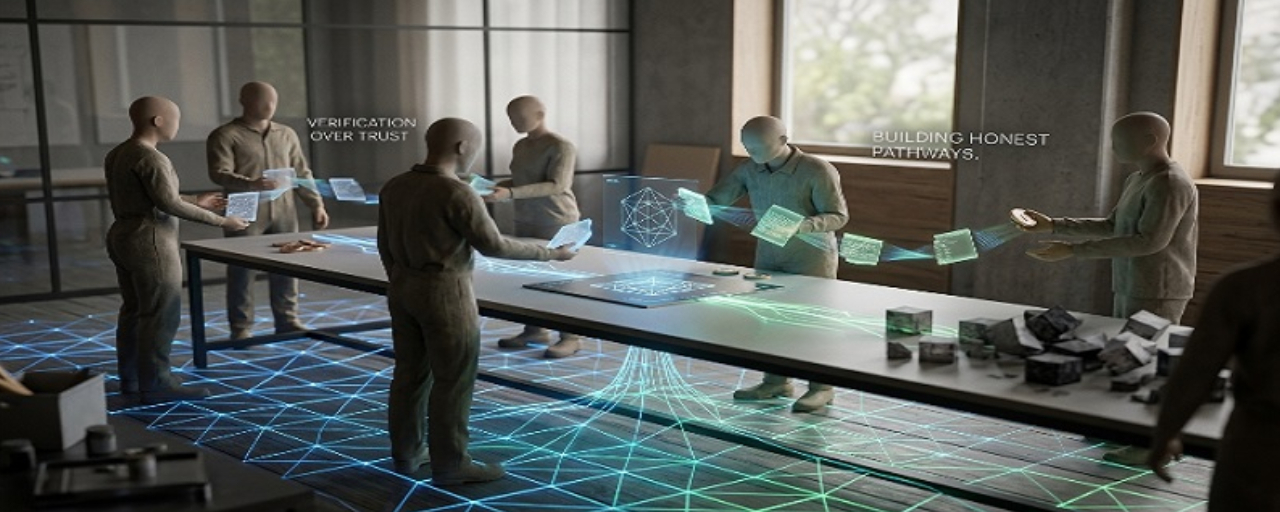

I’ve been thinking about how most AI systems today don’t really operate alone anymore. It’s usually multiple agents, each doing small tasks, passing information around like a quiet workflow you don’t really notice unless you look closely.
What caught my attention with @OpenLedger is how this idea starts to connect back to something more fundamental than just coordination. It’s the data underneath it all.
Because when you have multiple agents interacting, the question isn’t just what they do, but what they’re allowed to see, reuse, or carry forward. That part feels less talked about.
$OPEN kind of sits in that gap. Not as a loud solution, but more like an experiment in how these agents might share or verify the same data without relying on one central point. I might be wrong, but it feels like the direction is less about building smarter agents and more about building honest pathways between them.
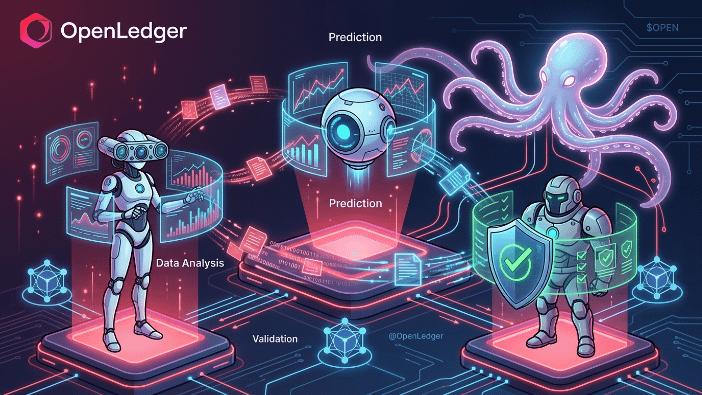
I remember reading a thread under #OpenLedger where someone mentioned that multi-agent systems only become useful at scale when trust stops being assumed and starts being verified. That stayed with me for some reason.
Maybe it’s just me, but I always assumed agents were the “intelligence layer,” not the “agreement layer.” But the more I look at it, the more that boundary feels blurry. #openledger and #open keep showing up in that overlap where coordination meets ownership.
I don’t understand fully yet how far this can go. Like, if every agent can produce value, does every interaction between them also need to be recorded or rewarded somehow? That question feels simple but it opens a lot of unknowns.
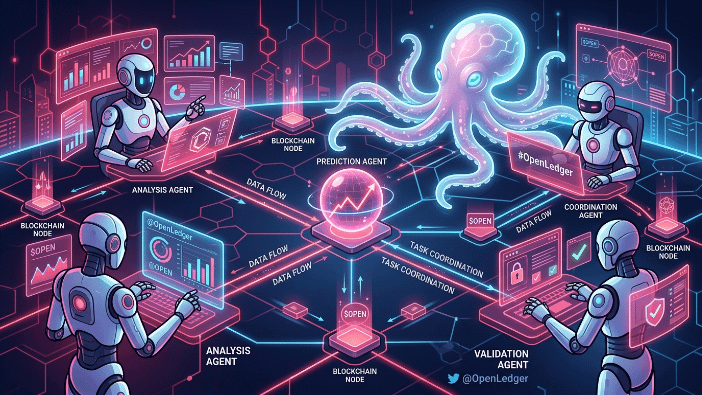
And I think that’s where OpenLedger quietly fits in, not as a centerpiece but as something trying to hold the structure together when too many agents start talking at once.
There’s something interesting about that kind of system design. It doesn’t feel finished. It feels like it’s still learning what it wants to become.
And I keep wondering if multi-agent systems are really about intelligence at all, or just about making complexity usable without losing track of where it came from.
