
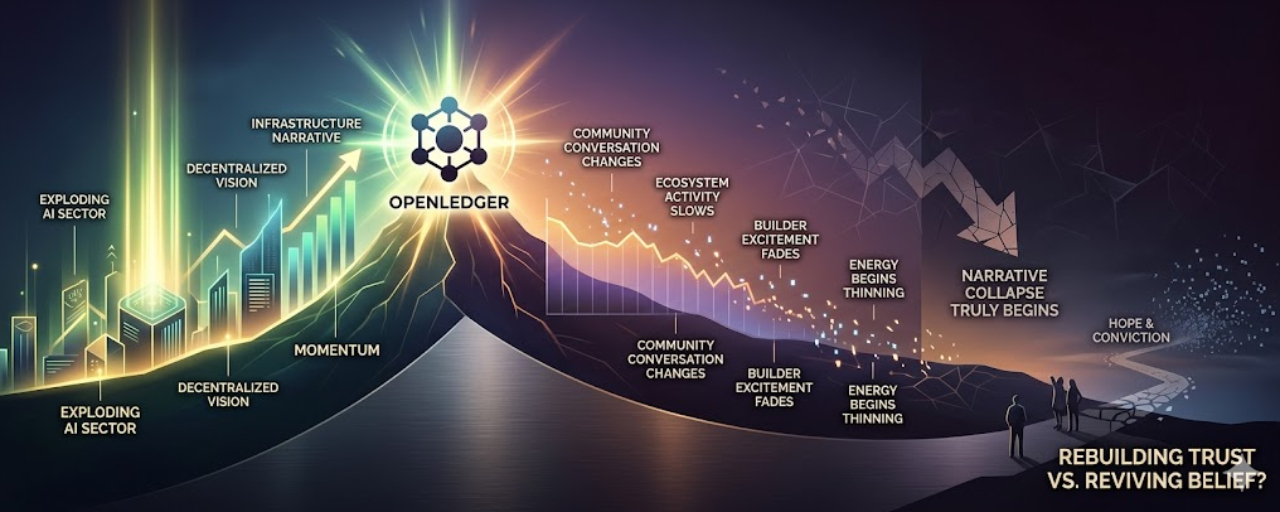

The market once treated OpenLedger as one of those rare projects that seemed perfectly positioned for the next cycle. AI was exploding across every sector, investors were desperate for the next infrastructure narrative, and OpenLedger arrived at exactly the right moment. Decentralized AI, open data contribution, incentive-driven intelligence networks — the vision sounded powerful enough to convince traders they were early to something genuinely transformative.
At first, the excitement felt justified.
Every announcement created fresh optimism. Community members spoke about OpenLedger as if it were building the foundation layer for the future AI economy. Influencers pushed the idea that centralized models would eventually lose relevance and that decentralized systems would become the natural evolution of artificial intelligence. The narrative was clean, modern, and emotionally easy to believe in.
That belief became the fuel behind the market momentum.
But crypto narratives rarely collapse all at once. They weaken quietly first.
The early warning signs usually appear long before price fully reacts. Ecosystem activity slows down. User growth stops accelerating. Builder excitement fades into repetitive marketing posts. Communities that once discussed innovation begin discussing only price recovery. The conversation changes without most investors noticing it immediately.
That shift is where OpenLedger started feeling different.
The project still had visibility. It still had supporters defending the long-term vision. But outside the core community, the energy began thinning. The wider market moved toward faster opportunities, newer AI plays, and ecosystems showing stronger real-time traction. OpenLedger remained alive as a narrative, yet the momentum supporting that narrative looked increasingly fragile.
And in crypto, momentum matters more than most investors want to admit.
A powerful story can survive weak price action for a while. It cannot survive prolonged emotional exhaustion. Eventually, holders stop asking whether adoption is growing and start asking only when the chart will recover. That psychological transition changes everything because the narrative no longer feels driven by belief in the product. It becomes driven by hope.
Hope is not the same as conviction.
This is the dangerous phase many projects enter after the hype cycle peaks. The branding still looks strong. The roadmap still sounds ambitious. Social engagement still appears active. But underneath the surface, the market begins questioning whether the ecosystem is actually expanding or simply repeating the same promises in different forms.
That is where narrative collapse truly begins.
Not with one crash.
Not with one scandal.
Not even with one failed update.
It begins when confidence slowly loses momentum faster than the project can rebuild excitement.
The hardest part for investors is accepting that strong narratives alone cannot carry a market forever. Crypto moves on attention, liquidity, and emotional belief. Once traders feel that a story no longer leads the cycle, capital rotates aggressively toward newer opportunities. The projects left behind often spend months trying to recover momentum that never fully returns.
OpenLedger may still continue building. The technology may still evolve. But markets do not reward potential forever. At some point, they demand proof strong enough to revive belief again.
And once a narrative starts collapsing, rebuilding trust becomes far more difficult than creating hype in the first place.
