
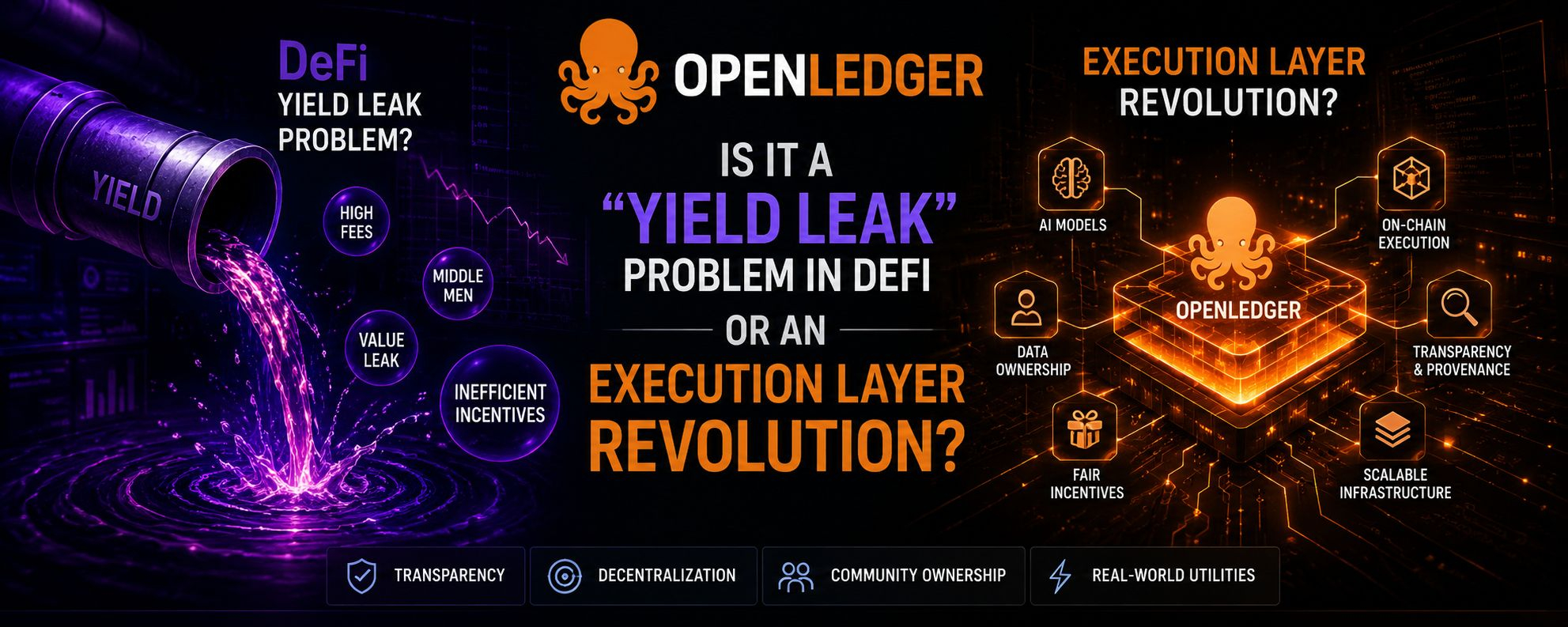

I’m watching OpenLedger carefully because it feels like one of those projects trying to solve a problem that most people still underestimate. For years, I’ve seen crypto search for real utility beyond speculation, while AI keeps absorbing more data, more attention, and more economic power into a small number of platforms. OpenLedger seems to be built around a simple but important question: if AI systems are trained and improved by massive amounts of human data and interaction, then who should actually benefit from that value creation?
What makes OpenLedger interesting to me is that it is not only talking about faster transactions or another blockchain ecosystem. The project is trying to build a system where contributors, developers, and AI applications can exist inside the same economic structure. In theory, the people providing useful data or helping improve models should not disappear in the background while all the rewards flow upward to the largest platforms. That idea sounds reasonable to me because the current AI economy is heavily unbalanced.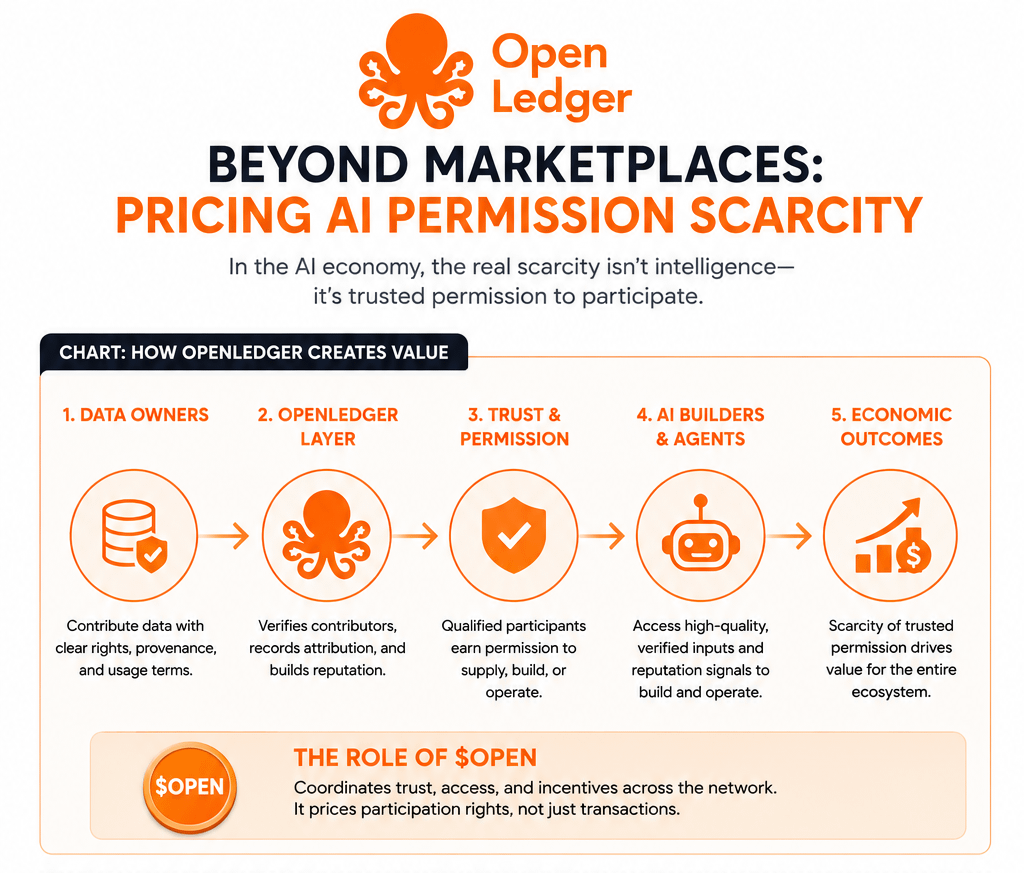
But this is also where I become cautious. I’ve watched many projects in both crypto and AI promise fairness, openness, and decentralization, only to run into the same reality later: coordination is difficult, incentives break down, and users usually choose convenience over ideals. OpenLedger talks a lot about attribution and rewarding contributions, but attribution in AI is not a clean or simple process. Data moves through layers of training, filtering, fine-tuning, and inference. Tracking where value truly comes from is incredibly hard once models become large and complex.
Still, I think OpenLedger is at least pointing toward a real structural issue instead of inventing a fake narrative. Right now, most AI systems operate like black boxes. People contribute data every day without understanding how much value they are helping create. OpenLedger seems to believe blockchain infrastructure can make those relationships more visible and programmable. Whether that fully works in practice is another question, but the direction itself feels more grounded than many AI-related crypto projects I’ve seen recently.
I also notice that the project is trying to position itself as infrastructure rather than just another application. That matters because infrastructure projects survive differently. They do not win through hype alone. They survive only if developers continue building on top of them and if the system becomes useful enough that people keep using it even after market excitement fades. That is a much harder path than simply creating short-term attention around a token.
And honestly, I think the token is the least interesting part of the conversation. The bigger issue is whether OpenLedger can create a working economic layer around AI collaboration. If contributors cannot trust the reward system, or if developers find the system too complicated, then none of the larger ideas matter. Crypto projects often underestimate how difficult long-term coordination really is.
Another thing I keep thinking about is whether decentralization actually improves the AI experience for normal users. Most people care about speed, reliability, and cost. They rarely care whether something is decentralized underneath unless it clearly changes the outcome for them. OpenLedger will eventually have to prove that its structure creates advantages that centralized AI platforms cannot easily copy on their own.
At the same time, I understand why projects like this continue to appear. AI is becoming one of the largest economic shifts in technology, and the current ownership model already looks concentrated. A handful of companies control massive amounts of compute, distribution, and training infrastructure. OpenLedger seems to be reacting to that concentration by asking whether AI can operate through a more open coordination layer instead of remaining entirely closed and platform-controlled.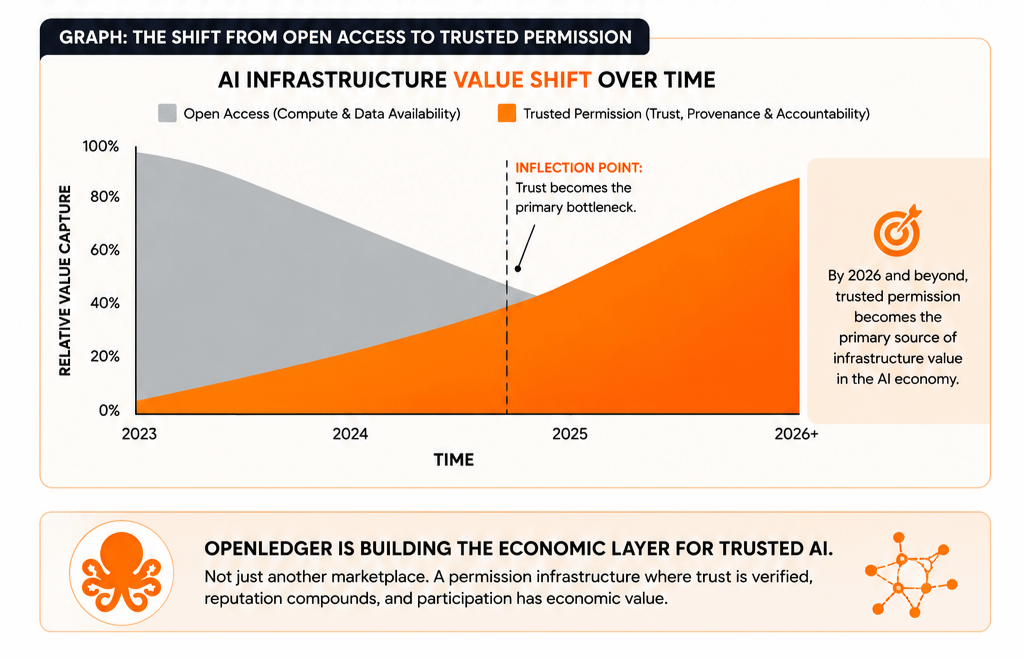
I don’t look at OpenLedger as a guaranteed revolution, but I also don’t dismiss it as empty hype. I see it as an experiment trying to test whether blockchain systems can create fairer incentive structures around AI before the industry becomes too centralized to change. That is a meaningful question, even if the answer is still uncertain.
For now, I’m mostly watching to see whether the project can move beyond theory. Ideas always sound powerful during early stages. The real test comes later, when systems meet real users, real incentives, and real market pressure. That is usually the point where the difference between a narrative and actual infrastructure becomes impossible to hide.