
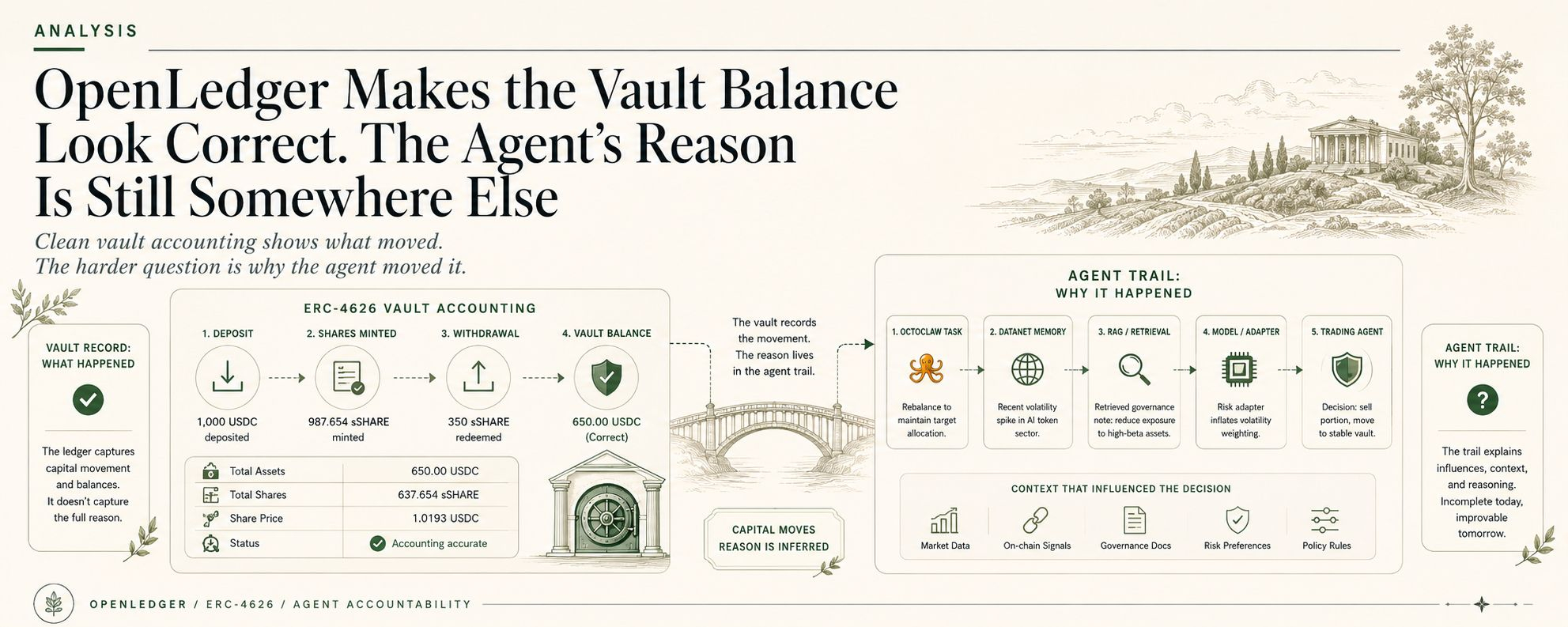


The lineage can be fine.
The discount can still widen.
A desk gets a clean signal and still cuts size.
That is the part of OpenLedger markets are going to argue with.
The clean story is easy enough to like. A Datanet shows where the signal came from. PoA shows which contribution shaped it. An OpenLoRA adapter carries the specialized path. Nobody has to pretend the output fell from the sky. OpenLedger is built around that split. Something can come from a real source path, the system can show it, and the underlying AI workflow does not have to stay trapped inside centralized black-box theater forever.
Good.
It should be built that way.
Opaque AI was never a serious answer for trading agents, treasury research, data-heavy automation, market intelligence, any of that.
Markets are still markets. After all.
And markets do not only care whether an output is traceable. They care whether they can stress it themselves when they get nervous. That is a different instinct. More primitive. Also more expensive.
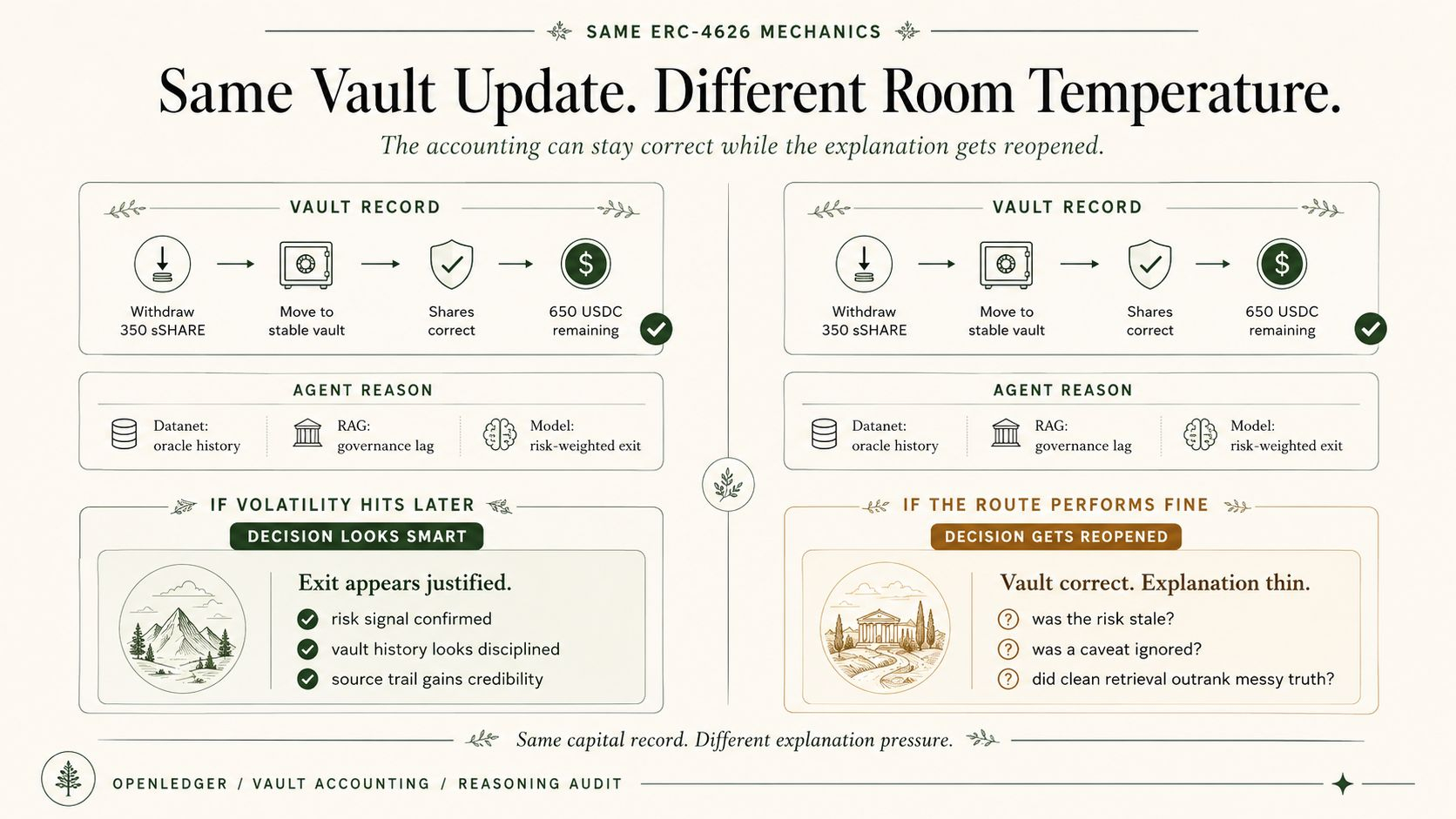
Say some OpenLedger-backed agent starts mattering financially. Research agent. Trading workflow. Treasury signal engine. Structured data product. Does not really matter. Money starts sitting on top of Datanet-fed signals and PoA-backed lineage instead of broad internal model visibility. The system says the source path is real. PoA traces contribution. The adapter route checks out. Fine.
Now put that in front of a market participant who actually has to size risk.
Not the docs.
Not the founder.
Not the clean AI-provenance voice.
A desk.
The agent says the signal is usable. The Datanet path is clean. The adapter route checks out. But the desk still wants to know if that source pool was deep or just four noisy inputs standing on each other’s shoulders. It wants to know if the adapter held across regimes or only behaved during the last quiet week.
That is where the mood changes.
Because a serious counterparty is not just asking whether the lineage checked out. They are asking how much uncertainty still sits outside their field of view, and what kind of cushion they need because they cannot evaluate the model path deeply enough themselves.
A market maker does not need to call OpenLedger unsafe to react.
It clips size.
Widens the quote.
Delays the route.
Runs a second model beside it because lineage alone is not enough to sign off risk.
That is where the whole thing gets real.
In centralized AI, people often overtrust nonsense because the answer sounds confident. True. But at least the discomfort is obvious. Everyone knows the box is closed. OpenLedger breaks that habit on purpose. It says an AI workflow can show provenance without pretending every model detail, data slice, adapter behavior, and evaluation trace has to become public theater.
Technically, that is powerful.
Behaviorally, that is a different market.
Because once provenance and confidence split apart, trust formation gets weird. A trace can be sound and a counterparty can still think, fine, but I am charging more for what I cannot evaluate. Not because they caught a flaw. Because they cannot stress enough of the hidden model behavior to stop imagining worse versions.
That matters more than people want to admit.
If the market has been trained for years to treat visibility like comfort, OpenLedger is not just introducing AI provenance. It is asking people to price around limited evaluability. Around Datanet depth they cannot fully inspect. Around adapter brittleness they cannot personally stress. Around the part of the workflow they are being told is traceable but no longer get to stare at directly.
And maybe sometimes that works.
Maybe sometimes a OpenLedger Datanet path plus PoA trail is enough. Maybe a partner, lender, desk, marketplace buyer, whatever, decides the reduction in black-box nonsense is worth the remaining uncertainty.
But it does not take much for the opposite instinct to show up.
A desk asks for more cushion.
A partner delays size.
A treasury team runs a second model check.
A counterparty says the trace is fine and still wants another layer of comfort before proceeding.
That is not some ideological rejection of AI provenance.
That is just risk getting priced.
The trace worked and still became haircut material. Lovely little market insult.
And OpenLedger, if it succeeds, is going to run directly into that.
Because traceable AI infrastructure does not just compete on provenance. It competes on believability. And believability in markets has never been purely technical. It is social. It is behavioral. It is about what people think they can underwrite without getting embarrassed later.
That is the friction here.
OpenLedger is right that provenance is not the same thing as blind trust. AI has been using confident output as a lazy substitute for proper source accountability forever. Fair enough.
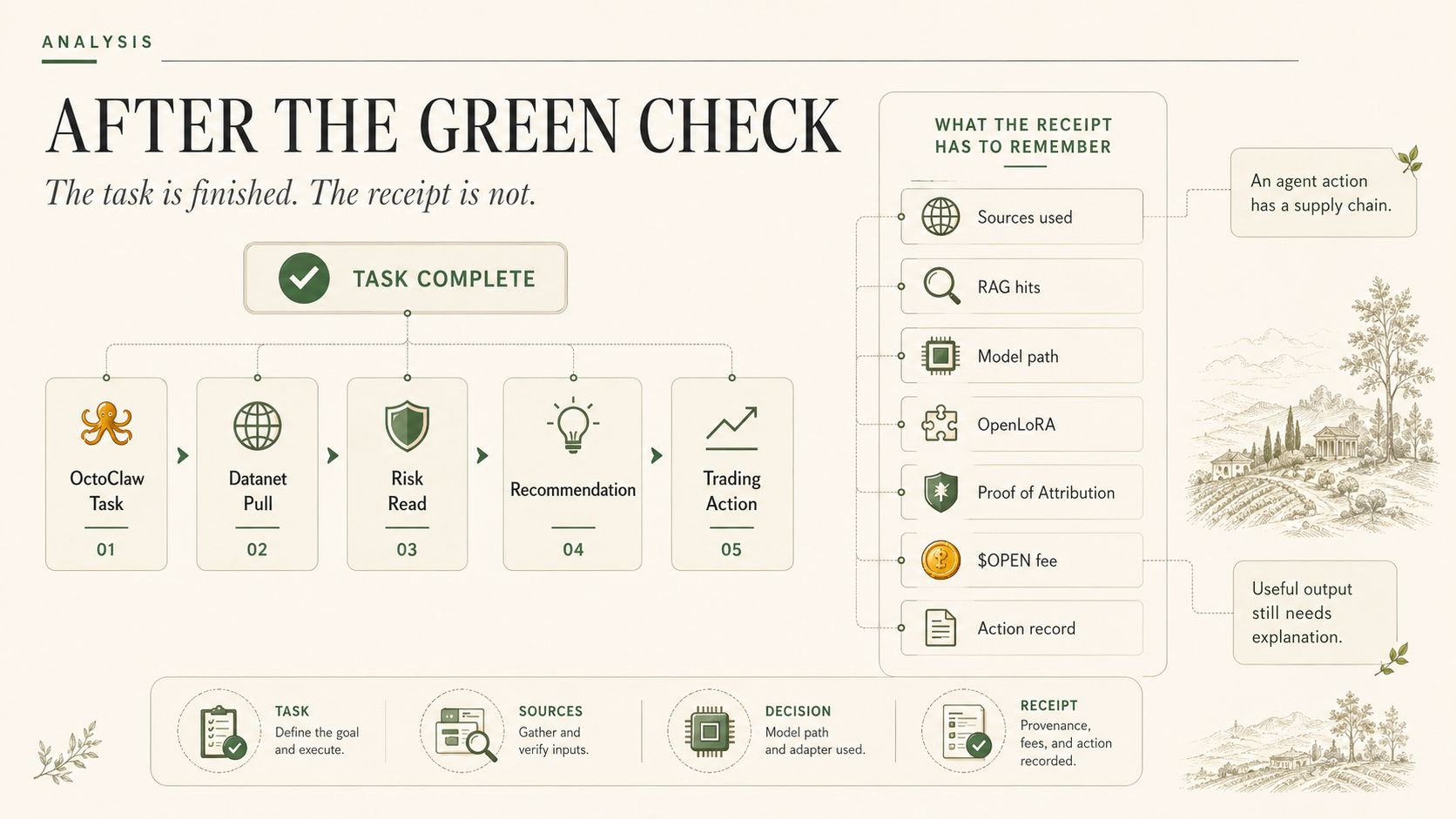
The problem is that markets use evaluability as a lazy substitute for comfort.
That habit does not disappear just because the trace is cleaner.
So if OpenLedger can prove the source path without exposing every model detail, the real question is not just whether the lineage is sound.
It is what premium, what discount, what hesitation gets attached to the part nobody gets to evaluate directly.
Because “traceable” does not stop a nervous desk from charging more for what it still can’t evaluate.